Pages

Tampilkan postingan dengan label IRMA. Tampilkan semua postingan

Kenyan ex-pat (and IRMA Steering Committee Member) aims to help gay countrymen

[We are so proud of IRMA Steering Committee Larry Misedah - shown on the left in the pic below. His compelling story is a must-read. Of note, Larry will be joining a group of IRMA members in Addis Ababa this December for Project ARM - Africa for Rectal Microbicides organizing and strategizing activities taking place in advance of the ICASA 2011 conference.]


via Bay Area Reporter, by Heather Cassell

Excerpt:

Until recently, Kenyan LGBT individuals were isolated, believing they were the only ones in their community; some expressed the desire to take their own lives, said Misedah. Older gay and lesbian individuals were forced to marry people of the opposite sex. Younger queer Kenyans felt comfort from their problems with alcohol, said Misedah, who also felt the cold hand of isolation until he came out.

Coming out liberated Misedah, he no longer suffered from the isolation and instead became a beacon for others.

"I felt sort of obliged in order to speak for those who did not have a voice," said Misedah. "I just felt that we needed to speak more and let the society know the challenges that LGBTI people were facing."

He worked first with Ishtar MSM, one of Kenya's first organizations to provide health services to men who have sex with men. He served as the spokesman for Sexual Minorities Uganda's first media campaign. Misedah, in collaboration with IGLHRC, drafted the first Declaration on Transgender Rights for Central and East Africa in 2007 and continued to work on capacity building in Africa with IGLHRC. He spoke at the African AIDS conference in 2009.

Misedah, among others, risked the threat of up to 14 years of imprisonment under Kenya's penal codes sections 162 and 165 for attempted or homosexual behavior under "carnal knowledge against the order of nature."

Misedah, who came from a well-to-do family, found himself banished from his family and cut off from his educational support at the university, where he eventually obtained his bachelor's degree in environmental planning and management, he said.

Usually, families look the other way in regards to their LGBT family members who have financial resources and contribute to their families. Poor queer Kenyans, however, often find themselves in "deep trouble," said Misedah.
Read the rest.


[If an item is not written by an IRMA member, it should not be construed that IRMA has taken a position on the article's content, whether in support or in opposition.]

Meet Gary Wolnitzek: The Last (But Not Least) of Our New Friendly Rectal Microbicide Advocates!

“First and foremost, as a gay man, and one who works at an organization focused on the LGBT community, it is extremely important to me that we develop ways that gay and bisexual men can protect themselves from HIV (and other STIs). Secondly, as an HIV advocate I feel it is important to create a robust and full toolbox that helps to prevent HIV infection and helps those living with HIV. Rectal Microbicides need to be one of the tools at our disposal.”

Gary is an IRMA advocate from Baltimore, Maryland. He is currently the Director of Gay, Lesbian, Bisexual, and Transgender Community Center of Baltimore (GLCCB). He loves conducting trainings in the community on a range of topics including advocacy planning, providing culturally competent care to the GLBT population and on topics related to new prevention technologies (NPT). He also enjoys spending time with friends at the pub, reading David Sedaris, watching “well-made” horror movies, and his cat, Aureliano.

Gary first became involved with IRMA while working at the Global Campaign for Microbicides (GCM). At this time he was well versed in preventative vaccine research and the research and trials surrounding vaginal microbicides, but he wasn’t as familiar with rectal microbicides. Shortly after starting at GCM he was introduced to people like Anna Forbes and Jim Pickett. He remembers a GCM meeting being co-hosted by the International Partnership for Microbicides (IPM) where this man kept chiming in with “What about rectal microbicides?!” Of course it was Jim, and Gary became inspired from that point on to learn more about rectal microbicides and involve himself with IRMA.

Gary tries to include vaginal and rectal microbicides in any talks he gives about HIV to the community. He believes knowledge is key, and a well informed base is necessary to move any work forward. He advises others doing HIV work to include microbicides in their agenda and points them to the IRMA website and blog for more information about them if needed. He also encourages IRMA members to become more involved on the listserv. He says that “by becoming more engaged in the conversations happening in this space then the more opportunities we have to gain new perspectives, find common ground on diverse issues, and develop new ideas.”

His advice for IRMA advocates combating stigma for their beliefs and work is to approach the individuals or organizations perpetuating the stigma with an open mind, listen to their arguments and opinions, and be prepared to create an informed and fact-based response. He hopes that this will bring about “some sort of common ground.” If this doesn’t work and the individual or organization is not willing to listen, he suggests reaching out to others that may be able to influence them- a method he calls “taking it to the streets!”

Read more bios on the IRMA website.


[If an item is not written by an IRMA member, it should not be construed that IRMA has taken a position on the article's content, whether in support or in opposition.]

Meet Moses Nsubuga Supercharger: Our New Friendly Rectal Microbicide Advocate!

“The task is hard but with determination we shall win together. Continue to keep the fire burning and remember it can even burn deep in the ocean.”

Moses is an IRMA advocate from Kampala, Uganda. He has been living with HIV since 1994 and is quite the superstar. He is a musician, radio host, TV presenter, actor, and activist who has a passion to fight HIV for people all over the world.

In 2000 he formed The Stigmaless Band - a music and drama group of adolescents living with HIV. Their objectives include encouraging early treatment, treatment adherence, and fighting stigma. The success of the band allowed Moses to collaborate with other community based organizations throughout Uganda and to eventually form a larger group called Joint Adherent Brothers and Sisters Against AIDS (JABASA). JABASA’s mission is to attain equal rights for minority and at-risk groups; to encourage early treatment for adults; and to help HIV positive Ugandans become financially self-sufficient by providing them with small loans to begin small income generating projects.

In 2009 he was contracted by USAID and The AIDS Support Organization (TASO) to host an HIV quiz game on television called “Everybody Wins When We Know the Facts about HIV.” As the show gained popularity and was being broadcast in more and more districts throughout Uganda, he was suspended from this work for opposing a law that he believed would criminalize and oppress minority groups if passed.

This did not slow Moses down! Since then he has become the manager of Searchland Shows, where he organizes music shows to advocate for treatment, condoms, and microbicides as prevention. He has also started an orphanage to look after the children of musicians who have died of AIDS. Currently he supports 34 children.

He believes microbicides have the potential to be one of the best prevention options available. He is very active on the IRMA listserv and always challenging opinions, asking questions, and striving to learn more.

Read more bios on the IRMA website.


[If an item is not written by an IRMA member, it should not be construed that IRMA has taken a position on the article's content, whether in support or in opposition.]

Meet Yaa Simpson: Another New Friendly Rectal Microbicide Advocate!

“Stigma is only dispelled by shining a brighter light on it! We have to speak life and light with our words and actions. There is enough doom and gloom to impact everyone - and that is where stigma resides. But letting people know they have options, biomedical techniques for prevention, medications, possible vaccines, gathering more evidence, integrating creative research designs, etc. are all steps in the right direction. We must expect the impossible and believe in miracles!”

Yaa Simpson is an IRMA advocate from Chicago, Illinois. She is an epidemiologist for the Chicago Department of Health and a Community Epidemiologist for TACTS (The Association of Clinical Trial Services). She loves to contribute to ideas and discussion about better research in the community, specifically HIV/STI prevention trials. She is also working towards her doctoral degree and hopes to one day conduct HIV prevention trails in Chicago.

Yaa first learned of IRMA when she was invited to a presentation on microbicides several years ago. Here she was introduced to Jim Pickett and his work with IRMA. She remembers Jim saying, “We all have opinions, like we all have booties!” She now is an active member on the listserv and enjoys IRMA’s blog and educational teleconferences.

She believes rectal microbicides are an important tool to add to the prevention technology toolbox, and acknowledges that we must develop technologies to prevent HIV spreading through any avenue, including rectally.

Her advice for IRMA is to continue to be involved with people who want to see change! “Talk to those who don’t want to hear about it and strategize with those who are looking for answers. Be diligent and be patient. And if you ever feel discouraged or overwhelmed by the stigma associated with standing up for rectal microbicides, remember what Mark Twain once said: 'Keep away from people who try to belittle your ambitions. Small people always do that, but the really great make you feel that you, too, can become great.'”

Read more bios from Friendly Rectal Microbicide Advocates.


[If an item is not written by an IRMA member, it should not be construed that IRMA has taken a position on the article's content, whether in support or in opposition.]

Meet Thomas Muyunga: Another New Friendly Rectal Microbicide Advocate!

“When one goes to fish, they go to the water body for fish. With the net one catches all sorts of fish and other debris. Sorting out the fish from debris is part of fishing. Same applies to HIV work. Talk about HIV, engage in activities around mobilising beneficiaries and challenge them to participate fully- make it enjoyable. Show the whole list of HIV fuels. Show how stigma, discrimination and abuse fuel HIV in communities.”

Thomas Muyunga is an IRMA Advocate from Kampala, Uganda. There he is CEO of MARPS (Most At Risk Populations’ Society) In Uganda, an umbrella organization committed to “lasting, enduring, and durable solutions against poverty.” Their work focuses on “PLEASE” - Protection, Lasting sexual-reproductive health practices, Empowerment, Attitude change, Social integration and Education. Thomas loves to mobilize communities and prepare and empower them to fight poverty, discrimination, and HIV.

Thomas has worked in HIV Services Provision since 1993 when he was a student volunteer at Rotary International. He first became aware of microbicides at an STD/STI Clinic at the National Referral Hospital in Uganda. He has since dedicated much time and effort to learning about and advocating for the development of successful microbicides. He will join IRMA as a Project ARM (Africa for Rectal Microbicides) scholarship grantee in Addis Ababa, Ethiopia prior to ICASA 2011 to be part of a working meeting to develop an African rectal microbicide agenda!

He believes rectal microbicides are very important because they bring more attention to anal intercourse and help to create conversation about it. He hopes this will also stimulate talk about the power dynamics of anal intercourse.

His advice for others wanting to become IRMA advocates is to first focus on learning as much as possible about HIV prevention, care and treatment so that you can teach others about these issues. Education will also prepare you to inform planning, programming and policy. We can only move forward if we are educated.

Read more Friendly Rectal Microbicide Advocate bios.


[If an item is not written by an IRMA member, it should not be construed that IRMA has taken a position on the article's content, whether in support or in opposition.]

Meet Amadou Moreau: Another New Friendly Rectal Microbicide Advocate!

“Advocating for the cause of minority groups in general is on my everyday to do list.”

Amadou Moreau is an IRMA advocate from Dakar, Senegal. There he is also a sociologist and demographer and Vice President of Global Initiatives at the Global Research and Advocacy Group (GRAG) - and he loves his job. HIV related matters are among key issues GRAG advocates for, as well as youth education across the developing world and gender-based violence.

He stays up to date on IRMA through the listserv and is hoping to become more involved through greater collaboration between IRMA and GRAG. He believes this relationship could be an asset to “enhance education and advocacy initiatives” and that IRMA collaboration with other groups, like GRAG, could do the same.

To Amadou, rectal microbicides are important among new HIV prevention technologies because they could be easy and safe to use and could add an important element to prevention packages. He has learned that across the developing world, and particularly in sub-Saharan Africa, it is not easy to advocate for rectal microbicides. However, he believes that with commitment and creativity IRMA advocates can succeed. He is excited to work with IRMA to bring more positive change to those who need it most.

Read more Friendly Rectal Microbicide Advocate bios.


[If an item is not written by an IRMA member, it should not be construed that IRMA has taken a position on the article's content, whether in support or in opposition.]

Meet Michael Ighodaro: Our New Friendly Rectal Microbicide Advocate!

“I believe there should be other HIV prevention options for gay men all around the world and especially Africa and Nigeria where same sex is taboo, which has made it very difficult for most gay men and MSM to access HIV prevention services.”

Michael Ighodaro is an IRMA advocate from Abuja, Nigeria. He is a social worker and support officer for ICARE who loves football and being on the internet. At ICARE he is a Community Outreach Officer and works mainly providing care and counseling to HIV positive MSM. He is also involved with a new LGBTI organization in the Edo state of Nigeria called Mind Builders Initiative.

He first learned of IRMA at a training and meeting for MSM held by IRMA-Nigeria. He now creates trainings for MSM himself, where he educates others about rectal microbicides. He strongly believes that all African LGBTI need to stand up for IRMA because “we deserve a prevention option against HIV for us too.”

When asked how he combats the stigma associated with standing up for rectal microbicides in Nigeria, he says “It is a cross I have decided to carry, and no matter the stigma and discrimination I will still be an IRMA advocate. I am used to stigma, being an MSM and HIV positive person in a country where they see you as a cursed person because of your sexuality and see HIV as a curse.”

He believes IRMA should conduct more trainings around the world, as well as host a meeting every few years where advocates can meet to share experience, advice and challenges.

Read more Friendly Rectal Microbicide Advocate bios.


[If an item is not written by an IRMA member, it should not be construed that IRMA has taken a position on the article's content, whether in support or in opposition.]

HIV/AIDS Organizations Tell FDA and Gilead Sciences: Don’t Delay HIV Prevention for Gay and Bisexual Men and Transgender Women

[Press Release - October 18, 2011]

Thirteen prominent U.S. HIV/AIDS organizations have issued an open letter to the U.S. Food and Drug Administration and Gilead Sciences calling for prompt regulatory review of pre-exposure prophylaxis (PrEP) for HIV prevention in gay and bisexual men and transgender women (men who have sex with men, or MSM). The letter urges FDA and Gilead to start the review process that could allow safe and appropriate approved PrEP use as a public health intervention, and not to delay review because of distinct questions about the safety and efficacy of PrEP in heterosexual populations.

[The letter is available online here. IRMA is a signatory.]

Pre-exposure prophylaxis, or PrEP, is a new HIV prevention method in which an uninfected person takes a daily HIV medication to reduce HIV infection risk. Data from an international study released in November, 2010 called iPrEx found that men and transgender women who have sex with men who received a daily single-tablet dose of the HIV drugs tenofovir and emtricitabine along with condoms and safe sex counseling had an average of 42% fewer HIV infections than those who received condoms and counseling alone.

Advocates assert that the need for new HIV prevention strategies for MSM is urgent. The U.S. Centers for Disease Control (CDC) estimates that MSM account for more than half of all new HIV infections in the United States. CDC logged an estimated 34% increase in HIV infections in young gay men between 2006 and 2009, and a 48% HIV increase among young black/African American gay men over the same period.

“We desperately need new strategies and tools to reduce the rapidly increasing rates of HIV infection in black gay and bisexual men,” said Phill Wilson, executive director of the Black AIDS Institute. “We’ve had evidence of PrEP’s effectiveness in MSM for almost a year now. It’s time to use every tool at our disposal to reduce the 50,000 new HIV infections that occur each year in this country. Prompt FDA review will help ensure that appropriate guidelines for PrEP use are established that can reduce HIV infections and safeguard public health.”

Data on PrEP in heterosexuals raise important but unique questions that may require further study. Two major trials in Africa found that PrEP reduces HIV infection risk in heterosexual men and women substantially. But two other studies present conflicting information about how PrEP works in heterosexuals. Critical and necessary efforts to understand how PrEP interacts with hormonal contraception, or how PrEP may impact pregnancy, however, should not delay access to a potentially lifesaving form of HIV prevention for MSM.

Before the results of the heterosexual PrEP studies were announced, the FDA and Gilead Sciences, the maker of the drugs, were reported to be ready to move quickly to consider approval of PrEP for those MSM who could benefit from the approach. Recent signs indicate, however, that FDA review of PrEP for this population may not start until the agency acquires more data on PrEP among heterosexuals—despite the urgent need for new HIV prevention strategies for MSM, and the fact that PrEP data in MSM were announced nearly one year ago.

“The FDA and Gilead Sciences should move quickly to ensure a thorough review of PrEP for MSM now, while they both work simultaneously and swiftly to thoroughly address questions and concerns about PrEP among heterosexual populations,” said Mitchell Warren, executive director of AVAC “Prompt FDA review of PrEP in MSM is the right thing to do for public health. In the midst of a growing HIV epidemic, HIV prevention delayed is HIV prevention denied.”


[If an item is not written by an IRMA member, it should not be construed that IRMA has taken a position on the article's content, whether in support or in opposition.]
IRMA Survey On Rect Douching and Enemas in 5 Languages - Please Participate!


IRMA and researchers at the University of California, Los Angeles (UCLA) School of Public Health are conducting a brief survey to help better understand the types of products people use rectally for anal sex including lubricants and enemas or douches.

Take the survey in English, Spanish, French, Chinese, or Russian
.

We're trying to gain a better understanding of rectal practices and behaviors that may affect the risk for sexually transmitted infections among people who practice anal intercourse and hope you - yes YOU - will fill out this brief anonymous survey (estimated time to complete: less than 15 minutes).

Please take the survey NOW and share this link widely!

[If an item is not written by an IRMA member, it should not be construed that IRMA has taken a position on the article's content, whether in support or in opposition.]

2012 International Microbicides Conference Scholarship Opportunity!

via International Microbicides Conference Secretariat

ASHM Australasian HIV/AIDS Conference 2011Do you need funding to attend M2012?

The M2012 organisers are pleased to announce that scholarships are available to attend the conference in Sydney, Australia. Scholarships will be offered in four categories that each have distinct criteria:

1. Research
2. Community
3. Government Official/ Public Health Policy
4. Media

Click here to find out how to apply for the scholarship.

For more information please visit the conference website http://www.microbicides2012.org/


[If an item is not written by an IRMA member, it should not be construed that IRMA has taken a position on the article's content, whether in support or in opposition.]

Open Letter from HIV-Positive Prevention Advocates Rejects Misinformation about PrEP

Close to 100 openly HIV-positive gay and bisexual men from across the United States and around the world have signed a new letter (http://tinyurl.com/pozPrEPletter) calling for an open discussion, “based on facts rather than on fear or misinformation,” of the challenges and opportunities presented by pre-exposure prophylaxis (PrEP) for HIV prevention in gay and bisexual men and transgender women. The new open letter is designed in part to urge FDA review of PrEP and to clarify facts about important PrEP research that advocates say have been misrepresented in a paid ad campaign sponsored by the AIDS Healthcare Foundation (AHF).

Pre-exposure prophylaxis, or PrEP, is a new HIV prevention method in which an uninfected person takes a daily HIV medication to reduce HIV infection risk. Data from an international study released in November, 2010 called iPrEx found that men and transgender women who have sex with men who received a daily single-tablet dose of the HIV drugs tenofovir and emtricitabine along with condoms and safe sex counseling had an average of 42% fewer HIV infections than those who received condoms and counseling alone. Much higher rates of protection were achieved among participants who took PrEP consistently.

Most of the HIV prevention community welcomed the news of a new tool that could significantly reduce infections in the populations at highest risk for HIV in many parts of the world. One HIV treatment provider, however, the AIDS Healthcare Foundation, has taken out an extensive series of full-page advertisements in gay papers around the country claiming that gay and bisexual men will act recklessly and will spread HIV if they are allowed to use PrEP. The AHF ad campaign claims that it is supporting gay and bisexual health by urging the U.S. FDA to ignore the PrEP study.

Today’s open letter challenges both the tone and content of the AHF communications and encourages “a full and factual discussion of the pros and cons of PrEP... based on facts, not misinformation.” Reminding the world that “gay and bisexual men invented safer sex…and have worked tirelessly to prevent new HIV infections,” the letter also points out that gay and bisexual men account for more than half of new HIV infections in the United States and are in particular need of new HIV prevention approaches.

"As an HIV positive gay man I signed this letter because I learned from experience we need all credible options to stop this epidemic. I owe my life to the fact that advocates and activists have pushed hard for decades to make effective AIDS drugs available to HIV-positive people,” said Kali Lindsey.  “Now we know that AIDS drugs can also play an important role in the health and well-being of HIV-negative gay men, how could we not move forward to reap the benefits of this research. It is not an option to ignore these findings.”

In July of this year the results of two addition studies, Partners PrEP (led by the University of Washington Department of Global Health) and TDF2 (led by the U.S. Centers for Disease Control and Prevention) demonstrated that PrEP is also safe and effective in heterosexual women and men. The Partners study found that participants who received PrEP experienced an average of 62-73% fewer HIV infections than those who received placebo. The TDF2 trial, conducted by the U.S. Centers for Disease Control found that the risk of HIV infection dropped by an average of 63% among those who received PrEP in addition to condoms and counseling. Data expected from the FEM-PrEP trial, which was stopped in April after it was determined that the trial would not be able to provide an efficacy result, will also provide additional information about PrEP use among women.

The new letter acknowledges that the PrEP, “is no magic solution to the HIV crisis,” and that research, “raises important questions…includ(ing) how to best support regular PrEP use; how to ensure the continued use of condoms and other precautions for those who decide to take PrEP; how to target PrEP to those who will benefit most; and how to pay for this new HIV prevention tool.”  Its signers express their commitment “to promoting safer sex and the open exchange of accurate information on HIV prevention,” and to “clarify the facts about PrEP, open up community discussion and make clear our belief that we are entitled to respect, accurate information and new HIV prevention tools.” The letter concludes by calling on all interested parties to “get the facts about PrEP, seek information, and express opinions…but to do so based on real information, not fear of the scientific process or prejudice against gay/bi men.”

The letter was coordinated by a group of U.S.-based AIDS advocacy organizations, including AIDS Foundation of Chicago, AVAC, International Rectal Microbicide Advocates (IRMA), and Project Inform.

Openly HIV-positive gay and bisexual men who wish to add their name to the letter can do so at: http://tinyurl.com/pozPrEPletter.


[If an item is not written by an IRMA member, it should not be construed that IRMA has taken a position on the article's content, whether in support or in opposition.]
Persecuted for Being Gay

via The Guardian, stories compiled by Gay Middle East

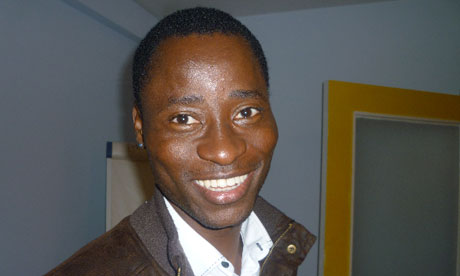
Bisi Alimi, from NigeriaBisi Alimi, from Nigeria (an IRMA member!)

In 2002, I was at university in Nigeria and standing for election. A magazine wrote about me and exposed me as being gay. This led the university to set up a disciplinary committee. I was very nearly dismissed. When I did graduate, people wanted to refuse me my certificate on the grounds that I did not have good enough morals to be an alumnus of the university. While this was going on, the then-president, Olusegun Obasanjo, declared that there were no homosexuals in Nigeria, and that such a thing would not be allowed in the country.

I talked with a friend of mine, who is a famous Nigerian talkshow host, about challenging this opinion. Nobody had come out publicly before. So, in October 2004, I appeared on her breakfast show, New Dawn with Funmi Iyanda". I talked about my sexuality, the burden of the HIV epidemic in the gay community.

The reaction was immediate and violent. I was subjected to brutality from the police and the community. I was disowned by my family and lost many friends, including in the gay community. They were afraid to know me. I was isolated, with no support and no job. The TV show was taken off the air by the government. It led to the introduction of the Same Sex Prohibition bill of 2006. All I had done was say who I was. Three years later I appeared on the BBC World Service. I repeated what I had said on television in Nigeria and suggested my government was using attacks on homosexuality to help cover up its own corruption.

On my arrival back to Nigeria, I was arrested, detained and beaten by the police. For a month, until I fled back to the UK in April 2007, my life was in constant danger.

Read the rest.


 [If an item is not written by an IRMA member, it should not be construed that IRMA has taken a position on the article's content, whether in support or in opposition.]

Calling all Women and Spanish Speakers- Please Take our Survey!


Dear Women and Spanish Speakers,

We need your help with our Rectal Douching and Enema Survey! IRMA and researchers at the University of California, Los Angeles (UCLA) School of Public Health are conducting a brief survey to help us better understand the types of products people use rectally for anal sex including lubricants and enemas or douches. We are trying to gain a better understanding of rectal practices and behaviors that may affect the risk for sexually transmitted infections among people who practice anal intercourse. It is a brief survey (takes less than fifteen minutes) and is completely anonymous.

We have been running this survey for about a month now, and the participation level has been high. However, of the hundreds of responses we have received, less than 10% have been from women! We need more feedback on these anal products from women! We are asking you, ladies, to please take our survey or forward it to anyone you know who may be interested. Women’s opinions and experiences matter in all things anal, and we desperately want to take them into consideration so that women can be better protected from sexually transmitted infections.

Also, with many thanks to IRMA's chapter based in Lima, Peru, we now have a Spanish translation of the survey available! So IRMA blog followers, please forward the survey to anyone you may know who needs the Spanish translation. Thanks IRMA-ALC Lima!

You can click here for the survey or on the "Rectal Douching & Enenma Survey" logo at the top of the page. Thanks again for all of your help!


IRMA's next teleconference: Yes, Africa Needs Rectal Microbicides - 9/27

Yes, Africa Needs Rectal Microbicides
Tuesday, September 27, 2011, 10:00 EDT

(click here to determine the time in your area)

Please join IRMA and AVAC with our special guest Dr. Salim Abdool Karim (Slim.)

Slim is a clinical infectious diseases epidemiologist whose main current research interests are in microbicides and vaccines to prevent HIV infection and implementing antiretroviral therapy in resource constrained settings. He is Pro Vice- Chancellor (Research) at the University of KwaZulu-Natal in Durban, South Africa and is also Professor of Clinical Epidemiology at the Mailman School of Public Health at Columbia University and Adjunct Professor of Medicine at the Weill Medical College of Cornell University. He is Director of CAPRISA - Centre for the AIDS Programme of Research in South Africa.

Slim did a fantastic presentation at the Microbicides 2010 called "Does Africa Need a Rectal Microbicide" and the data he shared revealed the answer to be a resounding "YES!" He will be doing an updated version of this presentation on our call.

Additionally, IRMA's Jim Pickett will discuss Project ARM - Africa for Rectal Microbicides. Project ARM is hosting a 2-day strategy meeting at the ICASA 2011 conference in Ethiopia this December. The 40 invited participants and speakers will be working on crafting an African-specific agenda for rectal microbicide advocacy and research that ensures Africa remains on the rectal microbicide map, and that all Africans who need rectal microbicides have access to them when they become available.

Click here to RSVP. Check back here in advance of the call for presentation slides. An audio recording of the call will be made available shortly after its completion.


[If an item is not written by an IRMA member, it should not be construed that IRMA has taken a position on the article's content, whether in support or in opposition.]

You are Invited - IRMA Teleconference - Lube Access - A Global Challenge


Lube Access - A Global Challenge
Monday, August 29, 2011, 1200 EDT

(click here to determine the time in your area)


Please join IRMA, AVAC and partners from PSI, Johns Hopkins, and the Global Forum on MSM and HIV as we discuss lube access in the global context - highlighting the needs, gaps, and challenges, as well as efforts underway to address them.

Click here to RSVP. Check back here in advance of the call for presentation slides. An audio recording of the call will be made available shortly after its completion.

The call's proposed agenda is as follows:
  • Welcome and introduction

  • Stefan Baral (Johns Hopkins): Lube access in Africa among MSM

  • Beth Skorochod (PSI): PSI's work as a distributor of SRHR commodities, specifically lube distribution in developing countries

  • Pato Hebert (MSMGF): Lube-related information from the 2010 MSMGF global survey on HIV prevention and social norms

  • Jim Pickett (IRMA): The importance of addressing lube access now to prepare for eventual rectal microbicide access

  • Q&A, Discussion


Click here to RSVP.

[If an item is not written by an IRMA member, it should not be construed that IRMA has taken a position on the article's content, whether in support or in opposition.]

IRMA and AIDS Leaders Press Feds for Action on Promising New Prevention Tool

Just months after an AIDS drug demonstrated reasonable efficacy in preventing HIV infection in controlled clinical trials, seven leading AIDS organizations are urging the U.S. government to act quickly to determine if the results could translate to the real world.   Today, at an HIV prevention meeting hosted by the U.S. Centers for Disease Control and Prevention (CDC), the coalition of AIDS advocates called on officials from the U.S. Department of Health and Human Services (HHS) to address the shortage of funding and coordination around a new prevention approach known as pre-exposure prophylaxis (PrEP).

“HIV estimates released by the CDC two weeks ago—showing that new HIV infections have risen nearly 50 percent in young black gay men since 2006—make it clear that the status quo is failing to keep the epidemic in check,” said David Evans, director of research advocacy at Project Inform. “PrEP could be one of the more promising new options we have to offer young HIV-negative gay men at the highest risk of infection in the U.S., but until we expand PrEP programs in real-world settings we won’t be able to translate the trial results into public health impact.”

PrEP involves HIV-negative people taking antiretroviral medication before exposure to the virus to prevent infection.  Three clinical trials have demonstrated that when used consistently, PrEP is both safe and effective at preventing HIV infection, but it’s unknown if and how results apply outside of clinical trials.  Activists are urging the U.S. government to move quickly to fund and coordinate demonstration projects to evaluate PrEP in the real word and determine the best ways to use it.

“We are at a pivotal moment in HIV prevention, and what happens next hinges on a swift, coordinated effort to understand how PrEP can be used effectively by people at highest risk for infection,” said Dr. Judy Auerbach, vice president of research and evaluation at San Francisco AIDS Foundation.  “If we do too little, or the demonstration projects aren’t properly designed, there’s a real danger that we could lose the promise of one of the most important scientific breakthroughs in HIV prevention.”

Two PrEP demonstration projects are near launch, and others are under discussion, but funding remains uncertain and participating medical providers and institutions are not being coordinated. The groups issuing the call to action request that HHS respond rapidly to ensure that coordination takes place and that the projects with the highest likelihood of answering key research questions are fully funded.  These questions include the feasibility, desirability, uptake, and effectiveness of PrEP in different settings, among others.

“We cannot be content with budget constraints and calls to do more with less,” said Mitchell Warren, AVAC executive director. “Science has given us new ways to potentially significantly blunt the epidemic in the U.S. and around the world. We have an obligation to push to find the best ways to use antiretroviral drugs as prevention – both for HIV-positive people to reduce their risk of passing on HIV to others and for HIV-negative people to protect themselves. The U.S. government and other funders must move quickly to ensure the availability of resources for the essential next steps for PrEP, including demonstration projects and continued research.”

The call to action was issued by Project Inform, along with the AIDS Foundation of Chicago, AIDS United, amfAR: the Foundation for AIDS Research, AVAC: Global Advocacy for HIV Prevention, the Black AIDS Institute, the International Rectal Microbicide Advocates, National Alliance of State & Territorial AIDS Directors, the National Minority AIDS Council and the San Francisco AIDS Foundation.  It’s accompanied by a report called “PrEP: Roadmap to the Real World,” in which advocates detail key questions to be answered in demonstration projects.


[If an item is not written by an IRMA member, it should not be construed that IRMA has taken a position on the article's content, whether in support or in opposition.]

How do you douche?

TOOT TOOT HEY BEEP BEEP!

IRMA has teamed up with UCLA on another survey - this one on the very exciting and super relevant topic of rectal douching and enemas.

The survey is now available in English.

IRMA and researchers at the University of California, Los Angeles (UCLA) School of Public Health are conducting a brief survey to help us better understand the types of products people use rectally for anal sex including lubricants and enemas or douches.

We are trying to gain a better understanding of rectal practices and behaviors that may affect the risk for sexually transmitted infections among people who practice anal intercourse. We hope you will fill out this brief anonymous survey (estimated time to complete: less than 15 minutes).

Spanish, French, Portuguese, Chinese and Russian versions of the survey are in the works now. Watch this space - we will let you know when they are ready.

In the meantime, please take the survey in English if appropriate, and share this link widely. Thanks!


[If an item is not written by an IRMA member, it should not be construed that IRMA has taken a position on the article's content, whether in support or in opposition.]

Project ARM: John Shaw Memorial Scholarship Call for Application

Project ARM—Africa for Rectal Microbicides—is a long-term, sustained project which aims to develop community capacity around rectal microbicide advocacy in order to ensure broad participation in research activities and well-informed community input into the development of an African rectal microbicide agenda. The end goal is enhanced rectal microbicide advocacy in Africa as well as the planning and implementation of rectal microbicide trials on the continent. Project ARM is coordinated by International Rectal Microbicide Advocates (IRMA). First year funding for Project ARM has been secured from the United States National Institutes of Health – Office of AIDS Research and the New Venture Fund. AVAC is also partnering with IRMA on this initiative.

Project ARM evolved from discussions initiated by IRMA through its listserv, and from input received from African advocates and partners at two informal meetings held in conjunction with the Microbicides 2010 (Pittsburgh) and AIDS 2010 (Vienna) conferences. A working group was formed following the Microbicides 2010 meeting, and has guided this process ever since. There are now 60 working group members including advocates and community members, researchers, funders and policy-makers from 10 African countries, as well as a few key international partners.

In order to develop an African rectal microbicide agenda that articulates research, advocacy and community mobilisation strategies, IRMA is hosting a working meeting on 2-3 December 2011 in Addis Ababa as part of Project ARM. This invite-only meeting is taking place prior to the 16th International Conference on AIDS and STIs in Africa (ICASA, December 4–8), and is considered an official satellite session.

PLEASE NOTE: This is a working meeting—not a workshop, nor a conference.

The objectives of the December working meeting are:
  • To promote a common understanding of how rectal microbicide (RM) research and advocacy is proceeding, the potential role that African RM research and advocacy could play, and the various African contexts within which RMs would be introduced.

  • To enhance the capacity of African community advocates to participate in RM agenda-setting, research and mobilisation efforts.

  • To stimulate strategies for African community mobilization around RMs; to put RMs on the research agenda in Africa; and, to develop an African RM research agenda that is part of a global RM research agenda.


AIMS OF THE SCHOLARSHIP PROGRAMME 
  1. To strengthen research literacy and advocacy capacity amongst IRMA membership in Africa

  2. To promote and enhance the role and standing of IRMA within the microbicide community in Africa

  3. To facilitate the involvement of well-informed and active members of the African research and advocacy communities in the development of an African rectal microbicides agenda

  4. To ensure diversity in participation at the meeting, including from researchers and community members, women and men, gay men and other men who have sex with men, people living with HIV, and different regions of Africa

We are covering the travel costs of more than 30 of the 40 meeting participants—most of which are Africans—including speakers, organisers, invited guests, and key partners. This includes an additional 12 scholarships for Africans through this call for applications.

For more information, please send an email to rectalmicro@gmail.com.

[If an item is not written by an IRMA member, it should not be construed that IRMA has taken a position on the article's content, whether in support or in opposition.]

ICASA 2011: The 16th Annual International Conference on AIDS and STIs in Africa


IRMA's Project ARM is is a project with the goal of expanding African mobilization and enhancing community capacity around rectal microbicide advocacy, eventually hoping to aid the development of an African rectal microbicide agenda through community participation. IRMA and Project ARM are going to be at ICASA - the 16th annual International Conference on AIDS and STIs in Africa - this December in Ethiopia - are you?
---

Who? IRMA, Project ARM, and thousands and thousands of other advocates from all over Africa and the world. YOU too!

What? The theme for this year's conference is OWN, SCALE-UP & SUSTAIN.

Where? Addis Ababa, Ethiopia

When? 4-8 December 2011

Why? Register to impart your knowledge, experience and best practices on HIV, AIDS and STIs; call up all players to raise ownership, commitment and support; and get your voice heard in an international platform.

 [If an item is not written by an IRMA member, it should not be construed that IRMA has taken a position on the article's content, whether in support or in opposition.]

Rectal Microbicides at the IAS

There wasn't a ton of rectal microbicide coverage at the recent IAS in Rome, but here is some content from the conference on this topic.


Acceptability of potential rectal microbicide delivery mechanisms for HIV prevention
Abstract
Slides/Audio


Acceptability of microbicides and other new prevention technologies among MSM in Greater Buenos Aires, Argentina
Poster

Mobilizing MSM community in Nigeria to support rectal microbicides development (the author is Kadir Audu, head of IRMA Nigeria and Community Vice Chair on the IRMA Steering Committee.)
Abstract


[If an item is not written by an IRMA member, it should not be construed that IRMA has taken a position on the article's content, whether in support or in opposition.]