Pages

Tampilkan postingan dengan label homophobia. Tampilkan semua postingan

Kenyan ex-pat (and IRMA Steering Committee Member) aims to help gay countrymen

[We are so proud of IRMA Steering Committee Larry Misedah - shown on the left in the pic below. His compelling story is a must-read. Of note, Larry will be joining a group of IRMA members in Addis Ababa this December for Project ARM - Africa for Rectal Microbicides organizing and strategizing activities taking place in advance of the ICASA 2011 conference.]


via Bay Area Reporter, by Heather Cassell

Excerpt:

Until recently, Kenyan LGBT individuals were isolated, believing they were the only ones in their community; some expressed the desire to take their own lives, said Misedah. Older gay and lesbian individuals were forced to marry people of the opposite sex. Younger queer Kenyans felt comfort from their problems with alcohol, said Misedah, who also felt the cold hand of isolation until he came out.

Coming out liberated Misedah, he no longer suffered from the isolation and instead became a beacon for others.

"I felt sort of obliged in order to speak for those who did not have a voice," said Misedah. "I just felt that we needed to speak more and let the society know the challenges that LGBTI people were facing."

He worked first with Ishtar MSM, one of Kenya's first organizations to provide health services to men who have sex with men. He served as the spokesman for Sexual Minorities Uganda's first media campaign. Misedah, in collaboration with IGLHRC, drafted the first Declaration on Transgender Rights for Central and East Africa in 2007 and continued to work on capacity building in Africa with IGLHRC. He spoke at the African AIDS conference in 2009.

Misedah, among others, risked the threat of up to 14 years of imprisonment under Kenya's penal codes sections 162 and 165 for attempted or homosexual behavior under "carnal knowledge against the order of nature."

Misedah, who came from a well-to-do family, found himself banished from his family and cut off from his educational support at the university, where he eventually obtained his bachelor's degree in environmental planning and management, he said.

Usually, families look the other way in regards to their LGBT family members who have financial resources and contribute to their families. Poor queer Kenyans, however, often find themselves in "deep trouble," said Misedah.
Read the rest.


[If an item is not written by an IRMA member, it should not be construed that IRMA has taken a position on the article's content, whether in support or in opposition.]

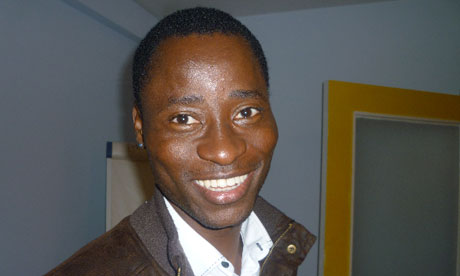
Persecuted for Being Gay

via The Guardian, stories compiled by Gay Middle East

Bisi Alimi, from NigeriaBisi Alimi, from Nigeria (an IRMA member!)

In 2002, I was at university in Nigeria and standing for election. A magazine wrote about me and exposed me as being gay. This led the university to set up a disciplinary committee. I was very nearly dismissed. When I did graduate, people wanted to refuse me my certificate on the grounds that I did not have good enough morals to be an alumnus of the university. While this was going on, the then-president, Olusegun Obasanjo, declared that there were no homosexuals in Nigeria, and that such a thing would not be allowed in the country.

I talked with a friend of mine, who is a famous Nigerian talkshow host, about challenging this opinion. Nobody had come out publicly before. So, in October 2004, I appeared on her breakfast show, New Dawn with Funmi Iyanda". I talked about my sexuality, the burden of the HIV epidemic in the gay community.

The reaction was immediate and violent. I was subjected to brutality from the police and the community. I was disowned by my family and lost many friends, including in the gay community. They were afraid to know me. I was isolated, with no support and no job. The TV show was taken off the air by the government. It led to the introduction of the Same Sex Prohibition bill of 2006. All I had done was say who I was. Three years later I appeared on the BBC World Service. I repeated what I had said on television in Nigeria and suggested my government was using attacks on homosexuality to help cover up its own corruption.

On my arrival back to Nigeria, I was arrested, detained and beaten by the police. For a month, until I fled back to the UK in April 2007, my life was in constant danger.

Read the rest.


 [If an item is not written by an IRMA member, it should not be construed that IRMA has taken a position on the article's content, whether in support or in opposition.]

Homophobia stymies HIV fight in Islamic countries


Stigma and homophobia against gay men is hampering efforts to manage a growing epidemic of HIV in Islamic countries, warn epidemiologists this week.

"The stigma is a barrier to HIV prevention services," says Laith Abu-Raddad of the Weill Cornell Medical College-Qatar in Doha. He heads up a team that is assembling, for the first time, data from the Islamic world on the growing prevalence of HIV in practising gay men.

They report that the arrival of HIV in the gay community has been relatively recent compared with other regions of the world, but warn that it is on the rise. In Pakistan, for example, the prevalence of HIV in transgender male sex workers rose from 0.8 per cent in 2005 to 6.4 per cent just three years later.

Historically, HIV epidemics have often begun in minority, high-risk groups such as men who have sex with men or intravenous drug users, then spread to the general population. A problem in much of the Islamic world is that men having sex with men is illegal. That, coupled with homophobia, hampers efforts to contain the virus by making gay men too scared to seek treatment, a pattern that has been seen in eastern European countries, India and sub-Saharan Africa.

Read the rest here.

[If an item is not written by an IRMA member, it should not be construed that IRMA has taken a position on the article's content, whether in support or in opposition.]

Former Ex-Gay Ugandan Man Now Regrets Past Homophobic Comments


A man who in 2009 renounced homosexuality at a public forum in Kampala has now told Behind the Mask that he regrets his previous actions and would like to be forgiven by the LGBTI community.

Saying that he felt “there is a fire in the belly saying gay is really who you are,” Mr George Oundo, known amongst Uganda’s LGBTI community as “Ms Georgina,” said that although he had renounced homosexuality on national media, at an opportune time he would ask the Kuchu community (Ugandan slang for LGBTI) to take him back.

Speaking on Wednesday July 27, 2011 to Behind the Mask outside the magistrate’s court in Kampala where three Christian evangelist preachers have been charged with making homophobic smears against a rival preacher, the now former ex-gay Oundo said he once again believed, “being gay is natural and inborn.”

The accused preachers, their lawyers, Henry Ddungu and David Kaggwa, together with David Mukalazi and Deborah Kyomuhendo (agents of the accused) face charges of conspiring to injure Pastor Robert Kayanja’s reputation by claiming that Kayanja sodomised boys in his church. The two lawyers are charged with allegedly commissioning false affidavits.

In March 2009 Oundo spoke at a Christian seminar and said he previously supported homophobic preacher Martin Sempa and legislator Mr David Bahati in their claims that homosexuals recruit children in schools and deserve the death penalty.

Speaking on Wednesday however, the now former ex-gay man said that he regrets the comments.

Looking sad, Mr Oundo, who once helped to establish an LGBTI human rights advocacy group in Kampala, said that although the preachers had given him some money and built him a house in Muyenga-Bukasa, a posh suburb of Kampala, he still had gay feelings. “I have never even become born again. I just do not want to be born again.”

Read the rest here.

[If an item is not written by an IRMA member, it should not be construed that IRMA has taken a position on the article's content, whether in support or in opposition.]

Homophobia in Ghana


Understanding the Drivers of Homophobia in Ghana


Recent condemnation of homosexuality by religious and political leaders in Ghana has led to a climate of fear preventing men who have sex with men (MSM) from accessing vital health services, say local NGOs.

The minister of Ghana’s Western Region, Paul Evans Aidoo, publicly described homosexuality as “detestable and abominable” after media reports in late May that 8,000 homosexuals had registered with health NGOs in the country’s west (the information appears to come from records kept by the NGOs of people who accessed services for MSM). Aidoo has since called for increased security in the region and the arrest of all homosexuals. Other religious leaders and politicians have followed suit, condemning homosexual activity.

As a result, far fewer MSM are accessing safe sex education and support programmes run by the Centre for Popular Education and Human Rights (CEPEHRG) to prevent the spread of HIV, said MacDarling Cobbinah from the Coalition against Homophobia in Ghana and a member of CEPEHRG.

“It has brought about a lot of fear and stigma for the people. It is difficult to organize programmes,” Cobbinah said. “It is very difficult for people to walk freely on the street… The call for arrest has really pushed people down.”

He added that one of his colleagues was recently accused of being gay and beaten up by a group of men.

Cobbinah said numbers had dropped at a regular HIV peer education programme that once had more than 20 people attending; two weeks ago only half the people came, and last week no one came, he told IRIN on 27 July. “They said, ‘If we come, we might be arrested.'”

An estimated 25 percent of Ghanaian MSM were HIV-positive in 2006, according to the US Agency for International Development (USAID).

According to the UN World Health Organization, since the beginning of the epidemic in the early 1980s, MSM have been disproportionately affected by HIV. The organization said social discrimination of MSM led them to delay or avoid seeking HIV-related information, care and services.

Other organizations in Ghana are also facing obstacles to providing vital services. An NGO based in the Western Region’s capital Sekondi-Takoradi, which distributes condoms and safe sex information to MSM, told IRIN that since Aidoo increased security and called for arrests they have felt threatened.

Male-to-male sexual relations are a crime in Ghana. Considered a misdemeanor, it carries a maximum sentence of six months, according to Kissi Agyabeng, a law lecturer at the University of Ghana. However, despite Aidoo’s calls for a crackdown, arrests do not yet appear to be taking place.

A spokesperson for the Sekondi-Takoradi NGO, who did not want his name or the organization’s name published for security reasons, said the NGO was now coming under pressure from the government to stop their work on HIV prevention if they did not reveal the names of MSM who have registered to use their services.

Stopping this work would affect thousands of people. In 2008, 2,900 people accessed their services, and by this year numbers had quadrupled, the spokesperson said.

...

Read the rest of the article here. For a fascinating personal story from a gay Ghanaian, read Paula Stromberg's article A Good Day in Ghana here.

[If an item is not written by an IRMA member, it should not be construed that IRMA has taken a position on the article's content, whether in support or in opposition.]

Survey reveals gaps in HIV programming for MSM

Via PlusNews.

A new global survey of more than 5,000 men who have sex with men (MSM) reveals a marginalized group of people with little access to basic HIV prevention tools such as condoms and few means to learn about HIV.

Conducted by the Global Forum on MSM & HIV between 24 June and 17 August 2010, the survey sought to highlight key gaps in global efforts to provide MSM with evidence-informed HIV prevention services. More than 1,000 of the study participants - drawn from all over the world - were health workers; 22 percent reported being HIV-positive.

The authors recommend expanding access to HIV prevention services for MSM across the globe, more focus on promoting awareness of emerging HIV prevention interventions and more robust and sustained stigma-reduction efforts. Some of the major findings of the survey include:

Access to health services - Fifty-three percent of participants said they could easily access testing for sexually transmitted infections, while 51 percent said they had easy access to HIV counseling; 47 percent found STI treatment easily accessible.

Just 36 percent of MSM surveyed reported having easy access to HIV treatment, while 27 percent said it was available but difficult to access, was not available or had never heard of HIV treatment.

Access to HIV prevention - Free condoms were easily accessible only to 44 percent of participants, while just 29 percent could obtain lubricant.

Just 30 percent of participants reported easy access to each of the basic HIV prevention services, including behavioural HIV/AIDS interventions, HIV education materials, mental health services, free or low-cost medical care, media campaigns focused on reducing HIV, and laws/policies to ensure access to HIV prevention.

Just 25 percent said they had access to sex education.

Stigma - Africa reported the highest levels of stigma and external homophobia, followed by the Middle East, Asia-Pacific, Central/South America and the Caribbean, which all reported similar levels of stigma. Australia and New Zealand reported the lowest levels of stigma and external homophobia.

MSM from Africa and the Asia-Pacific region reported the highest levels of internalized homophobia.

Read the rest here.

[If an item is not written by an IRMA member, it should not be construed that IRMA has taken a position on the article's content, whether in support or in opposition.]

New Guidelines on HIV Programming for MSM

Via IRIN.

HIV and gay rights activists say new guidelines released by the UN World Health Organization (WHO) on HIV programming for men who have sex with men (MSM) will not only improve health service provision for MSM, but will also act as an advocacy tool in the fight for the rights of this marginalized population.

"The document provides well-researched and evidence-based recommendations for HIV prevention and treatment of MSM, which will be useful for clinicians," said Kevin Rebe, a doctor with Health4Men, a South African health service provider which caters specifically for MSM. "The language of the paper is couched in human rights, and makes a strong call for decriminalization of same sex sexual activity, so it will also be useful for activists seeking to end discrimination."

The guidelines are designed for use by national public health officials and managers of HIV/AIDS and STI (sexually transmitted infections) programmes, NGOs and health workers. They contain MSM-specific programme activities such as the use of water- and silicone-based lubricant for the correct functioning of condoms during anal sex.

The guidelines do not advise medical male circumcision - a measure WHO recommends for HIV prevention among heterosexual men - for HIV prevention among MSM due to the lack of sufficient research on its effect of its use in MSM sexual activity.

They further recommend that health services adhere to the principles of medical ethics and the right to health, and ensure that MSM feel comfortable enough to seek medical care, with MSM-specific health needs catered for within national health systems.

"Like many other African countries, all men in South Africa are assumed to be straight, so health workers are not aware of the need to identify people of different sexualities during consultations; outside of centres like ours, there is little competency in providing health care to MSM," said Rebe. "By availing this knowledge, the guidelines will empower health workers to provide better care to MSM."


Wake-up call

In countries like Uganda, where homophobia is deeply entrenched both within society and the law, gay rights groups hope the new guidelines will serve as a wake-up call to the government about the need to include MSM in HIV programming.

"I hope the new guidelines will be an eye-opener to the government, who have so far ignored MSM within HIV prevention, treatment and support; it should show them that MSM exist in Uganda and are at high risk," said Frank Mugisha, executive director of the NGO Sexual Minorities Uganda. "They therefore cannot be ignored and urgently require HIV interventions."
 
Read the rest here.

[If an item is not written by an IRMA member, it should not be construed that IRMA has taken a position on the article's content, whether in support or in opposition.]

Gay sex became legal in India two years ago, but attitudes change slowly

via guardian.co.uk

The day the high court in Delhi ruled that being gay was no longer a crime was the day that Krishna Gurram Kouda finally came out to his family.

Despite having set up a state-wide network for gay men in Andhra Pradesh, the 39-year-old had never told his relatives about his sexuality. "I live with my parents," he explains as the fan above whirs in an ineffectual attempt to stave off the 40C Hyderabadi heat. "I have a good relationship with my brothers and their children." He looks at me. "I thought they would accept me," he pauses, "but I was a little afraid."

I first met Kouda in 2008 when I was reporting on how discrimination puts gay men at greater risk of HIV in Andhra Pradesh (which has one of India's highest rates of the virus) for the Guardian's international development journalism competition. At that time, section 377 of the Indian penal code made gay sex illegal, and strong social stigma drove gay men underground. Now the law has changed, I wanted to know whether their lives had also altered course.

For Krishna, the answer is yes. On the day of decriminalisation – 2 July 2009 – Krishna went public, spending hours on local TV and radio, talking about gay issues and rebutting religious leaders. When he got home at 10 o'clock that night, his mother and brother congratulated him. "You speak about your community's problems so well," they said, recognising for the first time that they knew he was gay. Since then, Krishna and Avinash, his partner of seven years, have received joint invitations to family parties and an annual couples-only Puja [prayer].

Read the rest.


[If an item is not written by an IRMA member, it should not be construed that IRMA has taken a position on the article's content, whether in support or in opposition.]

Ghana - Investigating "Growing Rate of Homosexuality"

via Ghana News

The Bureau of National Investigations (BNI) has begun investigations into the growing rate of homosexuality in the Western and Central regions, Western Regional Minister, Mr. Paul Evans Aidoo has revealed.

According to the minister, there is the need for a thorough investigation into what he terms a "social canker" which has contributed to the growing rate of HIV/AIDS in the country.

About eight thousand homosexuals were registered by non-governmental organization (NGOs) at a day’s workshop in the Western and some parts of the Central regions after they (homosexuals) underwent voluntary counseling and testing with majority of them infected with sexually transmitted diseases (STDs), including HIV/AIDS.

Read the rest.

[If an item is not written by an IRMA member, it should not be construed that IRMA has taken a position on the article's content, whether in support or in opposition.]

What the UN Can Learn from Gay Activism


via The Bay Area Reporter, by George Ayala

Many gay men and women have a deep and complicated relationship with the concept of omission. The choice to leave out information about our sexual orientation can be a useful strategy when faced with the potential for an awkward, painful, or violent situation. It placates sensitivities, prevents discord, and in some cases it saves our lives. However, it also preserves the status quo.

With such compelling reasons to bite our tongues, many of us choose silence as homophobia takes its toll around us. Lips sealed and hands tied, we watch in quiet pain as abuses are inflicted on our more visible kin. We become unwitting accomplices to those who wish to erase us. Realizing the effects of our own inaction, more and more of us have come to feel that this path of least resistance is not worth the violence and injustice it allows – and we speak up.

As the world prepares for the upcoming United Nations High Level Meeting on AIDS, taking place June 8-10 in New York, country missions at the UN are faced with a strikingly similar dilemma. With HIV rates among gay men skyrocketing across the globe, UN member states must decide how to present men who have sex with men in the meeting's final outcome document. They can appease anti-gay forces by omitting MSM entirely, or they can write MSM into their policies explicitly, no matter how polarizing the issue may be.

Read the rest here.

[If an item is not written by an IRMA member, it should not be construed that IRMA has taken a position on the article's content, whether in support or in opposition.]

Uganda Gay Death Bill May Return

via Mambaonline.com

Uganda's Anti-Homosexuality Bill and HIV Prevention and Control Bill are likely to be carried over to the new session of parliament, despite international and local pressure.

David Bahati, the Member of Parliament who introduced the Anti-Homosexuality Bill (2009), said he fully intended to re-introduce the bill into the next session. The new parliament began on 19 May.

"The closure of this parliament is just pressing on the pause button," he said. "I'm committed to the fight against behaviour and promotion of behaviour that is going to destroy the future of our children."

Men who have sex with men (MSM) are considered by the Uganda AIDS Commission to be a "most at-risk population", but because homosexual acts are illegal, there are no policies or services targeting HIV interventions towards them. AIDS activists say the bill would only drive an already stigmatised population further underground, leaving them even more vulnerable to HIV.

MSM are often referred to as a "bridging" population for HIV to the general population, given that many also have sex with women. According to a 2010 survey of 303 MSM in the capital Kampala by the US Centres for Disease Control, 78 percent had had sex with women while 31 percent had been married.

The study also found HIV prevalence among participants was 13.7 percent, significantly higher than the city's average rate of 8.5 percent; knowledge of the risks of HIV was also low.


Read the rest.


[If an item is not written by an IRMA member, it should not be construed that IRMA has taken a position on the article's content, whether in support or in opposition.]

Vietnam: Gay rights group tackles insensitive medical care

Doctors believed, for example, that becoming a homosexual was a fashion statement. They teased gay patients, and criticised anal sex despite training on gay issues, the survey revealed.
via VietNamNet

Nguyen Thanh Trung (not his real name), a gay man who lives in Ha Noi, was very upset by the way doctors discriminated against him when he was undergoing an anal health test in one of the city's many health clinics.

"The doctor told me to my face that having sex with men is not a natural act and asked me why I did it," Trung recalled.

"I was so upset that I left the clinic and will never return," he said.


Read the rest.


[If an item is not written by an IRMA member, it should not be construed that IRMA has taken a position on the article's content, whether in support or in opposition.]

<script type="text/javascript"><!--
google_ad_client = "ca-pub-4979705037097754";
/* 336x280,FreewarelistHome_B */
google_ad_slot = "3276839894";
google_ad_width = 336;
google_ad_height = 280;
//-->
</script>
<script type="text/javascript"
src="http://pagead2.googlesyndication.com/pagead/show_ads.js">
</script>
Percakapan Obrolan Berakhir
Adi sedang mengetik

The Caribbean: State-Sponsored Homophobia Helps Spread HIV

via Open Society, by David Scamell

A few weeks ago, civil society groups and human rights activists from across the Caribbean met with officials from UNAIDS, UNDP, and various national governments to talk about the impact that laws have on the HIV epidemic in the region. The meeting was the second regional dialogue of the UNDP Global Commission on HIV & Law, and was held in a region where a number of governments continue to use the law to persecute sexual and gender minorities.

According to the 2010 report from the International Lesbian and Gay Association, State-Sponsored Homophobia, 11 of the 13 Caribbean states criminalize sex between men. Under the continuous threat of imprisonment and police abuse, as well as discrimination from other citizens and even family members, gays and other men who have sex with men (MSM) in these countries are often driven away from the health and social services that they need. The same services, such as access to condoms and voluntary HIV testing and counseling, which are crucial in the fight against HIV.

Unsurprisingly, HIV among MSM is a relatively hidden but increasing problem for the Caribbean. In a region where the general adult HIV prevalence is second only to sub-Saharan Africa, at one percent of the population, infection among MSM is disproportionately high. For example, one in three MSM in Jamaica and one in five in Trinidad and Tobago are living with HIV.

Read the rest.

[If an item is not written by an IRMA member, it should not be construed that IRMA has taken a position on the article's content, whether in support or in opposition.]

IGLHRC Shocked at Possible Passage of Ugandan Anti-Homosexuality Bill; Rights Protections for All Ugandans Precarious


Press Release via IGLHRC

Contacts:

Cary Alan Johnson, Executive Director, IGLHRC (New York)
Tel: (347) 515 0330; Email: cjohnson@iglhrc.org

(New York, 6 May 2011) The International Gay and Lesbian Human Rights Commission is deeply concerned at reports that the now infamous Anti-Homosexuality Bill in Uganda may be passed by that country's Parliament. The Bill, first introduced in October 2009, was ostensibly "shelved" by Uganda's president Yoweri Museveni following an international outcry. However, public hearings on the Bill took place today in the Legal and Parliamentary Affairs Committee. The remaining stages of the legislative process – namely second and third readings of the bill and presidential adoption – could be completed within the remaining week of the current parliamentary session.

"We are shocked that after more than 2 years of engagement with the government of Uganda about the Anti-Homosexuality Bill, this heinous piece of legislation may still become law," said Cary Alan Johnson, IGLHRC Executive Director. "Governments, world religious and political leaders, and HIV prevention experts have all appealed to Ugandan parliamentarians to put their distaste and fear of LGBT people aside and use their better judgment for the good of the country."

The Bill reaffirms existing penalties for consensual same-sex relationships, and criminalizes the "promotion of homosexuality" and failure to report homosexual activity. The Parliamentary Committee itself has said that the provisions of the Bill are redundant and unnecessary. Most controversially, the Bill would punish "aggravated homosexuality" – including activity by "serial offenders" or those who are HIV positive – with the death penalty. To IGLHRC's knowledge, the provisions related to the death penalty remain part of the Bill, despite statements by the Bill's author that these would be removed. The Bill not only violates multiple protections guaranteed by the Constitution of Uganda, but also contravenes the African Charter on Human and People's Rights, the International Covenant on Civil and Political Rights (ICCPR), and other international human rights treaties to which Uganda is a party.

"There can be no reason to pass this Bill other than to take the attention of Ugandans – and the rest of the world – away from the fact that Uganda is slipping into political chaos," stated Johnson. "Clearly the issue of homosexuality is being used to deflect attention from the crackdown on democracy and freedom of speech that has led to at least 5 deaths, more than 100 injuries, and hundreds of arrests in the last month. IGLHRC stands firm with all the people of Uganda as they struggle to maintain their freedom and dignity."

See our previous work on Uganda

For more information, visit Uganda's Civil Society Coalition on Human Rights and Constitutional Law website


[If an item is not written by an IRMA member, it should not be construed that IRMA has taken a position on the article's content, whether in support or in opposition.]

LGBT activist talks challenges in Kenya

via Yale Daily News, by Mohammad Salhut

In Kenya, even some health workers who provide services to men who have sex with men are homophobic, LGBT activist Rachel Mandel said.

Mandel, a former employee for the International Center for Reproductive Health, spoke to 12 professors and graduate students in Luce Hall Wednesday about the difficulties of advocating for gay rights in Kenya through public health organizations.

While employees of these organizations aim to improve health standards for local communities, Mandel said often the employees do not support their patients’ sexual orientations and act in homophobic ways.
 
“The whole gay rights thing has a whole different place there than it does here,” she said.

Part of the problem, Mandel said, is the large chasm between what the administrators of non-profit organizations think is happening on the ground, and what is actually taking place.

Despite the organizations’ policies on equal treatment for patients, many employees at the two organizations Mandel worked for were “incredibly” homophobic, she said.

“The first time that I went I had tour of city of Mombasa by a staff member of ICRH,” she said. “At one point during the car ride he talked about homosexuality and referred to it as a psychological distortion. This same employee later became the head of the [Men who have sex with men] project.”

Read the rest.

[If an item is not written by an IRMA member, it should not be construed that IRMA has taken a position on the article's content, whether in support or in opposition.]

Human Rights Watch: US: Mississippi Policies Fuel HIV Epidemic

State’s Approaches Impede Access to Information, Prevention, Treatment

via Human Right Watch

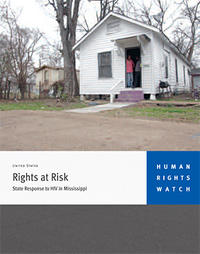
Thousands of Mississippians are at risk for HIV, and many who are infected are denied lifesaving measures and treatment because of counterproductive state laws and policies, Human Rights Watch said in a report released March 9. Mississippi has resisted effective approaches to HIV prevention and treatment and instead supported policies that promote stigma and discrimination, fueling one of the nation's highest AIDS rates, Human Rights Watch said.

The 59-page report, "Rights at Risk: State Response to HIV in Mississippi," documents the harmful impact of Mississippi's policies on state residents, including people living with HIV and those at high risk of contracting it. Mississippi refuses to provide complete, accurate information about HIV prevention to students and threatens criminal penalties for failing to disclose one's HIV status to sexual partners. At the same time, Mississippi provides little or no funding for HIV prevention, housing, transportation, or prescription drug programs for people living with HIV, and the state fails to take full advantage of federal subsidies to bolster these programs. In Mississippi, half of people testing positive for the virus are not receiving treatment, a rate comparable to that in Botswana, Ethiopia, and Rwanda.

Read the rest.

[If an item is not written by an IRMA member, it should not be construed that IRMA has taken a position on the article's content, whether in support or in opposition.]
Kenya: How discrimination is a barrier to good health

via guardian.co.uk

Complex issues, such as health and poverty, are often best illustrated by following individuals and showing how the issues affect their lives. That is why the Guardian is producing a series of films about some of the global issues that feature in Christian Aid's manifesto for change, Poverty Over.

The first film – on sexuality-based discrimination, human rights and HIV in Kenya – is available to view here on the Guardian's Christian Aid website from Monday. Same-sex relationships are illegal in the country, but prejudice and fear about them go far deeper than that. This film shows how hatred has a negative impact on the health of gay people in Kenya.

Anti-gay feeling is common in Kenya. Some politicians, religious leaders and sections of the media have stirred up this hatred. In November last year, for instance, the prime minister, Raila Odinga, called for a nationwide crackdown on gay people. Odinga ordered the police to arrest anyone found having sex with someone of the same gender and said that the country's constitution made it clear that homosexual activity was not to be tolerated.

This has obvious implications for men who have sex with other men, as they are often unable to access care if they become infected with HIV. Clinics that are known to treat gay men are threatened, medical practitioners may be unwilling to help them, they are often isolated and unable to access any kind of information. Many of these men are married, and risk infecting their wives with HIV.

The red-light areas of large cities in Kenya also show that, despite the rhetoric, there is a thriving gay sex industry. Many of the male sex workers have been thrown out of their family homes for their sexuality; they report that they are often compelled by clients to have sex without condoms.

Yet a growing gay community, and some inspiring gay rights and HIV activists, are doing their best to ensure that more people in Kenya are made aware of safer sex, condoms are made available, and prejudice against men who have sex with other men is addressed.

To find out more, view the film online from Monday, March 14. The site also has other interesting content that will engage, outrage, inspire and inform you, including Thursday webchats (1pm-2pm) when you can post questions for Christian Aid advisers. Additional films will be uploaded every week.

Source.

[If an item is not written by an IRMA member, it should not be construed that IRMA has taken a position on the article's content, whether in support or in opposition.]
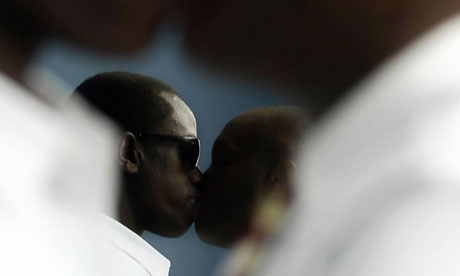
New Report: World’s Premier AIDS Event Neglects Populations Most at Risk for HIV

 via Global Forum on MSM and HIV

Independent assessment indicates severe underrepresentation of gay men, transgender people, sex workers and people who use drugs at the biennial International AIDS Conference

A new report indicates that the International AIDS Conference (IAC), a biennial event convened by the International AIDS Society (IAS) that has become the world’s premier gathering for people working in the field of HIV, suffers from gross underrepresentation of populations most at risk for HIV infection, including men who have sex with men (MSM), transgender people, sex workers and people who use drugs.  The independent audit, conducted by the Global Forum on MSM & HIV (MSMGF), confirms suspicions long-held by activist groups and calls for a comprehensive review of IAC governing structures.

Produced in response to growing concern among community groups that the IAC has repeatedly neglected these key populations, the report focuses on program content at the most recent IAC, held in Vienna, Austria in July 2010.  The analysis reveals that the percentage of all sessions at the conference exclusively focused on these groups was limited to 2.6% for MSM, 1.1% for transgender people, 3% for sex workers and 4.5% for people who use drugs.

“While the International AIDS Society turns a blind eye, HIV rates among these populations continue to climb around the world,” said Dr. George Ayala, Executive Officer of the MSMGF.  “The IAC is the world’s most important opportunity for international exchange and collaboration on HIV and AIDS.  Such abysmal representation of most-at-risk groups only serves to reinforce the invisibility, discrimination and disregard that drive the epidemic among these communities.”

Research has shown that these four populations are at higher risk for HIV infection than the general population in nearly every country context where reliable data exist.  MSM represent more than a quarter of HIV infections in Latin America and the Caribbean, people who inject drugs account for more than half of HIV infections in Eastern Europe,  and sex workers across Sub-Saharan Africa experience HIV prevalence rates of up to 50%.  Infection rates among transgender people in El Salvador, Indonesia and India are as high as 25%, 35%, and 42% respectively. 

The IAC takes place in a different city every two years, gathering tens of thousands of experts and advocates from around the world to share the field’s most recent developments and engage in strategic collaboration.  The most recent conference hosted an estimated 25,000 people.

“Ostensibly, the IAC offers chances for local healthcare providers to learn ways to improve their services, provides channels for advocates to engage in dialogue with powerful decision-makers, and creates opportunities for community members to shape global funding and research agendas,” said Dr. Mohan Sundararaj, Policy Associate at the MSMGF.  “This really is a phenomenal platform, but how useful can it be when those who need it most are locked out?”

The report recommends a number of steps to bring the IAC’s program coverage of these key populations up to a level proportionate to their epidemiological burden.  Among these recommendations are efforts to ensure transparent processes for abstract review and program design, the development of targeted support to authors developing abstracts focused on key populations, and open representation of civil society on the committees responsible for developing conference programs.

“The International AIDS Conference has unparalleled potential to impact the global AIDS epidemic,” said Dr. Ayala.  “It is incumbent upon the organizers to ensure that the IAC becomes a vehicle for change, shifting the global landscape so that funding, research and programs are directed to those who need them most.  Right now it’s part of the problem.”

[If an item is not written by an IRMA member, it should not be construed that IRMA has taken a position on the article's content, whether in support or in opposition.]

Uganda: Closet homosexuals sink further under the radar after Kato’s death

via Daily Monitor, by John K. Abimanyi

He sits at a table with his fingers encircled around the tail of a glass filled with Smirnoff. He is at a Kampala nightspot and has dissolved into the crowd, looking just like any other reveller. What most people at the bar would not know however, is that he, plus a couple of his colleagues at the venue, is homosexual. He demands that his identity is hidden if he is to be quoted in the papers instead; he proposes a pseudonym, Alan Mukasa.

He gives off no signs that he is gay. He’s not dressed in a tight fitting pair of jeans, commonly known as skinnies, his hair is a natural un-treated neatly trimmed black, he has no studs or earrings, wears no make-up or anything that may attract undue attention to him. “It’s a security precaution one has to take,” he says. “The best way to hide is to fit in.

Read the rest.

[If an item is not written by an IRMA member, it should not be construed that IRMA has taken a position on the article's content, whether in support or in opposition.]

LGBT Africans Face Blackmail and Extortion on a Regular Basis

via International Gay and Lesbian Human Rights Commission

Antiquated laws against same-sex sexual activity as well as deeply ingrained social stigma result in the all-too-frequent targeting of lesbian, gay, bisexual and transgender (LGBT) people in Africa for blackmail and extortion, said the International Gay and Lesbian Human Rights Commission (IGLHRC) in a report launched today.

The report, Nowhere to Turn: Blackmail and Extortion of LGBT People in Sub-Saharan Africa, illustrates how LGBT Africans are made doubly vulnerable by the criminalization of homosexuality and the often-violent stigmatization they face if their sexuality is revealed. Based onresearch from 2007 to the present, the volume features articles and research by leading African activists and academics on the prevalence, severity and impact of these human rights violations on LGBT people in Cameroon, Ghana, Malawi, Nigeria, and Zimbabwe.

"The tragic reality is that blackmail and extortion are part of the daily lives of many LGBT Africans who are isolated and made vulnerable by homophobic laws and social stigma," says IGLHRC's Executive Director, Cary Alan Johnson. "The responsibility clearly lies with governments to address these crimes and the underlying social and legal vulnerability of LGBT people."

The report's authors vividly depict the isolation, humiliation and manipulation to which LGBT people are subjected by blackmailers and extortionists and describe the threats of exposure, theft, assault, and rape, that can damage and even destroy the lives of victims. Vulnerability to these crimes is faced on a regular basis and families and communities are not safe havens. For example, according to research conducted in Cameroon and featured in the report, "the bulk of blackmail and extortion attempts were committed by other members of the community - 33.9% by neighbors, 11.8% by family members, 11.5% by classmates, and 14.1% by homosexual friends. Police were often complicit in this - either by ignoring or dismissing it or, in 11.5% of cases, directly perpetrating it."

Nowhere to Turn explores the role the State plays in these crimes by ignoring blackmail and extortion carried out by police and other officials by failing to prosecute blackmailers, and by charging LGBT victims under sodomy laws when they do find the courage to report blackmail to the authorities.

IGLHRC urges States to take concrete steps to reduce the incidence of these crimes by decriminalizing same-sex sexual activity, educating officials and communities about blackmail laws, and ensuring that all people are able to access judicial mechanisms without prejudice.

A PDF version of Nowhere to Turn is available here. To obtain a hard copy of the volume, email iglhrc@iglhrc.org

[If an item is not written by an IRMA member, it should not be construed that IRMA has taken a position on the article's content, whether in support or in opposition.]