Pages

Tampilkan postingan dengan label Pakistan. Tampilkan semua postingan

Why the CIA's Vaccine Ruse Is A Setback for Global Health


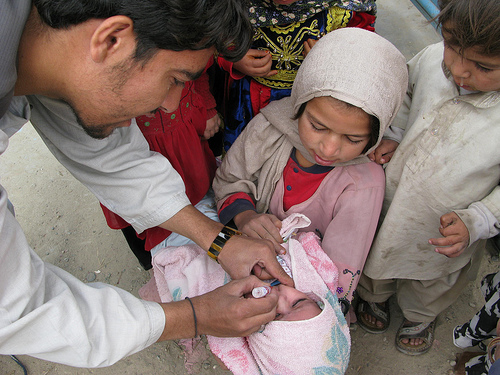
Last week, the Guardian broke the news that in the run-up to the raid on Osama bin Laden's compound, the CIA used a vaccination campaign as a ruse to get DNA evidence from the al-Qaeda leader's kids. With help from a Pakistani doctor, Shakil Afridi, they set up clinics in two neighborhoods, delivering doses of the Hepatitis B vaccine to local children. The revelation drew a quick and angry response from health experts. Medecins Sans Frontieres called the operation "a dangerous abuse of medical care." In the Washington Post, Orin Levine and Laurie Garrett warned that the CIA's "reckless tactics could have catastrophic consequences."

Indeed, they may. Here are three reasons why this is bad news for public health:

1. Broken Trust
When people don't trust medical personnel, they're less likely to participate in legitimate public health campaigns. Eight years ago, rumors spread that an anti-polio campaign in Nigeria was an American plot to sterilize Muslim girls, causing many families to refuse the vaccine. The subsequent outbreak spread to eight countries.

Read the rest here.

[If an item is not written by an IRMA member, it should not be construed that IRMA has taken a position on the article's content, whether in support or in opposition.]

Homophobia stymies HIV fight in Islamic countries


Stigma and homophobia against gay men is hampering efforts to manage a growing epidemic of HIV in Islamic countries, warn epidemiologists this week.

"The stigma is a barrier to HIV prevention services," says Laith Abu-Raddad of the Weill Cornell Medical College-Qatar in Doha. He heads up a team that is assembling, for the first time, data from the Islamic world on the growing prevalence of HIV in practising gay men.

They report that the arrival of HIV in the gay community has been relatively recent compared with other regions of the world, but warn that it is on the rise. In Pakistan, for example, the prevalence of HIV in transgender male sex workers rose from 0.8 per cent in 2005 to 6.4 per cent just three years later.

Historically, HIV epidemics have often begun in minority, high-risk groups such as men who have sex with men or intravenous drug users, then spread to the general population. A problem in much of the Islamic world is that men having sex with men is illegal. That, coupled with homophobia, hampers efforts to contain the virus by making gay men too scared to seek treatment, a pattern that has been seen in eastern European countries, India and sub-Saharan Africa.

Read the rest here.

[If an item is not written by an IRMA member, it should not be construed that IRMA has taken a position on the article's content, whether in support or in opposition.]

Narrow Window To Avert HIV Epidemics Among MSM in Middle East and North Africa

Via AIDSMap, by Michael Carter.

HIV epidemics are emerging among men who have sex with men (MSM) in a number of Middle Eastern and North African countries, an international team of investigators report in the online journal PLoSMedicine.

Prevalence of HIV was as high as 28% among some populations of MSM in Pakistan, and in 2008 over 50% of new HIV infections in Lebanon were in men who reported anal sex with another man.

High levels of risk behaviour in many countries suggested that there was the potential for further spread of HIV.

Alarmed by their findings, the investigatorssuggest “there is an urgent need to expand HIV surveillance and access to testing, prevention, and treatment services in a rapidly narrowing window of opportunity to prevent the worst of HIV transmission among MSM in the Middle East and North Africa.”

Worldwide, MSM are one of the groups most affected by HIV. The epidemic in most industrialised countries is focused on MSM, and research conducted in sub-Saharan Africa has found evidence of large but generally hidden MSM epidemics. Moreover, epidemics in MSM are well established and growing in Latin America and South East Asia.

In contrast, little is known about the MSM HIV epidemic in Middle Eastern and North African countries. Sex between men is often highly stigmatised in this setting, and in five countries homosexuality is punishable by death.

Given this lack in knowledge, a team of investigators lead by Dr Ghina Mumtaz undertook a systematic literature review to gain a better understanding of the HIV prevalence in MSM, their risk behaviour and knowledge of HIV in 23 North African and Middle Eastern Countries.

The authors believe their study “provides an integrated analysis and synthesis of the evidence to address the gap in our knowledge of what could potentially materialise as the key risk group for HIV sexual transmission in this region in the next decade.”

A total of 26 studies were included in the investigators’ analysis. They defined MSM as men who had insertive or receptive anal sex. However, the researchers emphasised that there was a huge diversity in MSM self-identity, role and behaviour in the region.

Overall, the prevalence of MSM behaviour was consistently between 2-3%. However, in some populations such as truck drivers (9%-49%) or street children (15%-77%) it was considerably higher.

Read the rest here.

[If an item is not written by an IRMA member, it should not be construed that IRMA has taken a position on the article's content, whether in support or in opposition.]

At Risk: Sex, HIV and the Community in Pakistan

[Thanks to the Global Forum on MSM and HIV for putting this on our radar.]

via Newsline, by Huma Khawar

Around 15 years of age, clad in a dirty shalwar kameez, the boy walks around the park, zeroes in on a customer and having struck the deal, takes him to the filthy public toilet located on the premises. The ‘transaction’ takes a few minutes and the boy is out looking for his next client. He makes 30 to 50 rupees per job and in one day he can service several customers – and all of this unprotected sex.

Wearing a green shalwar kameez, kajal on her eyes, sporting bright pink thickly applied lipstick, painted nails and dangling earrings, Anmol, the transgender beggar in Jinnah Super Market greets me with a wide smile. “Baji aaj tu kuch dey do. Itney din baad ayee ho.” Anmol is not the only one of her ilk here. Over the past one year there has been a huge influx of transgender people (hijras) on the streets, in market places and in the public parks of all major cities, where they actively ply their trade – usually one that places them on the fringe of society.

“People perceive transgenders as sex workers, beggars or dancers. Unfortunately that isn’t too far from the truth. A lack of education and employment opportunities forces them to make their living in these ways,” says Sarah Gill, a transgender medical college student in Karachi, who is actively working for transgender peoples’ rights and to end the violence and discrimination faced by them. Gill is president of the Moorat Interactive Society (MIS) and general secretary of the Gender Interactive Alliance (GIA). “There is no acceptance for our community in society. We are a symbol of shame even for our blood relations,” says Gill, who launched the first helpline for transgender people in Pakistan and is working to bring them from being a marginalised community into the mainstream, by creating an enabling environment in which “they can be treated like, and have the same rights as, males in our society.”

Read the rest.

[If an item is not written by an IRMA member, it should not be construed that IRMA has taken a position on the article's content, whether in support or in opposition.]