Pages

Tampilkan postingan dengan label public health. Tampilkan semua postingan

Why the CIA's Vaccine Ruse Is A Setback for Global Health


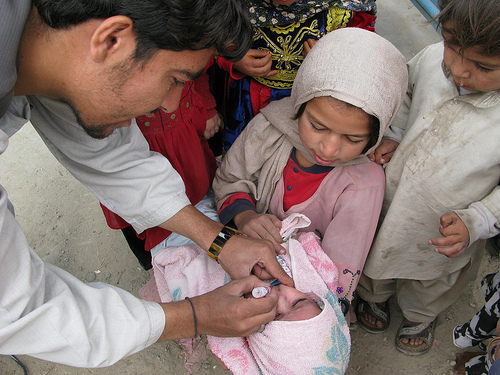
Last week, the Guardian broke the news that in the run-up to the raid on Osama bin Laden's compound, the CIA used a vaccination campaign as a ruse to get DNA evidence from the al-Qaeda leader's kids. With help from a Pakistani doctor, Shakil Afridi, they set up clinics in two neighborhoods, delivering doses of the Hepatitis B vaccine to local children. The revelation drew a quick and angry response from health experts. Medecins Sans Frontieres called the operation "a dangerous abuse of medical care." In the Washington Post, Orin Levine and Laurie Garrett warned that the CIA's "reckless tactics could have catastrophic consequences."

Indeed, they may. Here are three reasons why this is bad news for public health:

1. Broken Trust
When people don't trust medical personnel, they're less likely to participate in legitimate public health campaigns. Eight years ago, rumors spread that an anti-polio campaign in Nigeria was an American plot to sterilize Muslim girls, causing many families to refuse the vaccine. The subsequent outbreak spread to eight countries.

Read the rest here.

[If an item is not written by an IRMA member, it should not be construed that IRMA has taken a position on the article's content, whether in support or in opposition.]

CDC Provides Recommendations for Zombie Apocalypse

via The Seattle Times

Pity poor Tom Skinner, a top spokesman for the Centers for Disease Control and Prevention (CDC) who has been valiantly trying to interest reporters in a new study in the agency's Morbidity and Mortality Weekly Report trumpeting "10 Great Public Health Achievements."

Unfortunately for Skinner, over at his agency's public-health blog, his colleagues were posting something that really got to the beating heart of morbidity and mortality: the first official CDC instructions on coping with a zombie apocalypse.

Yes, that's right. With a straight face, the normally staid health agency had posted a primer on how to prepare for an invasion of the brain-eating undead.

"So what do you need before zombies ... or hurricanes or pandemics, for example, actually happen?" the post said. "First of all, you should have an emergency kit in your house. This includes things like water, food and other supplies to get you through the first couple of days before you can locate a zombie-free refugee camp."

Read the rest.

[If an item is not written by an IRMA member, it should not be construed that IRMA has taken a position on the article's content, whether in support or in opposition.]

Kenya: Counselling, not alarm device, had best effect on ART adherence

Via aidsmap, by Carole Leach-Lemens

Patients in Nairobi, Kenya getting intensive early adherence counselling when starting antiretroviral therapy were 29% less likely to have poor adherence and 59% less likely to have virological failure compared to those getting no counselling Michael H Chung and colleagues reported in a randomised, controlled trial published in the March issue of PLoS Medicine.

The positive effects of counselling on adherence were seen immediately after starting antiretroviral therapy and maintained throughout the18 month follow-up period. Use of an alarm device had no effect on adherence or virological outcomes. Public health concerns that scale-up of antiretroviral treatment in sub-Saharan Africa would lead to poor adherence and widespread drug resistance have been proven wrong, note the authors.

The authors conclude “as antiretroviral treatment clinics expand to meet an increasing demand for HIV care in sub-Saharan Africa, adherence counselling should be implemented to decrease the development of treatment failure and spread of resistant HIV.”

Read the rest

[If an item is not written by an IRMA member, it should not be construed that IRMA has taken a position on the article's content, whether in support or in opposition.]

HIV/AIDS: UNAIDS, activists urge countries to get clever with TRIPS

Via PlusNews

UNAIDS has released a new policy brief to help countries make intellectual property rights work for them, amid growing concern that an impending free trade agreement between the European Union (EU) and India could threaten the world's supply of generic antiretroviral (ARV) drugs.


The World Trade Organization's Trade Related Aspects of Intellectual Property Rights (TRIPS) allows countries to override patents - for public health purposes - by issuing "compulsory licenses" that enable the generic manufacture of drugs still under patent.

The UNAIDS brief, published on 15 March, noted that few developing countries had exercised this right and cited a lack of capacity to deal with the complicated legal paperwork required. Nevertheless, the flexibility afforded by TRIPS has brought increased competition, helping to lower the cost of first-line generic ARVs by as much as 99 percent in the last decade.

Recent changes in World Health Organization (WHO) HIV treatment guidelines substituted stavudine, a cheaper ARV, for tenofovir, a more expensive one, making it even more important for countries to take advantage of TRIPS to keep treatment costs low and extend coverage.

The UNAIDS paper - co-authored by UNAIDS, WHO and the United Nations Development Programme (UNDP) - aims to help countries improve their access to generic ARVs by using TRIPS. It also provides successful case studies from countries like Thailand, Brazil and Rwanda, which have used TRIPS to negotiate lower ARV prices, and recommends that governments adapt their national legislative frameworks and develop a domestic pharmaceutical production capability.

African activists speak out

According to UNITAID, an international facility for purchasing ARVs, India manufacturers most of the generic ARVs used in low-and middle-income countries, but African activists maintain that ongoing free trade talks between the EU and India will limit access to these drugs.

Read the rest

[If an item is not written by an IRMA member, it should not be construed that IRMA has taken a position on the article's content, whether in support or in opposition.]