Pages

Tampilkan postingan dengan label men. Tampilkan semua postingan

HPV Vaccine against Anal HPV Infection and Anal Intraepithelial Neoplasia

via The New England Journal of Medicine, by Joel M. Palefsky, M.D., Anna R. Giuliano, Ph.D., Stephen Goldstone, M.D., Edson D. Moreira, Jr., M.D., Carlos Aranda, M.D., Heiko Jessen, M.D., Richard Hillman, M.D., Daron Ferris, M.D., Francois Coutlee, M.D., Mark H. Stoler, M.D., J. Brooke Marshall, Ph.D., David Radley, M.S., Scott Vuocolo, Ph.D., Richard M. Haupt, M.D., M.P.H.

Background

The rate of anal cancer is increasing among both women and men, particularly men who have sex with men. Caused by infection with human papillomavirus (HPV), primarily HPV type 16 or 18, anal cancer is preceded by high-grade anal intraepithelial neoplasia (grade 2 or 3). We studied the safety and efficacy of quadrivalent HPV vaccine (qHPV) against anal intraepithelial neoplasia associated with HPV-6,11, 16, or 18 infection in men who have sex with men.

Methods

In a substudy of a larger double-blind study, we randomly assigned 602 healthy men who have sex with men, 16 to 26 years of age, to receive either qHPV or placebo. The primary efficacy objective was prevention of anal intraepithelial neoplasia or anal cancer related to infection with HPV-6, 11, 16, or 18. Efficacy analyses were performed in intention-totreat and per-protocol efficacy populations. The rates of adverse events were documented.

Results

Efficacy of the qHPV vaccine against anal intraepithelial neoplasia associated with HPV-6, 11, 16, or 18 was 50.3% (95% confidence interval [CI], 25.7 to 67.2) in the intention-to-treat population and 77.5% (95% CI, 39.6 to 93.3) in the per-protocol efficacy population; the corresponding efficacies against anal intraepithelial neoplasia associated with HPV of any type were 25.7% (95% CI, −1.1 to 45.6) and 54.9% (95% CI, 8.4 to 79.1), respectively. Rates of anal intraepithelial neoplasia per 100 person-years were 17.5 in the placebo group and 13.0 in the vaccine group in the intention-to-treat population and 8.9 in the placebo group and 4.0 in the vaccine group in the per-protocol efficacy population. The rate of grade 2 or 3 anal intraepithelial neoplasia related to infection with HPV-6, 11, 16, or 18 was reduced by 54.2% (95% CI, 18.0 to 75.3) in the intention-to-treat population and by 74.9% (95% CI, 8.8 to 95.4) in the per-protocol efficacy population. The corresponding risks of persistent anal infection with HPV-6, 11, 16, or 18 were reduced by 59.4% (95% CI, 43.0 to 71.4) and 94.9% (95% CI, 80.4 to 99.4), respectively. No vaccine-related serious adverse events were reported.

Conclusions

Use of the qHPV vaccine reduced the rates of anal intraepithelial neoplasia, including of grade 2 or 3, among men who have sex with men. The vaccine had a favorable safety profile and may help to reduce the risk of anal cancer. (Funded by Merck and the National Institutes of Health; ClinicalTrials.gov number, NCT00090285.)

Read the full study here.


[If an item is not written by an IRMA member, it should not be construed that IRMA has taken a position on the article's content, whether in support or in opposition.]

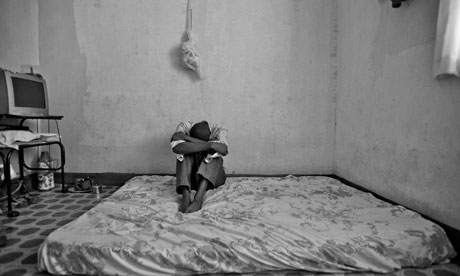
The Rape of Men

via The Guardian, by Will Storr

male-rape-victim-ugandaSexual violence is one of the most horrific weapons of war, an instrument of terror used against women. Yet huge numbers of men are also victims. In this harrowing report, Will Storr travels to Uganda to meet traumatised survivors, and reveals how male rape is endemic in many of the world's conflicts.

Of all the secrets of war, there is one that is so well kept that it exists mostly as a rumour. It is usually denied by the perpetrator and his victim. Governments, aid agencies and human rights defenders at the UN barely acknowledge its possibility. Yet every now and then someone gathers the courage to tell of it. This is just what happened on an ordinary afternoon in the office of a kind and careful counsellor in Kampala, Uganda. For four years Eunice Owiny had been employed by Makerere University's Refugee Law Project (RLP) to help displaced people from all over Africa work through their traumas. This particular case, though, was a puzzle. A female client was having marital difficulties. "My husband can't have sex," she complained. "He feels very bad about this. I'm sure there's something he's keeping from me."

Owiny invited the husband in. For a while they got nowhere. Then Owiny asked the wife to leave. The man then murmured cryptically: "It happened to me." Owiny frowned. He reached into his pocket and pulled out an old sanitary pad. "Mama Eunice," he said. "I am in pain. I have to use this."

Laying the pus-covered pad on the desk in front of him, he gave up his secret. During his escape from the civil war in neighbouring Congo, he had been separated from his wife and taken by rebels. His captors raped him, three times a day, every day for three years. And he wasn't the only one. He watched as man after man was taken and raped. The wounds of one were so grievous that he died in the cell in front of him.

Read the rest.


[If an item is not written by an IRMA member, it should not be construed that IRMA has taken a position on the article's content, whether in support or in opposition.]

High prevelance of anal pre-cancerous lesions in men with HIV

Via Aidsmap, by Michael Carter


Prevalence and incidence of high-grade pre-cancerous anal lesions in HIV-positive men who are taking antiretroviral therapy are high, Canadian investigators report in the online edition of Clinical Infectious Diseases. A low nadir CD4 cell count and infection with HPV types 16 and 18 were associated with an increased risk of developing high-grade pre-cancerous anal lesions (AIN-2, 3). The investigators hope that their findings will help identify patients who have a higher risk of HPV-associated anal disease.

Rates of HIV-related opportunistic infections have fallen significantly since the introduction of antiretroviral therapy.

However, the incidence of anal cancer is increasing.

Most of the information about the risk factors for this disease in HIV-positive gay men was obtained during the era before effective antiretroviral therapy became available. These include high-grade pre-cancerous lesions, infection with HPV 16 and 18, multiple HPV infections and CD4 cell count.

Investigators from the Canadian Human Immunodeficiency and Papilloma Virus Research Group (HIPVIRG) wanted to establish a comprehensive understanding of the risk factors for progression to AIN 2 and 3. They also wished to see if treatment with anti-HIV drugs had any impact on disease progression.

A total of 247 men who were taking or about to initiate antiretroviral therapy were recruited to the study between 2002 and 2005. The patients had swabs to see if they had anal HPV infection, and if present further tests were conducted to determine whether strains associated with anal cancer were present.

Read the rest
 
[If an item is not written by an IRMA member, it should not be construed that IRMA has taken a position on the article's content, whether in support or in opposition.]

FDA approves Gardasil to prevent anal cancer [Dec 22]


Read the press release from the FDA.


The U.S. Food and Drug Administration today [December 22] approved the vaccine Gardasil for the prevention of anal cancer and associated precancerous lesions due to human papillomavirus (HPV) types 6, 11, 16, and 18 in people ages 9 through 26 years.

Click here for the Gay Men's Health Crisis press release on Gardasil for men.
 

[If an item is not written by an IRMA member, it should not be construed that IRMA has taken a position on the article's content, whether in support or in opposition.]

Age-Specific Prevalence of and Risk Factors for Anal Human Papillomavirus (HPV) among Men Who Have Sex with Women and Men Who Have Sex with Men

via The Journal of Infectious Diseases

Background

An increasing incidence of anal cancer among men suggests a need to better understand anal canal human papillomavirus (HPV) infection among human immunodeficiency virus–negative men.

Methods

Genotyping for HPV was conducted on cells from the anal canal among men who have sex with women (MSW) and men who have sex with men (MSM), aged 18–70 years, from Brazil, Mexico, and the United States. Factors associated with anal HPV infection were assessed using multivariable logistic regression.

Results

The prevalence of any HPV type and oncogenic HPV types did not differ by city. Anal canal HPV prevalence was 12.2% among 1305 MSW and 47.2% among 176 MSM. Among MSW, reporting a lifetime number of ≥10 female sex partners, a primary sexual relationship <1 year in duration, and a prior hepatitis B diagnosis were independently associated with detection of any anal HPV in multivariable analysis. Among MSM, a younger age, reporting ≥2 male anal sex partners in the past 3 months, and never using a condom for anal sex in the past 6 months were independently associated with detection of any anal HPV in multivariable analysis.

Conclusions

Number of sex partners was associated with anal HPV infection in both MSW and MSM. Anal HPV infection in men may be mediated by age, duration of sexual relationship, and condom use.

Read the full article.

[If an item is not written by an IRMA member, it should not be construed that IRMA has taken a position on the article's content, whether in support or in opposition.]

External Genital Human Papillomavirus Prevalence and Associated Factors Among Heterosexual Men on 5 Continents

via The Journal of Infectious Diseases

Background

We examined the baseline prevalence of penile, scrotal, and perineal/perianal human papillomavirus (HPV) in heterosexual men (HM). We also evaluated baseline characteristics of HM to assess factors associated with prevalent HPV detection.

Methods

We tested serum samples from 3463 HM aged 16–24 years with 1–5 lifetime female sexual partners for antibodies to HPV 6, 11, 16, and 18. We collected baseline swab specimens for the detection of DNA of HPV 6, 11, 16, 18, 31, 33, 35, 39, 45, 51, 52, 56, 58, and 59 from 3 areas: penile, scrotal, and perineal/perianal. Risk factors for prevalent HPV DNA detection were evaluated.

Results

The prevalence of any tested HPV type was 18.7% at the penis, 13.1% at the scrotum, 7.9% at the perineal/perianal region, and 21.0% at any site. Having >3 lifetime female sexual partners had the greatest impact on HPV prevalence: odds ratio (OR) 3.2 (95% confidence interval (CI) 2.1–4.9) for HPV 6, 11, 16, and 18; and OR 4.5 (95% CI 3.3–6.1) for all HPV types tested. HPV DNA detection was highest in Africa. Neither condom usage nor circumcision was associated with HPV DNA prevalence.

Conclusion

Genital-HPV DNA detection is common in young, sexually active HM. We found HPV to be most prevalent in African men and least prevalent in men from the Asia-Pacific region. Increased numbers of sexual partners was an important risk factor for HPV DNA prevalence.

Read the full article.


[If an item is not written by an IRMA member, it should not be construed that IRMA has taken a position on the article's content, whether in support or in opposition.]

Via IPS Kenya: "More Men Preventing HIV Transmission to their Unborn Children"

From IPS, by Isaiah Esipisu

Pastor Joseph Muhembeli and his wife, Beatrice, queue at the Vihiga health centre with their six-month-old daughter for their prevention of mother-to-child treatment (PMTCT). But before long, as per the clinic’s policy, the couple are whisked to the front of the line – all because Muhembeli has accompanied his wife for the treatment.

The couple tested HIV-positive four years ago. But thanks to the Muhembeli’s involvement with the PMTCT programme, their six-month-old daughter has tested HIV-negative.

"For two years now, we have been encouraging male participation in the prevention of mother-to-child treatment of HIV. And that is why we give special treatment to all men who accompany their wives to either pre- or postnatal clinics," said Martha Opisa, the nurse in charge at the health centre.

Opisa said the Vihiga health centre used to receive about 40 clients a month seeking PMTCT services before men got actively involved in the pre- and postnatal clinics. "But now we now receive between 60 and 70 clients per month, almost doubling the original figure," she said.

Read the rest