Pages

Tampilkan postingan dengan label United States. Tampilkan semua postingan

Has anal sex gone out of vogue? What does this mean for HIV prevention?

via the HIV MSM blog

So the Advocate recently reported the findings of a large-scale survey on sexual behaviors.  Apparently, only 37.2% of over 24,000 gay and bisexually identified men indicated that their last sexual encounter consisted of anal sex.   The most practiced activities were kissing (almost 75%) and mutual masturbation (73%).

The survey, entitled  ‘The Gay and Bisexual Men’s National Sex Survey’ was sponsored by Manhunt,  its sexual health affiliate Manhunt Cares (see my past post here about them) and  its research partners, present the findings in a cutesy interactive graphical form which can be accessed from clicking on the picture on the left (i.e. I found out that 80.8 % of surveyed men have eaten cum at some point in their lives!) The abstract of the study, which appears in the Journal of Sexual Medicine can be found here.

Now before we give up our lube and condoms and other devices we find makes our anal sex experience more comfortable, there a few things to keep in mind.  For some reason, the majority of respondents in this latest conducted by researchers from Indiana University and George Mason University were Caucasian males.  Perhaps results would be changed if there was some diversity in the subject pool.  Also, one should note that the respondents were “self identified” gay or bisexual.  Perhaps if behaviors of non-identified men who have sex with men, (i.e. heterosexual identifying men) were recorded the results would also show a higher indication of anal sex.  However, I like the point that one of the commentators made:   Anal sex does require a lot of effort (much like vaginal penile sex as well) and perhaps people don’t want to go through such effort simply to get off.

Read the rest.


[If an item is not written by an IRMA member, it should not be construed that IRMA has taken a position on the article's content, whether in support or in opposition.]

Don't Delay HIV Prevention for Gay and Bi Men

via The Huffington Post, by David Ernesto Munar

Lives will be saved when the Food and Drug Administration puts its stamp of approval on a groundbreaking preventative approach called pre-exposure prophylaxis, or PrEP, recently found to reduce HIV infections.

With PrEP, people who are not infected with HIV take a daily pill, usually used to treat the disease, to help prevent infection -- as part of a broad HIV prevention approach that includes condoms and safer-sex counseling.

But the longer the FDA waits before beginning its review of the HIV medication Truvada for prevention, the more lives will be unnecessarily lost. This is particularly true for those at greatest risk: gay and bisexual men.

We urge the FDA to immediately begin its review for approval of Truvada for PrEP for gay and bisexual men.

Last year the iPrEX trial, touted as the scientific breakthrough of the year by TIME magazine, found that gay, bi and other men who have sex with men who took Truvada, along with counseling and condoms, had 42 percent fewer HIV infections than with counseling and condoms alone. Among those who used the prevention pill most consistently, the drop in infections was far greater.

And remember the sobering context: between 2006 and 2009, the number of young gay African-American men infected with HIV in the United States increased by 48 percent, according to the U.S. Centers for Disease Control.

Read the rest.


[If an item is not written by an IRMA member, it should not be construed that IRMA has taken a position on the article's content, whether in support or in opposition.]

Panel Endorses HPV Vaccine for Boys of 11

via The New York Times, by Gardiner Harris

Boys and young men should be vaccinated against human papillomavirus, or HPV, to protect against anal and throat cancers that can result from sexual activity, a federal advisory committee said Tuesday.

The recommendation by the panel, the Advisory Committee on Immunization Practices of the Centers for Disease Control and Prevention, is likely to transform the use of the HPV vaccine, since most private insurers pay for vaccines once the committee recommends them for routine use. The HPV vaccine is unusually expensive. Its three doses cost pediatricians more than $300, and pediatricians often charge patients hundreds more.

The committee recommended that boys ages 11 and 12 should be vaccinated. It also recommended vaccination of males ages 13 through 21 who had not already had all three shots. Vaccinations may be given to boys as young as 9 and to men between the ages of 22 and 26.

The committee recommended in 2006 that girls and young women ages 11 to 26 should be vaccinated, but vaccination rates in the United States have so far been disappointing.

Read the rest.


[If an item is not written by an IRMA member, it should not be construed that IRMA has taken a position on the article's content, whether in support or in opposition.]

Meet Gary Wolnitzek: The Last (But Not Least) of Our New Friendly Rectal Microbicide Advocates!

“First and foremost, as a gay man, and one who works at an organization focused on the LGBT community, it is extremely important to me that we develop ways that gay and bisexual men can protect themselves from HIV (and other STIs). Secondly, as an HIV advocate I feel it is important to create a robust and full toolbox that helps to prevent HIV infection and helps those living with HIV. Rectal Microbicides need to be one of the tools at our disposal.”

Gary is an IRMA advocate from Baltimore, Maryland. He is currently the Director of Gay, Lesbian, Bisexual, and Transgender Community Center of Baltimore (GLCCB). He loves conducting trainings in the community on a range of topics including advocacy planning, providing culturally competent care to the GLBT population and on topics related to new prevention technologies (NPT). He also enjoys spending time with friends at the pub, reading David Sedaris, watching “well-made” horror movies, and his cat, Aureliano.

Gary first became involved with IRMA while working at the Global Campaign for Microbicides (GCM). At this time he was well versed in preventative vaccine research and the research and trials surrounding vaginal microbicides, but he wasn’t as familiar with rectal microbicides. Shortly after starting at GCM he was introduced to people like Anna Forbes and Jim Pickett. He remembers a GCM meeting being co-hosted by the International Partnership for Microbicides (IPM) where this man kept chiming in with “What about rectal microbicides?!” Of course it was Jim, and Gary became inspired from that point on to learn more about rectal microbicides and involve himself with IRMA.

Gary tries to include vaginal and rectal microbicides in any talks he gives about HIV to the community. He believes knowledge is key, and a well informed base is necessary to move any work forward. He advises others doing HIV work to include microbicides in their agenda and points them to the IRMA website and blog for more information about them if needed. He also encourages IRMA members to become more involved on the listserv. He says that “by becoming more engaged in the conversations happening in this space then the more opportunities we have to gain new perspectives, find common ground on diverse issues, and develop new ideas.”

His advice for IRMA advocates combating stigma for their beliefs and work is to approach the individuals or organizations perpetuating the stigma with an open mind, listen to their arguments and opinions, and be prepared to create an informed and fact-based response. He hopes that this will bring about “some sort of common ground.” If this doesn’t work and the individual or organization is not willing to listen, he suggests reaching out to others that may be able to influence them- a method he calls “taking it to the streets!”

Read more bios on the IRMA website.


[If an item is not written by an IRMA member, it should not be construed that IRMA has taken a position on the article's content, whether in support or in opposition.]

Meet Yaa Simpson: Another New Friendly Rectal Microbicide Advocate!

“Stigma is only dispelled by shining a brighter light on it! We have to speak life and light with our words and actions. There is enough doom and gloom to impact everyone - and that is where stigma resides. But letting people know they have options, biomedical techniques for prevention, medications, possible vaccines, gathering more evidence, integrating creative research designs, etc. are all steps in the right direction. We must expect the impossible and believe in miracles!”

Yaa Simpson is an IRMA advocate from Chicago, Illinois. She is an epidemiologist for the Chicago Department of Health and a Community Epidemiologist for TACTS (The Association of Clinical Trial Services). She loves to contribute to ideas and discussion about better research in the community, specifically HIV/STI prevention trials. She is also working towards her doctoral degree and hopes to one day conduct HIV prevention trails in Chicago.

Yaa first learned of IRMA when she was invited to a presentation on microbicides several years ago. Here she was introduced to Jim Pickett and his work with IRMA. She remembers Jim saying, “We all have opinions, like we all have booties!” She now is an active member on the listserv and enjoys IRMA’s blog and educational teleconferences.

She believes rectal microbicides are an important tool to add to the prevention technology toolbox, and acknowledges that we must develop technologies to prevent HIV spreading through any avenue, including rectally.

Her advice for IRMA is to continue to be involved with people who want to see change! “Talk to those who don’t want to hear about it and strategize with those who are looking for answers. Be diligent and be patient. And if you ever feel discouraged or overwhelmed by the stigma associated with standing up for rectal microbicides, remember what Mark Twain once said: 'Keep away from people who try to belittle your ambitions. Small people always do that, but the really great make you feel that you, too, can become great.'”

Read more bios from Friendly Rectal Microbicide Advocates.


[If an item is not written by an IRMA member, it should not be construed that IRMA has taken a position on the article's content, whether in support or in opposition.]

Chimp to Man to History Books: The Path of AIDS

via The New York Times, by Donald G. McNeil, Jr.

Our story begins sometime close to 1921, somewhere between the Sanaga River in Cameroon and the Congo River in the former Belgian Congo. It involves chimps and monkeys, hunters and butchers, “free women” and prostitutes, syringes and plasma-sellers, evil colonial lawmakers and decent colonial doctors with the best of intentions. And a virus that, against all odds, appears to have made it from one ape in the central African jungle to one Haitian bureaucrat leaving Zaire for home and then to a few dozen men in California gay bars before it was even noticed — about 60 years after its journey began.

Most books about AIDS begin in 1981, when gay American men began dying of a rare pneumonia. In “The Origins of AIDS,” published last week by Cambridge University Press, Dr. Jacques Pépin, an infectious disease specialist at the University of Sherbrooke in Quebec, performs a remarkable feat.

Dr. Pépin sifts the blizzard of scientific papers written about AIDS, adds his own training in epidemiology, his own observations from treating patients in a bush hospital, his studies of the blood of elderly Africans, and years of digging in the archives of the European colonial powers, and works out the most likely path the virus took during the years it left almost no tracks.

Working slowly forward from 1900, he explains how Belgian and French colonial policies led to an incredibly unlikely event: a fragile virus infecting a small minority of chimpanzees slipped into the blood of a handful of hunters, one of whom must have sent it down a chain of “amplifiers” — disease eradication campaigns, red-light districts, a Haitian plasma center and gay sex tourism. Without those amplifiers, the virus would not be what it now is: a grim pilgrim atop a mountain of 62 million victims, living and dead.

Read the rest.


[If an item is not written by an IRMA member, it should not be construed that IRMA has taken a position on the article's content, whether in support or in opposition.]
Race, Gender, & Sexuality in HIV Prevention Campaigns

via The Society Pages, by Christie Barcelos

Gay men and bisexual men still represent a disproportionate number of HIV cases in the United States (CDC). In addition, African-American and Latino men are significantly more likely than white men to be diagnosed with HIV and die from AIDS-related illnesses. Numerous HIV prevention campaigns are thus aimed at these populations.

It’s important to try to reduce the HIV among these populations, but we also need to think critically about how prevention strategies reinforce stigmatization.

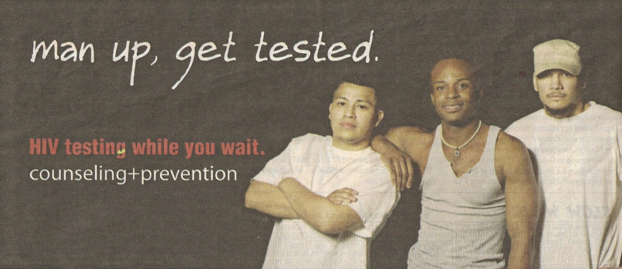
For example, this ad from a western Massachusetts clinic uses the phrase “man up, get tested” — taking care of yourself by getting tested for HIV is linked to your masculinity. What’s interesting is that by including only men of color in the photo, the ad suggests that black and Latino men are particularly obsessed with their masculinity, more so, perhaps, than white men. It also potentially reinforces stereotypes about black men as hyper-sexualized and Latino men as machismo.


[If an item is not written by an IRMA member, it should not be construed that IRMA has taken a position on the article's content, whether in support or in opposition.]

A Donor Deferred: The Lifetime Ban on Blood Donations from Gay Men

via The Huffington Post, by Robert Valadez

"Save a life, give blood," read the sticker on a colleague's lapel. It sounds wonderful -- where do I sign up? Unfortunately, I can't donate blood because I'm gay. Many people are surprised to hear that gay men are prohibited from donating blood in most countries around the world, including the U.S. I've sat at several dinner parties, perched atop my advocacy soapbox, informing straights and gays alike of the U.S. Food and Drug Administration's (FDA) policy that permanently defers any man who has had sex with another man, even once, since 1977, from donating blood.

It wasn't long ago that I was unaware of the policy. Like many college students across the nation, I happily signed up to donate blood at the campus blood drive. In fact, I rallied a group of friends to join me in participating in one of our country's most noble civic duties. One by one, we were called to donate. However, when my name was called, I was escorted to speak with a phlebotomist rather than fitted with an arm tie and stress ball. I was informed that my blood would not be accepted. Not today, not ever again. It had nothing to do with having consumed questionable British meat products or having a deficiency in iron. Rather, I had answered yes to the question -- the one that asked if I had had sex with a man since the 1970s. Given that I was born in the 1980s, the question seemed oddly phrased to me, not to mention unclear as to the definition of sex. Regardless, I checked the box, unaware of its repercussions. Suddenly, I was blacklisted.

Read the rest.


[If an item is not written by an IRMA member, it should not be construed that IRMA has taken a position on the article's content, whether in support or in opposition.]

Targeting the Invisible World Of Men Who Have Sex With Men

via Outwords, by Peter Carlyle-Gordge

Ask any outreach worker in the fight against HIV transmission and you’ll find one of the hardest at-risk groups to reach is MSM, or men who have sex with men.

Men in this group don’t necessarily identify as gay. Some may be married to women and have families. Some may simply avoid defining their sexual orientation and it is often hard to pinpoint where they gather or connect.

Now, if reaching the MSM group is challenging here, consider its near impossibility in such homophobic places as Africa, a place still plagued by superstition, repression and an outright burning hostility to any sexual practices beyond the vanilla heterosexual variety. In many Islamic countries such as Iran and Iraq, being attracted to the same sex may bring instant death by a mob, or less instant death after a shameful “trial” in an Islamic court, which may sentence you to be hanged, often in public.

Attitudes to same-sex attraction in Africa aren’t much better, with a nasty, often violent reaction to same-sex couplings – an official kind of homophobia that is encouraged by the Neanderthal and ignorant Catholic and Anglican churches. Indeed, the current worldwide Anglican communion is deeply split on same-sex rights, thanks largely to the Archbishop of Canterbury kowtowing in fear to the outspoken black African bishops who despise homosexuality and claim God does, too.

You don’t need to go far to stack up evidence of this official homophobia. The president of Iran famously came to the U.S. and told a university audience that same-sex dalliances did not exist in Iran. The evidence in the form of beatings and hangings of gay men tends to undermine his insane statement.

Read the rest.


[If an item is not written by an IRMA member, it should not be construed that IRMA has taken a position on the article's content, whether in support or in opposition.]

Questions Surround PrEP Trials

via The New York Times, by David Tuller

In the past year, three landmark clinical trials have shown that a daily dose of the antiretroviral medication Truvada can protect individuals from infection with H.I.V. — a significant discovery, given the failure so far of all efforts to develop a vaccine against the virus.

Now researchers in San Francisco and Miami are planning to test this prevention strategy, called pre-exposure prophylaxis, or PrEP, in a pilot study supported by the National Institutes of Health. The researchers will soon recruit up to 500 uninfected men who have sex with men, especially those considered to be at greatest risk of infection, such as younger gay men and, in particular, African-Americans.

The men will be asked to take Truvada daily, and the researchers will monitor their compliance with the regimen, their sexual behavior and their health status. Already, though, the prospect of antiretroviral drugs’ being used for prevention as well as treatment is raising complex questions for researchers and advocates.

Will healthy uninfected people consistently take an expensive and powerful drug that can cause a range of side effects? Is it fair to provide medications to H.I.V.-negative individuals when so many of those already infected do not have access? Will those receiving the drug be more likely to engage in risky sex because they believe they are protected — even if they do not always take it as prescribed?

Read the rest.


[If an intem is not written by an IRMA member, it should not be construed that IRMA has taken a position on the article's content, whether in support or in opposition.]

Pro/Con: Two views of U.S. prohibiting gay men's blood donation

via The Los Angeles Times, by Jessica Pauline Ogilvie

Donor bloodLast month, the United Kingdom lifted its long-standing ban on accepting blood donations from gay men. Instead, health officials there implemented a new policy that allows men to become blood donors as long as they haven't had sex with another man in the previous year.

With this decision, the U.K. joined France, Italy, Japan and eight other developed countries in allowing gay and bisexual men to contribute to the nation's blood supply. Many of those countries require sexually active gay men to wait a year before giving blood, while others have deferral periods of six months or five years. Some countries have regulations that focus on potential donors' risky sexual behavior rather than their sexual orientation.

In the United States, however, men who have sex with men are still subject to a lifetime ban on donating blood. The U.S. Food and Drug Administration implemented the ban in 1983 after an estimated 10,000 people with the bleeding disorder hemophilia became infected with HIV through transfusions of HIV-tainted blood.

That policy has become increasingly controversial in recent years. Some experts in the field of blood safety — as well as gay rights activists — say that it's discriminatory and that scientific advances in testing for HIV render it obsolete. Many would like to see the policy changed to resemble the U.K.'s one-year deferral policy or have the ban lifted altogether.
On the other side of the debate are those who say that men who have sex with men still face a heightened risk of contracting HIV and that even a small increased threat to the blood supply isn't justifiable.

The issue has divided major U.S. health organizations. Last year, the FDA denied a request to overturn the ban, but the American Red Cross and others support moving to a one-year deferral.

Read the rest.


[If an item is not written by an IRMA member, it should not be construed that IRMA has taken a position on the article's content, whether in support or in opposition.]

Addressing the HIV Epidemic among Gay and Bisexual Men

via AIDS.gov, by Kevin Fenton, M.D., Ph.D., FFPH, Director, National Center for HIV/AIDS, Viral Hepatitis, STD, and TB Prevention, CDC

In 1981, our nation and its public health system were grappling with a new disease that was taking the lives of gay men across the United States. Thirty years later, HIV/AIDS continues to be a crisis among gay and bisexual men. The latest data show men who have sex with men (MSM) remain most affected in this country. Although MSM represent 2% of the population, they account for 64% of all new infections (including 3% among MSM who are injection drug users [IDUs]). CDC estimates that there were more than 30,000 new HIV infections in 2009 among MSM, including MSM-IDU. Though the numbers have gone down dramatically, approximately 7,000 MSM with an AIDS diagnoses still die each year and nearly 300,000 MSM with AIDS have died since the beginning of the epidemic.

Today, we commemorate the fourth annual National Gay Men’s HIV/AIDS Awareness Day, an observance founded by the National Association of People with AIDS to raise awareness of the HIV/AIDS epidemic among gay and bisexual men. This annual observance is one way we are focusing attention and resources on those populations at highest risk for HIV infection, including gay and bisexual men. This focus is a top priority outlined in the National HIV/AIDS Strategy (NHAS).

To reach those at risk, CDC is pursuing High Impact Prevention to support the most effective and impactful programs to aggressively reach the goals of the National Strategy. The interventions are being implemented at the federal, state, and local levels to reach the right populations at a scale large enough to make a significant difference. These approaches include expanded testing efforts to ensure more gay and bisexual men get tested at least annually, more often if at increased risk;prevention programs for people living with HIV and their partners; condom distribution; demonstration projects that focus on the most heavily affected communities; and matching HIV prevention funding for health departments and community-based organizations in those locations with the highest HIV burden.

Read the rest.


[If an item is not written by an IRMA member, it should not be construed that IRMA has taken a position on the article's content, whether in support or in opposition.]

Study: The feasability of incorporating self-collected rectal swabs to measure the prevalence of HPV infection in MSM

via Journal of the American Sexually Transmitted Diseases Association, by Gilbert, Mark MD*; Kwag, Michael BA*; Mei, Wendy BSc†; Rank, Claudia MPH*‡; Kropp, Rhonda MSc‡; Severini, Alberto MD‡; van Niekerk, Dirk MD§; Zhou, Chen MD§; Press, Natasha MD¶; Ogilvie, Gina MD*; Wong, Tom MD‡; the ManCount Study Team 

Background:

Inclusion of self-collected rectal swabs (SCRS) into existing community venue-based HIV surveillance systems for men who have sex with men (MSM) may provide a feasible method for monitoring human papillomavirus (HPV) vaccine-related outcomes in this population. We measured the prevalence of HPV and anal dysplasia through incorporating SCRS into ManCount, the Vancouver site of the M-Track HIV surveillance system.

Methods:

Participating MSM were provided with a self-collection kit for collection on-site or at a follow-up venue. Swabs were subject to polymerase chain reaction amplification for HPV detection, and cytology slides were reviewed for anal dysplasia. Factors associated with participation were identified through multivariate logistic regression.

Results:

Of 766 men completing ManCount, 268 (35%) agreed to participate, self-collecting 252 specimens (247 on-site). Of 239 complete specimens, 33.5% did not have detectable β-globin; in the remainder (159 specimens) the prevalence of HPV infection was 62.3% (23.3% HPV type 16 or 18; 38.4% HPV type 6, 11, 16, or 18). In the 62.3% (149) of specimens adequate for cytology, the prevalence of anal dysplasia was 42.3% (HSIL 11.4%, LSIL 18.8%, ASC-US 6.7%, ASC-H 5.4%). Participation was associated with venue type, availability of on-site collection, and other characteristics.
Conclusions:

SCRS can be feasibly integrated within existing community venue-based HIV surveillance systems for MSM, and may be a suitable method for monitoring the impact of HPV vaccination in this population. However, participation may be influenced by venue type and availability of on-site collection, and adequacy of SCRS specimens may be lower in community venues as compared with clinical settings.


[If an item is not written by an IRMA member, it should not be construed that IRMA has taken a position on the article's content, whether in support or in opposition.]

New Microbicide May Block Virus From Infecting Cells

via The University of Utah U News Center

Kiser LabUniversity of Utah researchers have discovered a new class of compounds that stick to the sugary coating of the AIDS virus and inhibit it from infecting cells – an early step toward a new treatment to prevent sexual transmission of the virus.

Development and laboratory testing of the potential new microbicide to prevent human immunodeficiency virus infection is outlined in a study set for online publication by Friday in the journal Molecular Pharmaceutics.

Despite years of research, there is only one effective microbicide to prevent sexual transmission of HIV, which causes AIDS, or acquired immune deficiency syndrome. Microbicide development has focused on gels and other treatments that would be applied vaginally by women, particularly in Africa and other developing regions.

To establish infection, HIV must first enter the cells of a host organism and then take control of the cells’ replication machinery to make copies of itself. Those HIV copies in turn infect other cells. These two steps of the HIV life cycle, known as viral entry and viral replication, each provide a potential target for anti-AIDS medicines.

“Most of the anti-HIV drugs in clinical trials target the machinery involved in viral replication,” says the study’s senior author, Patrick F. Kiser, associate professor of bioengineering and adjunct associate professor of pharmaceutics and pharmaceutical chemistry at the University of Utah.

“There is a gap in the HIV treatment pipeline for cost-effective and mass-producible viral entry inhibitors that can inactivate the virus before it has a chance to interact with target cells,” he says.

Read the rest.


[If an item is not written by an IRMA member, it should not be construed that IRMA has taken a position on the article's content, whether in support or in opposition.]

San Francisco First U.S. City to Offer PrEP

via Bay Area Reporter, by Matthew S. Bajko

San Francisco is expected to become the first city in the country to offer gay men an anti-HIV pill that has proven successful in stopping transmission of the virus that causes AIDS.

Officials with the National Institutes of Health and San Francisco public health officials are close to finalizing an agreement to launch in early 2012 a demonstration project for usage of pre-exposure prophylaxis or PrEP. The combination pill contains tenofovir and emtricitabine (Gilead Science's Truvada) and has proven to be highly effective during clinical trials studying its efficacy.

Under the contract, up to 300 men who have sex with men at high risk for contracting HIV would be enrolled in the pilot study. City Clinic would administer the program while Magnet, the gay men's health center in the Castro, would help identify suitable participants for the study.

"We are anticipating we will be the first municipality to implement a PrEP demonstration project and things are moving forward toward that goal," Dr. Grant Colfax, the city's director of HIV prevention, told the Bay Area Reporter this week. "We are hoping the demo project would be implemented in the first quarter of 2012."


Read the rest.


[If an item is not written by an IRMA member, it should not be construed that IRMA has taken a position on the article's content, whether in support or in opposition.]

Sexual Pleasure is Key for Successful Microbicides

via WeNews, by Amy Littlefield

Participants in Kate Morrow's [IRMA Steering Committee Member] recent study may not have felt like they were fighting the global HIV epidemic.
In fact, what they were literally feeling were gels of various consistencies inside their vaginas.

The women in Morrow's Project LINK answered questions after handling the gels, inserting them vaginally, walking around and simulating intercourse with a fake phallus. Did the gel leak out? Did it inhibit the experience . . . or did they actually enjoy it?


Morrow has developed a set of scales to show the range of sensations and experiences women reported. Her goal now is to connect those sensations to data about which gels women would use to prevent HIV. Do they prefer gels that are smooth, thin or thick like hair gel? The answers to those questions could help lead to a microbicide that women will tolerate--and perhaps even enjoy.

For decades, women's health advocates have known that women need a way to protect themselves from HIV that is not dependent on a male partner. Vaginal microbicide gels are among an array of options--including pills, rectal microbicides and vaginal rings--that may one day help. Advocates hope microbicides could even be combined with birth control and help prevent other sexually-transmitted illnesses.


[If an item is not written by an IRMA member, it should not be construed that IRMA has taken a position on the article's content, whether in support or in opposition.]

<script type="text/javascript"><!--
google_ad_client = "ca-pub-4979705037097754";
/* 336x280,FreewarelistHome_B */
google_ad_slot = "3276839894";
google_ad_width = 336;
google_ad_height = 280;
//-->
</script>
<script type="text/javascript"
src="http://pagead2.googlesyndication.com/pagead/show_ads.js">
</script>
Percakapan Obrolan Berakhir
Adi sedang mengetik

Gay couples in Atlanta back HIV tests together


Some gay male couples, including ones in Atlanta and two other cities, support getting HIV tests with their partner as a way to bolster the relationship, but current testing protocols may not support it, according to a new study from Emory University researchers.

The study, “Attitudes Towards Couples-Based HIV Testing Among MSM in Three U.S. Cities,” was published in the journal AIDS and Behavior. Dr. Rob Stephenson of the Rollins School of Public Health at Emory worked with three colleagues from the school and others in Chicago and Seattle to complete the study. It calls on opening HIV testing to gay couples as a way to fill “a significant gap” in couples-based services for men who have sex with men (MSM) and to help them integrate routine HIV testing into their lives.

“Services remain individually focused,” the researchers say. “[Couples-based voluntary HIV counseling and testing] provides an opportunity for MSM to talk about sex, and to make plans for safer sexual behavior as a couple in the presence of a counselor.”

“The initial results presented here are encouraging. Couples-based voluntary HIV counseling and testing] is an acceptable format for HIV counseling and testing among MSM in this study, and if it is adapted and promoted well, could fill a significant gap in couples-based services for U.S. MSM,” they add.

The researchers launched the study after noting that heterosexual couples in Africa in which one member is HIV-positive and the other is not who receive HIV counseling and testing together helped bring about behavioral changes that reduced HIV transmission. So they examined attitudes toward couples-based testing with four focus groups of gay men in relationships in Atlanta, Chicago and Seattle.


[If an item is not written by an IRMA member, it should not be construed that IRMA has taken a position on the article's content, whether in support or in opposition.]

Victory! Court Overturns “Anti-Prostitution Pledge”

Via Care2, by Jaime-Alexis.

Yesterday, a federal appeals court in New York ruled that the US cannot force organizations to formally pledge to denounce prostitution and sex trafficking in order to receive US funding for HIV and AIDS work. This is a significant victory for the global health community. Why is this good news? Because the policy—commonly known as the “anti-prostitution pledge”—is flawed.

The pledge requires all organizations—American or foreign—that receive US funds to fight HIV and AIDS abroad to adopt a formal position condemning prostitution and trafficking. I have been involved with international development organizations focused on HIV and AIDS. I have never met anyone in the development community who is not firmly opposed to—or horrified by—trafficking. There are few issues that bring such universal abhorrence. One problem with the anti-prostitution pledge however is that it conflates prostitution and trafficking, which ignores realities on the ground. In many developing countries there are individuals who sell sex for their livelihood—food, shelter. And these individuals require and deserve access to health and social services, including HIV prevention and care. Condemning and judging by denouncing their livelihood can drive them further from the help they need, limit their ability to access health care, provide for their families, or even leave the industry.

The ambiquity of the pledge language adds to the challenge. If, as in the case of one plaintiff, Pathfinder International, an organization works with sex workers to organize and empower them so that they can advocate for their rights (which is both an effective HIV prevention strategy as well as an effective means of reducing other harms of sex work, including violence and exploitation), is that “promoting prostitution?” No. For those of us in the development community, it means you’re helping those in need.

Perhaps even more problematic, the pledge, as defined by the Bush Administration who first enforced it and now the Obama Administration, applies not only to US government funding, but to private donations as well. That means that even if an organization is not using any government funds to provide services to sex workers, they could potentially lose US funding for their separate, privately-funded work.

Recognizing the issues with this policy, Pathfinder and Alliance for Open Society International originally brought the US Government to court in 2005. “Trust that it was not an easy decision for Pathfinder to take our largest funder—the US Government—to court,” Pathfinder President Daniel E. Pellegrom said. “However, we strongly believe vital principles were, and continue to be, at stake. Private organizations cannot be told what to think or believe; they cannot be compelled to espouse a government mandated position. And they must be free to challenge the status quo and to speak out on behalf of the vulnerable and disenfranchised.”

 Read the rest here.

[If an item is not written by an IRMA member, it should not be construed that IRMA has taken a position on the article's content, whether in support or in opposition.]

30 Years: Epidemic to Pandemic

by Aldona Martinka

This Sunday was the thirtieth anniversary of the CDC report that would become the first mention of HIV/AIDS. IRMA is commemorating this with a short series on AIDS history. It will explore where we began, where we are now, and where we are going as we continue to battle this disease with hope and determination. This is part three of five.

Today everyone realizes that AIDS is a global issue, from the First World to the Third World. In 1999, AIDS became the fourth most common cause of death in the world. To the average American, however, AIDS as a global issue did not seem so important until the turn of the century. The United Nations began to hold increasingly frequent meetings to discuss HIV/AIDS-related issues, and American politicians and activists began to turn their gaze outward.

The Joint United Nations Programme on HIV/AIDS (UNAIDS) was launched in 1996, and by 2000 the UN was a vital player in the global fight against the disease. In that year alone the UN, the WHO, and UNAIDS worked to negotiate pharmaceutical prices for HIV/AIDS drugs in the developing world, the UN Security Council met regarding AIDS and its effects on peace/security in Africa, and the UN announced its Millennium Development Goals. The same year the G8 met and announced a need for more resources to battle the pandemic. The UN would, in the next few years, hold its first Special Session on AIDS (reviewed in 2005), launch the Global Coalition on Women and AIDS, and continue to reinforce its commitment to providing prevention and treatment options for HIV/AIDS worldwide.

The United States also began fighting AIDS on a global scale during this time. In 200 President Clinton announced his administration’s Millennium Vaccine Initiative, declared HIV a national security threat, and issued an executive order to aid developing countries in producing and importing generic treatments for HIV/AIDS. He and his legacy would continue to work to provide these drugs at a low cost to developing countries worldwide for years to come. In 2001, the Bush administration vowed to continue a commitment to fighting AIDS both nationally and globally. The CDC created a plan to halve US infections within five years. Early in 2003, President Bush announced the creation of the President’s Emergency Plan For AIDS Relief (PEPFAR), a five year plan devoting $15 billion dollars to fight AIDS internationally. This was, and continues to be, the largest commitment by any country to combat HIV/AIDS. The first $350 million was authorized the next year.

The US, the UN, the G8, international projects such as the Global Fund to Fight AIDS, Tuberculosis, and Malaria, countless other organizations, have continued to fight for HIV/AIDS prevention and treatment, and as the 31st year of AIDS begins there is a renewed energy to this battle.

[If an item is not written by an IRMA member, it should not be construed that IRMA has taken a position on the article's content, whether in support or in opposition.]

Self-Perceived Risk of HIV Infection and Attitudes About PrEP Among STD Clinic Attendees

Via Liebert Online, by Y. Omar Whiteside, Tammy Harris, Christopher Scanlon, Stephen Clarkson, and Wayne Duffus

Background

Despite the advances in the prevention of and treatment for HIV infection, the estimated rates of HIV infections remained constant from 2005 to 2008. More importantly, during this period the estimated number of newly diagnosed HIV/AIDS cases increased 8%. In 2008, blacks accounted for more than half (52%) of all new HIV cases diagnosed. The South, where the majority of black/African Americans live, continues to suffer disproportionately from the HIV/AIDS epidemic. The Centers for Disease Control and Prevention's (CDC) 2008 HIV Surveillance Report documented that the death rate among persons with AIDS increased in both the South and the Midwest and that the South has the highest number of AIDS diagnoses of any region in the country. Because of this region's epidemiology, the need to prevent new HIV infections is of paramount importance.

South Carolina, a southern state, has one of the highest AIDS rates in the United States (2008 AIDS rate: 15.5 per 100,000 population in South Carolina; 12.2 per 100,000 population in the United States) In 2008, Columbia, South Carolina, ranked seventh in its AIDS case rate (25.6 per 100,000 population) among metropolitan statistical areas. Of increasing concern to South Carolina public health officials is the high prevalence of HIV-infected residents and the potential for unabated transmission.

Methods

This was an exploratory study on self-perceived risk of HIV infection and attitudes about using PrEP among sexually transmitted diseases (STD) clinic attendees. It was designed as a cross-sectional study and was conducted from January 2009 to May 2009 and October 2010 to December 2010 in an STD clinic in South Carolina. An STD clinic was chosen as the location from which to draw participants because individuals with an STD have an increased risk for both HIV infection and transmission. The inclusion criteria were that participants be at least 16 years of age; have had oral, anal, or vaginal sex within the past 6 months; be seeking STD clinic services, self-report being HIV-negative, and not have previously completed the survey. Participants were given a 20-min, self-administered, paper-based, anonymous survey that measured demographic information; sexual exposure history; self-perceived risk perception for HIV infection; and attitudes about PrEP.

Results

Compared to heterosexual participants, homosexual participants were significantly more likely to have knowledge of PrEP (odds ratio [OR]=6.7, 95% confidence interval [CI]: 1.70–26.1). Compared to those participants who had 1 sexual partner in the past 3 months, individuals who had 2 to 4 sexual partners in the past 3 months were approximately 2.35 times as likely to have a lower level of agreement with the statement “I believe I am at risk of getting HIV” (p=0.0003). Compared to female participants, respondents who were male were approximately 2.8 times as likely to have a lower level of agreement with the statement “If I had to it would be very difficult for me (or my partner) to both use condoms and take daily pills to prevent HIV infection” (p<0.0001). These results suggest the need for the creation of PrEP implementation programs that are tailored to self-perceived risk perception, age, and gender.

Read the full study here.


[If an item is not written by an IRMA member, it should not be construed that IRMA has taken a position on the article's content, whether in support or in opposition.]