Pages

Tampilkan postingan dengan label homosexuality. Tampilkan semua postingan

Why Uganda’s Anti-Gay Legislation Is the World’s Business

via Bloomberg News, by the editors

Uganda’s anti-homosexuality bill just won’t go away.

Last spring, an egregious proposal by a member of the ruling party to impose harsh penalties, including death, for homosexual acts was shelved for a second time when Uganda’s parliament recessed without debating it. This week, parliament moved to revive the measure.

Homosexuality is already illegal in Uganda. The law would increase the maximum penalties, providing up to life imprisonment for homosexual acts and execution for so-called aggravated homosexuality -- repeated homosexual behavior, homosexual acts with a minor or a disabled person, and homosexual acts by anyone who is HIV-positive.

The original bill also made it punishable by up to three years’ imprisonment to fail to report homosexual behavior to authorities within 24 hours. In the last parliamentary session, a committee recommended scratching that provision, which would compromise health workers involved in AIDS control efforts. It’s not clear this time around whether the bill will go through the committee process anew; in any case, committee views are not binding.

The bill enjoys considerable support in Uganda, where homosexuality is widely abhorred, and may well pass if it comes to a parliamentary vote. President Yoweri Museveni would probably veto it, knowing that passage would alienate Uganda’s Western allies, on whom the country relies for development assistance.

For now, the circus around the draft law suits Museveni, who has been in power for 25 years. Domestically, it whips up support for his party, the National Resistance Movement. Internationally, it attracts opprobrium but also distracts critics from other Ugandan scandals for which Museveni bears more direct responsibility: the arrest of opposition figures, police brutality, corruption.

Read the rest.


[If an item is not written by an IRMA member, it should not be construed that IRMA has taken a position on the article's content, whether in support or in opposition.]

Persecuted for Being Gay

via The Guardian, stories compiled by Gay Middle East

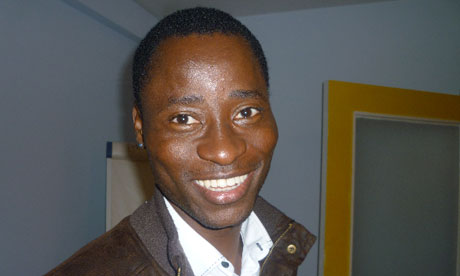
Bisi Alimi, from NigeriaBisi Alimi, from Nigeria (an IRMA member!)

In 2002, I was at university in Nigeria and standing for election. A magazine wrote about me and exposed me as being gay. This led the university to set up a disciplinary committee. I was very nearly dismissed. When I did graduate, people wanted to refuse me my certificate on the grounds that I did not have good enough morals to be an alumnus of the university. While this was going on, the then-president, Olusegun Obasanjo, declared that there were no homosexuals in Nigeria, and that such a thing would not be allowed in the country.

I talked with a friend of mine, who is a famous Nigerian talkshow host, about challenging this opinion. Nobody had come out publicly before. So, in October 2004, I appeared on her breakfast show, New Dawn with Funmi Iyanda". I talked about my sexuality, the burden of the HIV epidemic in the gay community.

The reaction was immediate and violent. I was subjected to brutality from the police and the community. I was disowned by my family and lost many friends, including in the gay community. They were afraid to know me. I was isolated, with no support and no job. The TV show was taken off the air by the government. It led to the introduction of the Same Sex Prohibition bill of 2006. All I had done was say who I was. Three years later I appeared on the BBC World Service. I repeated what I had said on television in Nigeria and suggested my government was using attacks on homosexuality to help cover up its own corruption.

On my arrival back to Nigeria, I was arrested, detained and beaten by the police. For a month, until I fled back to the UK in April 2007, my life was in constant danger.

Read the rest.


 [If an item is not written by an IRMA member, it should not be construed that IRMA has taken a position on the article's content, whether in support or in opposition.]

‘Confront legal and policy barriers to HIV’: Sub-Saharan Africa Regional Dialogue on HIV and the Law

Via UNAIDS.

In Sub-Saharan Africa, the region most heavily affected by HIV, legal, policy and social barriers, including stigma, discrimination, gender inequality and the criminalization of key populations at higher risk of HIV infection, continue to make people vulnerable to HIV and hamper the ability of individuals, communities and states to respond to the epidemic. This was the conclusion of the Regional Dialogue for sub-Saharan Africa, part of the Global Commission on HIV and the Law, held at the beginning of August in Pretoria, South Africa.

No taboo should be left unchallenged

A significant breakthrough came from the pledge of participants to highlight and discuss all aspects of the legal environment relating to HIV, including laws and practices related to stigma and discrimination, access to affordable treatment, children and adolescents, women’s rights and gender-based violence.

“This regional dialogue is a great opportunity for us, as Africans, to confront the difficult issues including discriminatory and punitive laws that target sex workers and men who have sex with men, and other populations vulnerable to HIV,” said Bience Gawanas, African Union Commissioner for Social Affairs.

The criminalization of drug use, sex work and same-sex sexual relations was also confronted by the participants in a bid to challenge all taboos. This is remarkable as recent punitive legal and policy developments in a number of countries in sub-Saharan Africa relating to the situation of members of key populations has raised concerns about the readiness of stakeholders in the region to confront this issue. Some 31 countries in the region criminalize sex work, and same-sex sexual relations constitute a criminal offence in at least 30 countries.

Read the rest here.

[If an item is not written by an IRMA member, it should not be construed that IRMA has taken a position on the article's content, whether in support or in opposition.]

UGANDA NOW TO INCLUDE HOMOSEXUALS IN HIV PROGRAMMES


In an incredible change of heart, the Uganda government has listed homosexuals as a target for HIV/Aids programming in a new five year National HIV Prevention Strategy for Uganda 2011-2015.

The policy document which Behind the Mask has seen will run under the theme: “Expanding and Doing HIV Prevention better.” The policy development process is spearheaded by the Uganda Aids Commission (UAC), with consultations of various stakeholders including Civil Society.

Until recently, the UAC had publicly stated that they had no funds for targeting homosexuals in HIV programming. “Gays are one of the drivers of HIV in Uganda, but because of meagre resources we cannot direct our programmes at them at this time,” Dr Kihumuro Apuuli, (pictured) the Director General of UAC was quoted saying in 2008.

However, some have suggested that the UAC was being influenced by Christian born again movements who were lobbying Uganda’s First Lady, Janet Museveni, a born again Christian herself, not to recognize gays in any policy document. The UAC was established by an act of Parliament, and is directly under President’s Office.

The National HIV Prevention Strategy sets forth opportunities and guidance for intensified efforts to significantly stem new HIV infections. Its vision builds on that of the National HIV/Aids Strategic Plan(NSP), of a Uganda where new HIV infections are rare, and where everyone, regardless of age, gender, ethnicity or socio‐economic status has uninterrupted access to high quality and effective HIV prevention.

“The overall goal of the strategy is to reduce new HIV infections by 30percent based on the baseline of 2009 which would result in 40percent reduction of the projected number of new HIV infections in 2015,” the policy text reads in part.

Ms Hasifa Nakiganda, an LGBTI lobbyist with Uhspa Uganda welcomed the contents of the draft policy. She said Uganda’s burying its head in the sand over homosexuals was setting a bad example, because Uganda was a reference country when it came to the best management of HIV/Aids. “So by denying homosexuals universal access to HIV programming, Uganda is sending a bad signal to other countries struggling with the HIV pandemic,” Ms Hasifa said. Uhspa Uganda petitioned the Ugandan Parliament pleading for homosexuals Right to Health and HIV programming inclusion.

Uganda has only one policy that recognizes homosexuals as a target for health service delivery- the National Policy Guidelines and Service Standards for Sexual and Reproductive Health and Rights. But homophobia prevents gays from accessing public health services.

The new NPS policy aligns with the National Development Plan for Uganda and the, the Second National Health Policy, and the Health Sector Strategic and Investment Plan (HSSIP) (2010-2015). It will contribute to attainment of Universal Access, as per the UNGASS- United Nations General Special Session Country Progress Declaration of Commitment on HIV/Aids and MDG (Millennium Development Goals) 5, 6, and 7 targets; calling  for increased focus, coordination and collaboration to comprehensively scale‐up HIV prevention efforts and align them to the drivers of the epidemic.

Read the rest here.

Read another Behind the Mask article discussing this news here.

[If an item is not written by an IRMA member, it should not be construed that IRMA has taken a position on the article's content, whether in support or in opposition.]

New Guidelines on HIV Programming for MSM

Via IRIN.

HIV and gay rights activists say new guidelines released by the UN World Health Organization (WHO) on HIV programming for men who have sex with men (MSM) will not only improve health service provision for MSM, but will also act as an advocacy tool in the fight for the rights of this marginalized population.

"The document provides well-researched and evidence-based recommendations for HIV prevention and treatment of MSM, which will be useful for clinicians," said Kevin Rebe, a doctor with Health4Men, a South African health service provider which caters specifically for MSM. "The language of the paper is couched in human rights, and makes a strong call for decriminalization of same sex sexual activity, so it will also be useful for activists seeking to end discrimination."

The guidelines are designed for use by national public health officials and managers of HIV/AIDS and STI (sexually transmitted infections) programmes, NGOs and health workers. They contain MSM-specific programme activities such as the use of water- and silicone-based lubricant for the correct functioning of condoms during anal sex.

The guidelines do not advise medical male circumcision - a measure WHO recommends for HIV prevention among heterosexual men - for HIV prevention among MSM due to the lack of sufficient research on its effect of its use in MSM sexual activity.

They further recommend that health services adhere to the principles of medical ethics and the right to health, and ensure that MSM feel comfortable enough to seek medical care, with MSM-specific health needs catered for within national health systems.

"Like many other African countries, all men in South Africa are assumed to be straight, so health workers are not aware of the need to identify people of different sexualities during consultations; outside of centres like ours, there is little competency in providing health care to MSM," said Rebe. "By availing this knowledge, the guidelines will empower health workers to provide better care to MSM."


Wake-up call

In countries like Uganda, where homophobia is deeply entrenched both within society and the law, gay rights groups hope the new guidelines will serve as a wake-up call to the government about the need to include MSM in HIV programming.

"I hope the new guidelines will be an eye-opener to the government, who have so far ignored MSM within HIV prevention, treatment and support; it should show them that MSM exist in Uganda and are at high risk," said Frank Mugisha, executive director of the NGO Sexual Minorities Uganda. "They therefore cannot be ignored and urgently require HIV interventions."
 
Read the rest here.

[If an item is not written by an IRMA member, it should not be construed that IRMA has taken a position on the article's content, whether in support or in opposition.]

Gay sex became legal in India two years ago, but attitudes change slowly

via guardian.co.uk

The day the high court in Delhi ruled that being gay was no longer a crime was the day that Krishna Gurram Kouda finally came out to his family.

Despite having set up a state-wide network for gay men in Andhra Pradesh, the 39-year-old had never told his relatives about his sexuality. "I live with my parents," he explains as the fan above whirs in an ineffectual attempt to stave off the 40C Hyderabadi heat. "I have a good relationship with my brothers and their children." He looks at me. "I thought they would accept me," he pauses, "but I was a little afraid."

I first met Kouda in 2008 when I was reporting on how discrimination puts gay men at greater risk of HIV in Andhra Pradesh (which has one of India's highest rates of the virus) for the Guardian's international development journalism competition. At that time, section 377 of the Indian penal code made gay sex illegal, and strong social stigma drove gay men underground. Now the law has changed, I wanted to know whether their lives had also altered course.

For Krishna, the answer is yes. On the day of decriminalisation – 2 July 2009 – Krishna went public, spending hours on local TV and radio, talking about gay issues and rebutting religious leaders. When he got home at 10 o'clock that night, his mother and brother congratulated him. "You speak about your community's problems so well," they said, recognising for the first time that they knew he was gay. Since then, Krishna and Avinash, his partner of seven years, have received joint invitations to family parties and an annual couples-only Puja [prayer].

Read the rest.


[If an item is not written by an IRMA member, it should not be construed that IRMA has taken a position on the article's content, whether in support or in opposition.]

Ghana - Investigating "Growing Rate of Homosexuality"

via Ghana News

The Bureau of National Investigations (BNI) has begun investigations into the growing rate of homosexuality in the Western and Central regions, Western Regional Minister, Mr. Paul Evans Aidoo has revealed.

According to the minister, there is the need for a thorough investigation into what he terms a "social canker" which has contributed to the growing rate of HIV/AIDS in the country.

About eight thousand homosexuals were registered by non-governmental organization (NGOs) at a day’s workshop in the Western and some parts of the Central regions after they (homosexuals) underwent voluntary counseling and testing with majority of them infected with sexually transmitted diseases (STDs), including HIV/AIDS.

Read the rest.

[If an item is not written by an IRMA member, it should not be construed that IRMA has taken a position on the article's content, whether in support or in opposition.]

LGBT activist talks challenges in Kenya

via Yale Daily News, by Mohammad Salhut

In Kenya, even some health workers who provide services to men who have sex with men are homophobic, LGBT activist Rachel Mandel said.

Mandel, a former employee for the International Center for Reproductive Health, spoke to 12 professors and graduate students in Luce Hall Wednesday about the difficulties of advocating for gay rights in Kenya through public health organizations.

While employees of these organizations aim to improve health standards for local communities, Mandel said often the employees do not support their patients’ sexual orientations and act in homophobic ways.
 
“The whole gay rights thing has a whole different place there than it does here,” she said.

Part of the problem, Mandel said, is the large chasm between what the administrators of non-profit organizations think is happening on the ground, and what is actually taking place.

Despite the organizations’ policies on equal treatment for patients, many employees at the two organizations Mandel worked for were “incredibly” homophobic, she said.

“The first time that I went I had tour of city of Mombasa by a staff member of ICRH,” she said. “At one point during the car ride he talked about homosexuality and referred to it as a psychological distortion. This same employee later became the head of the [Men who have sex with men] project.”

Read the rest.

[If an item is not written by an IRMA member, it should not be construed that IRMA has taken a position on the article's content, whether in support or in opposition.]

Kenya: Ongeri Warns Students On Homosexuality

Via allAfrica.com, by Henry Wanyama (reported April 19)

EDUCATION minister Sam Ongeri yesterday asked students to shun homosexuality. Ongeri said homosexuality is one vice that the ministry for education must stump out. He said: "I am not threatening anybody but you all know that homosexuality is illegal." Ongeri spoke at the Bomas of Kenya when he opened the third national students' leadership conference. The conference has attracted 1,500 student leaders from across the country who are deliberating on the theme: Education Reforms, Students Perspective.

The minister said, however, he had no clue on the extent of homosexuality but asked teachers, students and everybody in society to know one another so as to be able to fight the vice.

"Homo sexuality is unhealthy and does not add any value to your life. Those who practise are easily infected with HIV/Aids," Ongeri said. He told students that as leaders in their respective schools they should help defeat the vice and the Education ministry is ready to render support. Ongeri said the student leaders' contribution at the conference will be taken to account by the task force collecting views on how the current education system can be aligned to the new constitution.

The minister revealed that very soon the ministry will launch a management guide to extracurricular activities. He also called on students to act as a cushion to society as we approach the 2012 general elections and not to be incited by politicians.

Read the rest

[If an item is not written by an IRMA member, it should not be construed that IRMA has taken a position on the article's content, whether in support or in opposition.]

Fearing No Evil

Via Poz, by Regan Hofmann with Oriol R. Gutierrez Jr.

David Kuria works for the Gay and Lesbian Coalition of Kenya where he risks his life daily to provide safe sanctuary and advocacy for the rights of lesbian, gay, bisexual and transgender people in Africa and around the world.

Now, he is running for Kenya’s Senate. A basic tenet of his work is showing that a global push for gay rights helps bolster the fight against HIV. His dream? A day when no LGBT person has to choose between being openly gay—or being killed.

In October 2009, David Bahati, a member of Uganda’s parliament, proposed an “Anti-Homosexuality Bill” (a.k.a. the “kill the gays bill”). It was an attempt to legalize a phenomenon spreading around the world: hate crimes against gay people.

Homosexuality is currently illegal in Uganda (and can result in up to a 14-year jail sentence); Bahati’s proposed bill intensifies the criminalization of homosexuality by introducing the death penalty for people who have previous convictions, are HIV positive, or engage in same-sex acts with people younger than 18. The bill also includes provisions for Ugandans who engage in same-sex relations outside the country—people can be sent back to Uganda for punishment.

Not that there are many safe places to go; laws against same-sex relations exist in nearly 80 countries. Finally, the bill outlines penalties for individuals, companies, media organizations or nongovernmental organizations that support LGBT rights. (As in, if you know your neighbor’s gay and don’t say so, you can get into huge trouble yourself.) It engenders nothing short of a witch hunt.

Read the rest

[If an item is not written by an IRMA member, it should not be construed that IRMA has taken a position on the article's content, whether in support or in opposition.]

Is being an HIV Gay a punishment from God?

Via bulawayo24.com, by Yngve Sjolund

In 2000, an ex-partner accused Adam of infecting him with HIV. He went to Adam’s employers and told them that he had infected him with HIV. Adam was forced to go for an HIV test by his employers which came back showing that he was HIV positive.

Adam remembers: “I felt kind of betrayed that my employers were falling for the blackmail. I had broken up with this person – and so he said I infected him with HIV because he wanted me to give him money and food, because I had a job. He wanted support from me.”

Today Adam (38), living in Soweto, considers himself as a self-identified black gay man and explains: “I always believed that when a person is born they are born for a reason, and they are born with different sexual orientations. There are straight people and there are gay people. Especially amongst the gay population in the black community people will say it is a foreign thing to be gay. They will say it is a white man’s disease, and as our Zimbabwean President will say, they are ‘worse than pigs and dogs’.

Adam is determined to make a change and sees a way forward for his peers: “I think people should embrace who they are. I personally feel that their conscience should guide them. If we look at culture, culture has its own imbalances, and as a gay and a Christian man I believe God created everybody differently, for a purpose. God did not make a mistake creating me as a gay person. And I don’t believe it is the work of the devil that somebody sleeps with the same sex. God created it that way. And he made me that – he is the one that created me as a man and gave me the feelings to be gay and have feelings for other men.”

Many people today still believe that being gay and contracting HIV is a “punishment from God”, but Adam explains that it is actually more a case of being lucky or unlucky. “I personally believe HIV has exposed me to so many things – I was lucky to get HIV. And because I have had bad publicity about me which I would not like to discuss. You get HIV for a variety of reasons. It is not a punishment.

It is just like another disease, like you can get cancer. Some people don’t even go around saying ‘I want cancer’ or ‘I want sugar diabetes.’ It is unfortunate that HIV is stigmatised to sex and people will think that a person has to be a pervert to have sex to get HIV. But it is just unfortunate.”

Read the rest

[If an item is not written by an IRMA member, it should not be construed that IRMA has taken a position on the article's content, whether in support or in opposition.]

High HIV risk behavior among men who have sex with men in Kigali, Rwanda: making the case for supportive prevention policy

AIDS Care. 2011 Apr;23(4):449-55.

Chapman J, Koleros A, Delmont Y, Pegurri E, Gahire R, Binagwaho A.

Futures Group International, Washington, DC, USA.

Abstract

Rwanda has responded strongly to HIV/AIDS, but prevention among men who have sex with men (MSM) has not yet been addressed due to a strong cultural resistance to homosexuality, and a lack of data showing the public health value of attending to the sexual health needs of this group. We conducted an exploratory study on HIV risk among MSM in Kigali using snowball sampling involving peer leaders. The 99 respondents were demographically, socially, and sexually diverse. Respondents reported relatively high numbers of male and female partners, and considerable HIV risk behaviors including commercial sex with men and women, low condom use during anal and vaginal sex, and high mobility. Many respondents reported verbal and/or physical abuse due to their sexuality. This first study of MSM in Rwanda has brought attention to a previously neglected HIV risk group and their potential driving role in the Rwandan epidemic, demonstrating the need for sensitive and targeted interventions.

[If an item is not written by an IRMA member, it should not be construed that IRMA has taken a position on the article's content, whether in support or in opposition.]

Uganda: Closet homosexuals sink further under the radar after Kato’s death

via Daily Monitor, by John K. Abimanyi

He sits at a table with his fingers encircled around the tail of a glass filled with Smirnoff. He is at a Kampala nightspot and has dissolved into the crowd, looking just like any other reveller. What most people at the bar would not know however, is that he, plus a couple of his colleagues at the venue, is homosexual. He demands that his identity is hidden if he is to be quoted in the papers instead; he proposes a pseudonym, Alan Mukasa.

He gives off no signs that he is gay. He’s not dressed in a tight fitting pair of jeans, commonly known as skinnies, his hair is a natural un-treated neatly trimmed black, he has no studs or earrings, wears no make-up or anything that may attract undue attention to him. “It’s a security precaution one has to take,” he says. “The best way to hide is to fit in.

Read the rest.

[If an item is not written by an IRMA member, it should not be construed that IRMA has taken a position on the article's content, whether in support or in opposition.]

LGBT Africans Face Blackmail and Extortion on a Regular Basis

via International Gay and Lesbian Human Rights Commission

Antiquated laws against same-sex sexual activity as well as deeply ingrained social stigma result in the all-too-frequent targeting of lesbian, gay, bisexual and transgender (LGBT) people in Africa for blackmail and extortion, said the International Gay and Lesbian Human Rights Commission (IGLHRC) in a report launched today.

The report, Nowhere to Turn: Blackmail and Extortion of LGBT People in Sub-Saharan Africa, illustrates how LGBT Africans are made doubly vulnerable by the criminalization of homosexuality and the often-violent stigmatization they face if their sexuality is revealed. Based onresearch from 2007 to the present, the volume features articles and research by leading African activists and academics on the prevalence, severity and impact of these human rights violations on LGBT people in Cameroon, Ghana, Malawi, Nigeria, and Zimbabwe.

"The tragic reality is that blackmail and extortion are part of the daily lives of many LGBT Africans who are isolated and made vulnerable by homophobic laws and social stigma," says IGLHRC's Executive Director, Cary Alan Johnson. "The responsibility clearly lies with governments to address these crimes and the underlying social and legal vulnerability of LGBT people."

The report's authors vividly depict the isolation, humiliation and manipulation to which LGBT people are subjected by blackmailers and extortionists and describe the threats of exposure, theft, assault, and rape, that can damage and even destroy the lives of victims. Vulnerability to these crimes is faced on a regular basis and families and communities are not safe havens. For example, according to research conducted in Cameroon and featured in the report, "the bulk of blackmail and extortion attempts were committed by other members of the community - 33.9% by neighbors, 11.8% by family members, 11.5% by classmates, and 14.1% by homosexual friends. Police were often complicit in this - either by ignoring or dismissing it or, in 11.5% of cases, directly perpetrating it."

Nowhere to Turn explores the role the State plays in these crimes by ignoring blackmail and extortion carried out by police and other officials by failing to prosecute blackmailers, and by charging LGBT victims under sodomy laws when they do find the courage to report blackmail to the authorities.

IGLHRC urges States to take concrete steps to reduce the incidence of these crimes by decriminalizing same-sex sexual activity, educating officials and communities about blackmail laws, and ensuring that all people are able to access judicial mechanisms without prejudice.

A PDF version of Nowhere to Turn is available here. To obtain a hard copy of the volume, email iglhrc@iglhrc.org

[If an item is not written by an IRMA member, it should not be construed that IRMA has taken a position on the article's content, whether in support or in opposition.]

Kenya: "Gays here are just outcasts"

via Voice of America, by Darren Taylor

Excerpt:
Denis Nzioka lives in Nairobi and is one of East Africa’s most prominent gay rights activists.  He works for a variety of NGOs, including the Gay and Lesbian Coalition of Kenya and the Gay Activists Alliance of Africa.

Nzioka says opinions like those of Ichuliza, Wathira and Githui have always been popular in Kenya.  But – fueled by some politicians, religious leaders and “cultural bigots” – he says homophobia’s becoming “much more” common in the country.

“We have had (recent) cases of police beating up gay people.  We have had gay parties being raided by police, or any effeminate guy – maybe in a club – being thrown out by bouncers or the police being called to arrest this person,” Nzioka says.  “We also have cases of gay people being blackmailed.  I know of one well-known Kenyan who has paid blackmailers 200,000 Shillings (about US$ 2,500) to prevent him being exposed as a homosexual.”

According to Nzioka, some Kenyan health institutions are also homophobic.  “We’ve had cases of homosexuals being infected with anal and oral gonorrhea and going to the hospital where doctors refused to treat them,” he says.

He says homophobia is very prevalent in Kenya’s schools.  “We often hear of cases of gay students being discriminated against by fellow pupils and even teachers,” he says.

And in Kenya’s streets, the insults persist.  “Homophobes shout at you, ‘You fag! Homo!   You prostitute!  You are evil; you are immoral.  You are worse than pigs; you are just dogs,” says Nzioka.
Read the rest.


[If an item is not written by an IRMA member, it should not be construed that IRMA has taken a position on the article's content, whether in support or in opposition.]

Uganda LGBT Activist David Kato Murdered; Human Rights Watch Calls for Investigation

 via Human Rights Watch

Excerpt:
"David Kato's death is a tragic loss to the human rights community," said Maria Burnett, senior Africa researcher at Human Rights Watch. "David had faced the increased threats to Ugandan LGBT people bravely and will be sorely missed."

Witnesses told police that a man entered Kato's home in Mukono at around 1 p.m. on January 26, 2011, hit him twice in the head and departed in a vehicle. Kato died on his way to Kawolo hospital. Police told Kato's lawyer that they had the registration number of the vehicle and were looking for it.

Kato was the advocacy officer for the organization Sexual Minorities Uganda. He had been a leading voice in the fight against the Anti-Homosexuality Bill, which has been before Uganda's parliament since October 15, 2009. While homosexual sex is already illegal in Uganda, the proposed law would criminalize all homosexuality, making it punishable by a fine and life imprisonment. "Repeat offenders" and those who are HIV positive would be subject to the death penalty. The bill would also oblige anyone with knowledge of someone who is or might be a homosexual to report that person to the police within 24 hours.
Read the rest.

Read the post from Justice for Gay Africans Society.

Read President Obama's statement on the murder.

Read statement from Secretary of State Hillary Clinton.


[If an item is not written by an IRMA member, it should not be construed that IRMA has taken a position on the article's content, whether in support or in opposition.]

Homosexuality In Ghana

 via GhanaWeb

Excerpt:
But attitudes are changing in Ghana too. Not long ago, there were no gay clubs, organisations, activities, etc. in our country. But now there are many with university students leading the way. Ghanaian youth have a more favourable attitude to gays than the old - the same trend found in other countries too. But it is today still difficult for prominent Ghanaian gays to come out and a politician who is known to be gay will never be voted for. But it cannot be so that there are no prominent men in Ghana who are gay. There must be as there are in all societies. After all, some of the most gifted and most brilliant persons in the world are gays. The well-known Ghanaian philosopher, cultural theorist and novelist, Anthony Kwame Appiah, currently the Laurance S. Rockefeller Professor of Philosphy at Princeton University, is openly gay. What is wrong with that?

[If an item is not written by an IRMA member, it should not be construed that IRMA has taken a position on the article's content, whether in support or in opposition.]

Uganda's Rolling Stone Pushes Back Against Judiciary and "Homos"

As a follow-up from yesterday's post Uganda gays celebrate court victory against newspaper below you will find a press statement from the newspaper in question - Rolling Stone. Thanks to Spectrum Uganda for this.


PRESS STATEMENT from Rolling Stone (Uganda)

Homos had a short-lived smile today morning after The Rolling Stone management announced it would appeal against a High Court ruling which "permanently restrains" the investigative newspaper from outing their pictures.

Homos sued Rolling Stone last November over a page one story titled “Pictures Of Uganda’s Top 100 Homos Leak.”

Court at 10:00am said the newspaper should give these self-confessed criminals shs4.5m as compensation for violating their right of privacy.

This was in total disregard of the fact that the shamed homos’ pictures had appeared on a gay-networking website –gaydar.co.uk.

Justice Kibuuka Musoke said in his ruling read by the court registrar that by quoting a church leader calling upon government to hang homos, the newspaper put the lives and dignity of these fellows at risk!!

Can a newspaper incite government against a homo? If this is not fantasy then what is it?

Hanging is done after the due process of the law has been followed. Simple facts.

We would have paid them but doing so is as good as “paying a tribute” to those who promote sexual identity confusion and related madness.

Our lawyers said the controversial ruling does not only condone but perpetuates immorality with impunity.

It further sets a dangerous precedent for the nation and future generations.

It also puts media freedom at stake.

The newspaper managers have resolved to register our grievance with the President’s office.

We remain strong that indeed in times of war, losses are expected.

The newspaper will fight homos on different fronts.

Our supporters should remain strong –the agents of the devil shall be defeated.

It’s a matter of time.

Sanity must prevail at all costs.


Issued by
Giles Muhame
Managing Editor,Rolling Stone
Source : Extracted from Gilles Muhame's Wall on facebook


[If an item is not written by an IRMA member, it should not be construed that IRMA has taken a position on the article's content, whether in support or in opposition.]

The British legacy of homophobia

via New Statesman, by Philip Dayle

Excerpt:

Eric Heinze, professor of law at Queen Mary, University of London, believes that there is a "manufactured sensitivity" in pressing human rights relating to sexual orientation. Why shouldn't gay rights attract the same moral revulsion as the fight against racism or violence against women? Can the UK call out its former colonies on this issue? What kind of deference is shown to culture or religion in this type of human rights activism?

Not surprisingly, the colonial history of many developing countries makes them resistant to calls for reform from metropolitan centres in Europe. Activism that is viewed as patronising harks back to the days of empire, when important decisions were made in London and force-fed back to the colonies. These seemingly symbolic considerations are as important as substantive arguments in advocacy for change in this regard.
Read the full article.


[If an item is not written by an IRMA member, it should not be construed that IRMA has taken a position on the article's content, whether in support or in opposition.]

Chinese NGOs Important in Fighting Spread of AIDS

Among the Chinese gay community, non-governmental organizations play an indispensable role, fulfilling the role governments usually play, said Gao Yongjun, an official with Tianjin's disease prevention and control center.
"The volunteers, often gay themselves, are better than government workers at approaching and convincing gays to practice safe sex," said Gao.
In 2010 alone, the Shenlan group provided care for 160 HIV/AIDS-positive gays and extended their prevention network to over 5,000 male homosexuals.
The continuous efforts of these groups are credited with raising awareness levels of safe sex among the gay population.
Still, even as the NGOs boost condom-use and help save lives, contributing to a better society, its members still suffer discrimination. Most of the gay groups, fearing publicity, operate in secret.
Traditional Chinese culture is family-based, with emphasis on marriage and offspring, and so homosexuals remain an alienated group under constant pressure, according to Zhang.
For many of the volunteers, some of whom are "closet homosexuals" or HIV/AIDS-positive themselves, their biggest fear is the possibility of encountering family members or acquaintances when performing their group's work.
[If an item is not written by an IRMA member, it should not be construed that IRMA has taken a position on the article's content, whether in support or in opposition.]