Pages

Tampilkan postingan dengan label lubricant. Tampilkan semua postingan

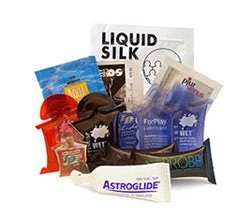
You are Invited - IRMA Teleconference - Lube Access - A Global Challenge


Lube Access - A Global Challenge
Monday, August 29, 2011, 1200 EDT

(click here to determine the time in your area)


Please join IRMA, AVAC and partners from PSI, Johns Hopkins, and the Global Forum on MSM and HIV as we discuss lube access in the global context - highlighting the needs, gaps, and challenges, as well as efforts underway to address them.

Click here to RSVP. Check back here in advance of the call for presentation slides. An audio recording of the call will be made available shortly after its completion.

The call's proposed agenda is as follows:
  • Welcome and introduction

  • Stefan Baral (Johns Hopkins): Lube access in Africa among MSM

  • Beth Skorochod (PSI): PSI's work as a distributor of SRHR commodities, specifically lube distribution in developing countries

  • Pato Hebert (MSMGF): Lube-related information from the 2010 MSMGF global survey on HIV prevention and social norms

  • Jim Pickett (IRMA): The importance of addressing lube access now to prepare for eventual rectal microbicide access

  • Q&A, Discussion


Click here to RSVP.

[If an item is not written by an IRMA member, it should not be construed that IRMA has taken a position on the article's content, whether in support or in opposition.]

Survey reveals gaps in HIV programming for MSM

Via PlusNews.

A new global survey of more than 5,000 men who have sex with men (MSM) reveals a marginalized group of people with little access to basic HIV prevention tools such as condoms and few means to learn about HIV.

Conducted by the Global Forum on MSM & HIV between 24 June and 17 August 2010, the survey sought to highlight key gaps in global efforts to provide MSM with evidence-informed HIV prevention services. More than 1,000 of the study participants - drawn from all over the world - were health workers; 22 percent reported being HIV-positive.

The authors recommend expanding access to HIV prevention services for MSM across the globe, more focus on promoting awareness of emerging HIV prevention interventions and more robust and sustained stigma-reduction efforts. Some of the major findings of the survey include:

Access to health services - Fifty-three percent of participants said they could easily access testing for sexually transmitted infections, while 51 percent said they had easy access to HIV counseling; 47 percent found STI treatment easily accessible.

Just 36 percent of MSM surveyed reported having easy access to HIV treatment, while 27 percent said it was available but difficult to access, was not available or had never heard of HIV treatment.

Access to HIV prevention - Free condoms were easily accessible only to 44 percent of participants, while just 29 percent could obtain lubricant.

Just 30 percent of participants reported easy access to each of the basic HIV prevention services, including behavioural HIV/AIDS interventions, HIV education materials, mental health services, free or low-cost medical care, media campaigns focused on reducing HIV, and laws/policies to ensure access to HIV prevention.

Just 25 percent said they had access to sex education.

Stigma - Africa reported the highest levels of stigma and external homophobia, followed by the Middle East, Asia-Pacific, Central/South America and the Caribbean, which all reported similar levels of stigma. Australia and New Zealand reported the lowest levels of stigma and external homophobia.

MSM from Africa and the Asia-Pacific region reported the highest levels of internalized homophobia.

Read the rest here.

[If an item is not written by an IRMA member, it should not be construed that IRMA has taken a position on the article's content, whether in support or in opposition.]

POZ love for IRMA - The Anal Dialogues

The July/August 2011 issue of POZ Magazine belongs to IRMA and rectal microbicides. Check it out for a nice history of our work and a snapshot of the science, including important information on lubricant safety.

via POZ.com, by Trenton Straub

Excerpt:

Perhaps IRMA’s most visible work is three game-changing reports it published in conjunction with the biennial International Microbicides Conference. The first, Rectal Microbicides: Investments & Advocacy in 2006, compiled what research was being done and where—a tricky task. “A lot of researchers were concerned that if ‘anal’ or ‘rectal’ appeared in research proposals or reports, they wouldn’t get funded, so they’d scrub their papers so those words wouldn’t show up,” LeBlanc says. “Instead, they would refer to ‘topical use of products’ or other language.” And because of the dangers surrounding the subject—male-to-male sex is illegal in many countries, including 31 in sub-Saharan Africa—IRMA first had to gain researchers’ trust, proving they were not raging advocates who would alienate and antagonize. Their professionalism paid off, and the report was a hit. “It showed we were serious,” Pickett says, “and we got hundreds of new members.” 


Read the rest.

[If an item is not written by an IRMA member, it should not be construed that IRMA has taken a position on the article's content, whether in support or in opposition.]

New Guidelines on HIV Programming for MSM

Via IRIN.

HIV and gay rights activists say new guidelines released by the UN World Health Organization (WHO) on HIV programming for men who have sex with men (MSM) will not only improve health service provision for MSM, but will also act as an advocacy tool in the fight for the rights of this marginalized population.

"The document provides well-researched and evidence-based recommendations for HIV prevention and treatment of MSM, which will be useful for clinicians," said Kevin Rebe, a doctor with Health4Men, a South African health service provider which caters specifically for MSM. "The language of the paper is couched in human rights, and makes a strong call for decriminalization of same sex sexual activity, so it will also be useful for activists seeking to end discrimination."

The guidelines are designed for use by national public health officials and managers of HIV/AIDS and STI (sexually transmitted infections) programmes, NGOs and health workers. They contain MSM-specific programme activities such as the use of water- and silicone-based lubricant for the correct functioning of condoms during anal sex.

The guidelines do not advise medical male circumcision - a measure WHO recommends for HIV prevention among heterosexual men - for HIV prevention among MSM due to the lack of sufficient research on its effect of its use in MSM sexual activity.

They further recommend that health services adhere to the principles of medical ethics and the right to health, and ensure that MSM feel comfortable enough to seek medical care, with MSM-specific health needs catered for within national health systems.

"Like many other African countries, all men in South Africa are assumed to be straight, so health workers are not aware of the need to identify people of different sexualities during consultations; outside of centres like ours, there is little competency in providing health care to MSM," said Rebe. "By availing this knowledge, the guidelines will empower health workers to provide better care to MSM."


Wake-up call

In countries like Uganda, where homophobia is deeply entrenched both within society and the law, gay rights groups hope the new guidelines will serve as a wake-up call to the government about the need to include MSM in HIV programming.

"I hope the new guidelines will be an eye-opener to the government, who have so far ignored MSM within HIV prevention, treatment and support; it should show them that MSM exist in Uganda and are at high risk," said Frank Mugisha, executive director of the NGO Sexual Minorities Uganda. "They therefore cannot be ignored and urgently require HIV interventions."
 
Read the rest here.

[If an item is not written by an IRMA member, it should not be construed that IRMA has taken a position on the article's content, whether in support or in opposition.]

KENYA: Rural MSM Too Afraid to Access HIV Health Services

Via PlusNews.

Discriminatory laws and a largely homophobic society mean that men who have sex with men (MSM) in Kenya generally find it difficult to access HIV-related information and health services, but rural MSM have an especially hard time.

When Kibet Kipsowen*, 30, a cattle keeper in Kenya’s Rift Valley Province, and his partner have sex, they use the oil-based jelly he applies when milking his cows; he’s never heard of a water-based lubricant, let alone used one. “Milking jelly is the only lubricant I have known for the last four years,” he told IRIN/PlusNews at his home in the village of Lanjuera.

Health practitioners discourage the use of oil-based lubricants for anal sex, as the oil degrades condoms, increasing the likelihood that they will break. Studies have found that most African MSM use oil-based lubricants, heightening their risk of contracting HIV.

According to a 2008 Modes of Transmission study conducted by UNAIDS and the government, MSM and prisoners account for 15.2 percent of new HIV infections in Kenya annually.

Kipsowen and his partner have been an item for a few years now, but dare not let anyone in their village know they are a couple. “Even people who have ‘normal’ sex do not speak about it - I can never reveal my sexuality or else I would risk being an outcast, or even be killed,” he said.

The only other person in the village who knows about his sexuality is Soita Wellapondi, a local nurse and social worker, and that’s only because Kipsowen visited her when he developed a sexually transmitted infection.

“At that time I had a lot of wounds in my anus; I felt so much pain that I thought I would die, yet I could not even confide to my own mother, brother or sister, and I could not visit a health centre,” he said.

He knew that by confiding in Wellapondi he risked his secret being revealed to the community, but he felt she was his only chance of accessing health care. “I bought him some antibiotics and pain killers; it was absolutely impossible to convince him to visit a health centre, even one far away where he is not known,” said Wellapondi.

Local health workers have very little experience and no training in dealing with MSM. A clinical officer at the Mogotio health centre near Lanjuera says he has only ever had one MSM client.

Even people who have 'normal' sex do not speak about it - I can never reveal my sexuality or else I would risk being an outcast or even be killed“He came here for treatment of injuries resulting from anal sex, and was advised to come for further treatment but he never came back,” said the clinical officer, who declined to be named.


Read the rest here.

[If an item is not written by an IRMA member, it should not be construed that IRMA has taken a position on the article's content, whether in support or in opposition.]

IRMA lube safety presentation gets some love

IRMA recently teemed up with the Global Forum on MSM and HIV to present on one of our key issues - lube safety "Are Lubes Safe for Rectal Use? What MSM Need to Know."

IRMA Secretary and resident lube expert Marc-André LeBlanc did the honors, and if we must say so ourselves, did them quite well. And we're not the only ones saying so.

The webinar was attended by over 60 people from all over the world and was even covered on a number of websites.

About.com/sexuality says: "I've sung the praises of IRMA, the International Rectal Microbicide Advocates in the past, and wanted to pass along an interesting resource. It is primarily intended for people who work with men who have sex with men (that's what the MSM above stands for, in case you're more of a media person and were wondering why the mainstream media needs to know about rectal lubes in the first place), but may be of interest to sex educators, lube lovers, or anyone with a nerd's love of information."

And the Bilerico Project gave the issue some attention as well. While the blogger on Bilerico is a little confused about what IRMA has contributed to the field of lube safety (we DID the internet survey on lube use, we DID NOT actually test specific lubes in the lab, that is for our scientist friends) - we very much appreciate the coverage. It helps get the word out and that is what's most important.

Full Presentation: Are Lubes Safe for Rectal Use? What MSM Need to Know (or download a pdf of the slides here).

[If an item is not written by an IRMA member, it should not be construed that IRMA has taken a position on the article's content, whether in support or in opposition.]

A comparison of condom use errors and problems for heterosexual anal and vaginal intercourse

via International Journal of STD and AIDS

Abstract

Condom use errors and problems were compared for anal and vaginal intercourse among a convenience sample of heterosexual men aged 18–66 years (n = 757). Men completed an online questionnaire for the last male condom use event for penile–anal (10.4%) or penile–vaginal (89.6%) intercourse. The prevalence of condom use errors and problems was similar regardless of intercourse type with a few exceptions; those reporting anal intercourse were significantly more likely to report using water-based (P < 0.001) and oil-based (P = 0.037) lubricant and to remove condoms before sex was finished (P < 0.001). The large majority of the sample (93.8%) reported at least one of the nine errors assessed and almost half (46.2%) reported at least one of the seven problems, indicating that many adults may need assistance with these issues. Condom use promotion programmes designed for heterosexual adults are needed that address condom use errors and problems for penile–anal as well as penile–vaginal intercourse.

[If an item is not written by an IRMA member, it should not be construed that IRMA has taken a position on the article's content, whether in support or in opposition.]

Study finds most lubricants damage rectal cells and some increase HIV activity

via Aidsmap, by Gus Cairns

A study by the Population Council (Begay 2011) has found that every one of a panel of 41 commercially-available sexual lubricants for sale in the USA damaged human rectal and colonic cells in the test tube and compromised the integrity of the single-cell layer that forms the surface of the rectum.

In contrast Carraguard, a gel formerly tried as an experimental microbicide, did not damage cells

Unexpectedly, the investigators found that four of the lubricants not only damaged the rectal lining cells but appeared actively to increase HIV replication in the cell cultures.

Read the rest.

Click here for all of our blog posts regarding lubricants and lube safety.


[If an item is not written by an IRMA member, it should not be construed that IRMA has taken a position on the article's content, whether in support or in opposition.]

Study Authors Call for More Testing of Personal Lubricant Safety

via About.com, by Cory Silverberg

Last May two studies were released that got a lot of attention for pointing out the potential role personal lubricants might play in STD transmission during anal intercourse. Specifically, lab studies raised the possibility that lubricant could actually make transmission easier by irritating the rectal lining.

The work was supported by the interdisciplinary group, International Rectal Microbicide Advocates, who have been doing their best to help researchers and health care providers contextualize the findings so they are neither blown out of proportion, nor cast aside as irrelevant.

This week more findings were published in the journal AIDS Research and Human Retroviruses. Researchers studied forty-one brands of lubricants (taken from the IRMA list of most frequently used lubricants), looking for any anti-HIV-1 activity, toxicity, and essentially the salt content of lubricants that could contribute to damage at the cellular level.
Read the rest.


[If an item is not written by an IRMA member, it should not be construed that IRMA has taken a position on the article's content, whether in support or in opposition.]

Lube Alert: Population Council Releases New Lube Safety Data

via AIDSmeds, by David Evans
A forthcoming research report suggests a number of personal lubricants can damage anal tissue cells and increase HIV replication, potentially heightening the risk of contracting HIV, notably if condoms aren’t used.

The “personal lubricant” market is a thriving one. One popular website sells 53 different brands, with many boasting several varieties. If you’d like one that tastes like fruit or chocolate, or adds the sensation of heat, you’ve got multiple options to choose from. The same goes for the degree of slipperiness, the type of sex you want to have, the ease of cleanup and, most important, condom compatibility.

What sexual accoutrement retailers can’t tell you is whether a lube will increase, decrease or have no effect on your chance of becoming infected with HIV if the condom breaks or you decide not to use a condom in the first place. Until recently, it wasn’t a question high on the list of researchers’ or manufacturers’ priorities—lubes are intended to keep condoms from tearing during sex, end of story. But for scientists at the Population Council, a New York City–based research organization at the forefront of HIV microbicide development efforts, the positive or negative effects of lubricants on HIV transmission has been a nagging issue for years.

New research results from the nonprofit organization suggest there may be reasons for concern. According to laboratory studies the group conducted—on schedule to be published in a forthcoming issue of AIDS Research and Human Retroviruses and currently available online—a large number of popular lubes may actually make it easier for HIV to get past the body’s defenses, notably during anal sex without a condom. Even more alarming is the finding that four lubes in particular cause HIV to reproduce up to four times faster than it does in the absence of such products.

Read the rest.

Read the IRMA Q&A on lubricant safety.

[If an item is not written by an IRMA member, it should not be construed that IRMA has taken a position on the article's content, whether in support or in opposition.]

PODCAST: Get Your Butt Out of the Sand

via Feast of Fun

Your body is a magical wonderland waiting to be explored, but proceed with caution because risks may be lurking around the backside. You can’t just stick your butt in the sand and pretend there’s nothing behind there to deal with.

Today health advocate (and IRMA chair) Jim Pickett joins us to answer your vital questions about your butt. Yes, your derriere, your bon bon, your gluteus maximus, because overcoming our bashfulness over the booty is key to gay men’s health.(And rectal microbicides too!)

Why do gay men enjoy anal sex? How do I know if my boyfriend is good for me? Are some types of lube safer than others? How do I keep my booty fresh and fabulous?

Plus we take a closer look at the Asset Based Lifestyle- the secret every gay man needs to know about focusing on what works in your life in order to bring about the change you need to shine.

And of all the hot hot hot news... Listen.


[If an item is not written by an IRMA member, it should not be construed that IRMA has taken a position on the article's content, whether in support or in opposition.]

Journal of Sexual Medicine: Study examines effect of water-based and silicon-based lubricant

via EurekAlert

A new study by sexual health researchers at Indiana University found that women who used lubricant during sex reported significantly higher levels of satisfaction and pleasure.

The study, involving 2,453 women, is the largest systematic study of this kind, despite the widespread commercial availability of lubricant and the gaps in knowledge concerning its role in alleviating pain or contributing to other health issues.

Read the rest.

[If an item is not written by an IRMA member, it should not be construed that IRMA has taken a position on the article's content, whether in support or in opposition.]

Cheeky! IRMA Chair Chats Up Microbicides, Lube Safety, and No Promo Homo

Rapid HIV testing: Australia's 'big embarrassment'
via SX and CityVoice (Sydney), by Brendan Bolger
...Anal sex could be playing an important role in (heterosexual) HIV transmission. Vulnerable women have unprotected anal sex. Anal sex is used as contraception...
Read the rest.

NEW: Lube Safety Fact Sheet and QA for Advocates

IRMA urges more research on lube safety


After an extraordinary amount of work with IRMA's Lube Safety Working Group and members of the IRMA Steering Committee - led by IRMA Secretary Marc-André LeBlanc over the course of four months and many, many drafts - we are delighted to release two important documents to help you gain a better understanding of the safety issues around lubricants used for anal intercourse.

Many men, women and transgender people use lubricants (lubes) during sexual intercourse. Yet we know very little about their safety when used during anal intercourse (AI).

Very few studies have examined the effect of lubes on human rectal tissue, but those that did showed mixed results. Most water-based lubes tested in these studies were shown to be damaging to rectal tissue. However, some lubes were more damaging than others. Furthermore, in one study the use of lube for AI was associated with the presence of rectal sexually transmitted infection (STI).

Based on current evidence:
  • More research is urgently needed to explore if there is a link between lube use and acquiring HIV and/or rectal STIs.
  • It is unclear whether any particular type or brand of lube might increase, decrease or have no effect on acquiring HIV and/or rectal STIs.
  • Using male or female condoms is still considered the best way to prevent acquiring HIV and STIs during AI. In addition, the use of condom-compatible lubes has been associated with a decreased risk of condoms breaking or slipping.
  • It is not possible at this time to recommend for or against using lubes if having AI without condoms.
  • Lube use on its own is not a proven method of HIV or STI prevention.
For more detailed information:

Kenya's Ishtar MSM Launches Lube Access Campaign

[We are very proud of IRMA Steering Committee Member Lourence Misedah - great work!]

New City, Real Job, Same Old IRMA Advocate

by Becca Cadoff
 
Hi, my name is Becca and I’m a Rectal Microbicide Advocate.

Wait, no, that’s not the right way to introduce myself at my new job… I was on the train to the first day of my new job, thinking about the best way to introduce myself to my new co-workers…

After graduating from Northwestern University in Evanston, IL, I moved to New York to work for a civil rights litigation organization.  But growing up in a bubble-town in New Jersey left me naïve, but working in Chicago at an AIDS advocacy organization during college opened my eyes to a host of problems with our communities.  I’m no longer the bright-eyed girl from a preppy east coast town, but a college educated graduate, well-versed in some of the most difficult problems facing the world.  So, with all of that, how do I convey my experiences and who I am at my core without talking about my internship at the AIDS Foundation of Chicago?  Without talking about IRMA?  Without talking about rectal microbicides?  I really didn’t know…

When I started my AFC/IRMA internship in January, I was passionate about HIV care, treatment, and prevention, but I knew close to nothing about microbicides, much less rectal microbicides.  I knew that risk of infection via anal sex was higher than via vaginal sex, but I couldn’t really tell you why.  I knew that lubricant use was important in anal sex, but I didn’t know that some lubricants may actual be harmful to the anal canal.  I knew that some people were having anal sex – all over the world and all types of couples – and I knew that other people were afraid of anal sex, but I didn’t know that the people who were afraid (and ignorant) were actually making anal sex more potentially dangerous for those who were having it. 


Engage your friend, family, coworkers in a conversation about how important it is to continue research on rectal microbicides and other types of HIV prevention.

Before my internship, I was interested in HIV prevention, but I knew a lot about behavior modification and only a little about other ways to prevent new HIV infections.  My senior thesis proposal focused on condom negotiation, and asked whether women with better condom negotiation skills could lower their risk of infection, and help teach other women how to more effectively get their partners to use condoms.  But I slowly realized that the results of my study would not be of use until eons from now.  Even once the data had been collected, it would have taken years to develop a program to integrate the results, and much more time after that for women to actually bring their new condom-negotiation skills into the bedroom.  Yes, behavior change can be effective, but if you ask anyone who has ever tried to diet, it takes a really long time and, to put it plainly, it is just so freaking hard!  Without careful monitoring, encouragement, and focus, it’s all too easy for one cookie to turn into a whole cake, and for one instance of unprotected sex to turn into night after night of high risk for HIV infection. 

So why spend time on trying to change individuals’ behavior when it is possible to develop ways to protect people within the constraints of their normal behavior?  Look at this: We know that many women take a daily birth control pill.  So what about a daily pill that a woman could take WITH her birth control that would also prevent HIV?  She doesn’t have to set a different alarm, or remember to do something else.  (A man could easily take the same pill, and there are many trials of this method – called PrEP – going on throughout the world.  Women are just better for this example because so many already take oral contraceptive pills and thus adding a pill wouldn’t change their daily routines.) 

Just like we know thousands of women take the Pill, we know that many of the thousands of individuals worldwide who engage in anal intercourse use lubricant, or clean out the rectum before sex.  Adding some kind of HIV fighting agent to the products that are already widely used turns regular lube into a microbicide.  It also means that we only have to convince people to use a different but very similar product, not to change their routine all together.  A miniscule effort compared to a total behavior 180.  It’s much more effective to get lube-users to switch to microbicides than to put condom use where condom use doesn’t already exist. 

But don’t worry, I’m not done with behavior modifications as a method of HIV prevention.  For some people, it can work - so we should stick with it!  But we need to protect EVERYONE from HIV infection, not just the people who are able to change their daily activities.  We desperately need to develop a more comprehensive toolkit that we can use to complement the behavior modification, and the condoms, and the PEP, and all the other methods of HIV prevention that are floating out there.  And the best way to get this toolkit full is to ask donors to fund the research, scientists to do the research, and everyone else to make sure that rectal microbicides become a reality.    

That’s where I – and you – come in as an advocate.  Advocacy is so very unbelievably important.  And it can be really easy too: read one article on microbicides every day, and tell someone what you read.  Engage your friend, family, coworkers in a conversation about how important it is to continue research on rectal microbicides and other types of HIV prevention.  Spreading the knowledge makes a big difference.  I’m sure you’ve heard never to underestimate the power of stupid people in large groups.  What about the power of informed, knowledgeable people in large groups?  I’d say if the analogy holds, things look good on our end.  Rectal microbicides aren’t too distant a reality if we really make an effort to ask for them. 

Hm, so maybe I should take my own advice and tell my co-workers about rectal microbicides.  In that case, I guess “Hi, my name is Becca and I’m a Rectal Microbicide Advocate” isn’t such a bad introduction after all!