Pages

Tampilkan postingan dengan label gay men. Tampilkan semua postingan

Has anal sex gone out of vogue? What does this mean for HIV prevention?

via the HIV MSM blog

So the Advocate recently reported the findings of a large-scale survey on sexual behaviors.  Apparently, only 37.2% of over 24,000 gay and bisexually identified men indicated that their last sexual encounter consisted of anal sex.   The most practiced activities were kissing (almost 75%) and mutual masturbation (73%).

The survey, entitled  ‘The Gay and Bisexual Men’s National Sex Survey’ was sponsored by Manhunt,  its sexual health affiliate Manhunt Cares (see my past post here about them) and  its research partners, present the findings in a cutesy interactive graphical form which can be accessed from clicking on the picture on the left (i.e. I found out that 80.8 % of surveyed men have eaten cum at some point in their lives!) The abstract of the study, which appears in the Journal of Sexual Medicine can be found here.

Now before we give up our lube and condoms and other devices we find makes our anal sex experience more comfortable, there a few things to keep in mind.  For some reason, the majority of respondents in this latest conducted by researchers from Indiana University and George Mason University were Caucasian males.  Perhaps results would be changed if there was some diversity in the subject pool.  Also, one should note that the respondents were “self identified” gay or bisexual.  Perhaps if behaviors of non-identified men who have sex with men, (i.e. heterosexual identifying men) were recorded the results would also show a higher indication of anal sex.  However, I like the point that one of the commentators made:   Anal sex does require a lot of effort (much like vaginal penile sex as well) and perhaps people don’t want to go through such effort simply to get off.

Read the rest.


[If an item is not written by an IRMA member, it should not be construed that IRMA has taken a position on the article's content, whether in support or in opposition.]

The European MSM Internet Survey (EMIS) - See What They Learned!

via EMIS

This is the second community report written especially for you - members of Europe’s diverse LGBT communities. We hope that you find this information interesting and helpful! The first community report covered testing for HIV, knowledge about testing, being ‘out’, sexual happiness and the ‘sexiest man on the planet’. All EMIS community reports are available in 25 languages at www.emis-project.eu.

In this second report we will focus on a range of topics dealing with sex and the number and type of sexual partners, as well as testing for STIs other than HIV. Please be aware that this information is only preliminary, and that we are in the process of preparing a more detailed report for publication later in 2011. Similar to the previous community report, we have included an overview of the data discussed in this report on page three. When reading the table, if you compare the numbers of EMIS respondents in the left column with the first report, you will notice that they have slightly decreased. This is due to changes in the criteria used to exclude respondents’ data from the study if responses were not consistent. We do our best not to report on data from men who hastily clicked through the survey and who did not provide answers that actually corresponded to their knowledge and experiences.

Who You Had Sex With

In each country a significant number of you, who completed the EMIS questionnaire, did not identify as ‘gay or homosexual’. This means we clearly reached a wide range of men who have sex with men. Indeed, around 15% of all respondents reported having had sex with a woman in the twelve months prior to completing the survey. As the table on page three shows, this went from a low of nearly ‘one in ten’ of you in Belgium (.be), the Netherlands (.nl), Poland (.pl) and France (.fr) to over a quarter of you in Slovenia (.si), Bulgaria (.bg) Romania (.ro) and Bosnia & Herzegovina (.ba).

How Many Men You Had Sex With

In the table on page three you can see in which countries partner numbers were particularly high or low. Many of you (43% to 59%) had between two and ten partners, while having more than ten partners went from 10% to over 25% across the 38 countries. The number of sexual partners tells us a few things, such as, how easy or difficult it is to find partners (because they might not be ‘out’ or there might be no places or venues for you to meet). This may also tell us about how hard it might be for many of you to build steady relationships, particularly in societies where same sex couples are not officially recognised or allowed. Of course many men choose to have multiple sex partners. It is advised that the more partners you have, the more often you need to have a sexual health check-up.

Where You Met Men to Have Sex

We asked you where you met your last non-steady male sex partner (of those who had a non-steady partner in the last twelve months). The most common response was “on the Internet”, followed by various sex venues including gay saunas and backrooms of bars and clubs.

Read the rest.


[If an item is not written by an IRMA member, it should not be construed that IRMA has taken a position on the article's content, whether in support or in opposition.]

Why Uganda’s Anti-Gay Legislation Is the World’s Business

via Bloomberg News, by the editors

Uganda’s anti-homosexuality bill just won’t go away.

Last spring, an egregious proposal by a member of the ruling party to impose harsh penalties, including death, for homosexual acts was shelved for a second time when Uganda’s parliament recessed without debating it. This week, parliament moved to revive the measure.

Homosexuality is already illegal in Uganda. The law would increase the maximum penalties, providing up to life imprisonment for homosexual acts and execution for so-called aggravated homosexuality -- repeated homosexual behavior, homosexual acts with a minor or a disabled person, and homosexual acts by anyone who is HIV-positive.

The original bill also made it punishable by up to three years’ imprisonment to fail to report homosexual behavior to authorities within 24 hours. In the last parliamentary session, a committee recommended scratching that provision, which would compromise health workers involved in AIDS control efforts. It’s not clear this time around whether the bill will go through the committee process anew; in any case, committee views are not binding.

The bill enjoys considerable support in Uganda, where homosexuality is widely abhorred, and may well pass if it comes to a parliamentary vote. President Yoweri Museveni would probably veto it, knowing that passage would alienate Uganda’s Western allies, on whom the country relies for development assistance.

For now, the circus around the draft law suits Museveni, who has been in power for 25 years. Domestically, it whips up support for his party, the National Resistance Movement. Internationally, it attracts opprobrium but also distracts critics from other Ugandan scandals for which Museveni bears more direct responsibility: the arrest of opposition figures, police brutality, corruption.

Read the rest.


[If an item is not written by an IRMA member, it should not be construed that IRMA has taken a position on the article's content, whether in support or in opposition.]

Don't Delay HIV Prevention for Gay and Bi Men

via The Huffington Post, by David Ernesto Munar

Lives will be saved when the Food and Drug Administration puts its stamp of approval on a groundbreaking preventative approach called pre-exposure prophylaxis, or PrEP, recently found to reduce HIV infections.

With PrEP, people who are not infected with HIV take a daily pill, usually used to treat the disease, to help prevent infection -- as part of a broad HIV prevention approach that includes condoms and safer-sex counseling.

But the longer the FDA waits before beginning its review of the HIV medication Truvada for prevention, the more lives will be unnecessarily lost. This is particularly true for those at greatest risk: gay and bisexual men.

We urge the FDA to immediately begin its review for approval of Truvada for PrEP for gay and bisexual men.

Last year the iPrEX trial, touted as the scientific breakthrough of the year by TIME magazine, found that gay, bi and other men who have sex with men who took Truvada, along with counseling and condoms, had 42 percent fewer HIV infections than with counseling and condoms alone. Among those who used the prevention pill most consistently, the drop in infections was far greater.

And remember the sobering context: between 2006 and 2009, the number of young gay African-American men infected with HIV in the United States increased by 48 percent, according to the U.S. Centers for Disease Control.

Read the rest.


[If an item is not written by an IRMA member, it should not be construed that IRMA has taken a position on the article's content, whether in support or in opposition.]

New study finds gay and bisexual men have varied sexual repertoires

via Indiana University

"The data revealed some interesting information on the types of sexual behavior that MSM reported, including that less than 40 percent of men engaged in anal intercourse during their most recent sexual event."

"Of all sexual behaviors that men reported occurring during their last sexual event, those involving the anus were the least common," Rosenberger said. "There is certainly a misguided belief that 'gay sex equals anal sex,' which is simply untrue much of the time."

A new study by researchers at Indiana University and George Mason University found the sexual repertoire of gay men surprisingly diverse, suggesting that a broader, less disease-focused perspective might be warranted by public health and medical practitioners in addressing the sexual health of gay and bisexual men.
 
The study, published online ahead of print in the Journal of Sexual Medicine, tapped the largest sample of its kind in the United States to examine the sexual behaviors of gay and bisexual men. In collaboration with the OLB Research Institute at Online Buddies, Inc., researchers were able to include feedback from nearly 25,000 men. While gay study participants reported 1,308 unique combinations of behaviors, the most commonly reported behavior was kissing a partner on the mouth.

From a public health standpoint, say the researchers, this study provides professionals with data on the behavior of men having sex with men (MSM) that was missing from the sexual health discussion.

Read the rest.


[If an item is not written by an IRMA member, it should not be construed that IRMA has taken a position on the article's content, whether in support or in opposition.]

HIV/AIDS Organizations Tell FDA and Gilead Sciences: Don’t Delay HIV Prevention for Gay and Bisexual Men and Transgender Women

[Press Release - October 18, 2011]

Thirteen prominent U.S. HIV/AIDS organizations have issued an open letter to the U.S. Food and Drug Administration and Gilead Sciences calling for prompt regulatory review of pre-exposure prophylaxis (PrEP) for HIV prevention in gay and bisexual men and transgender women (men who have sex with men, or MSM). The letter urges FDA and Gilead to start the review process that could allow safe and appropriate approved PrEP use as a public health intervention, and not to delay review because of distinct questions about the safety and efficacy of PrEP in heterosexual populations.

[The letter is available online here. IRMA is a signatory.]

Pre-exposure prophylaxis, or PrEP, is a new HIV prevention method in which an uninfected person takes a daily HIV medication to reduce HIV infection risk. Data from an international study released in November, 2010 called iPrEx found that men and transgender women who have sex with men who received a daily single-tablet dose of the HIV drugs tenofovir and emtricitabine along with condoms and safe sex counseling had an average of 42% fewer HIV infections than those who received condoms and counseling alone.

Advocates assert that the need for new HIV prevention strategies for MSM is urgent. The U.S. Centers for Disease Control (CDC) estimates that MSM account for more than half of all new HIV infections in the United States. CDC logged an estimated 34% increase in HIV infections in young gay men between 2006 and 2009, and a 48% HIV increase among young black/African American gay men over the same period.

“We desperately need new strategies and tools to reduce the rapidly increasing rates of HIV infection in black gay and bisexual men,” said Phill Wilson, executive director of the Black AIDS Institute. “We’ve had evidence of PrEP’s effectiveness in MSM for almost a year now. It’s time to use every tool at our disposal to reduce the 50,000 new HIV infections that occur each year in this country. Prompt FDA review will help ensure that appropriate guidelines for PrEP use are established that can reduce HIV infections and safeguard public health.”

Data on PrEP in heterosexuals raise important but unique questions that may require further study. Two major trials in Africa found that PrEP reduces HIV infection risk in heterosexual men and women substantially. But two other studies present conflicting information about how PrEP works in heterosexuals. Critical and necessary efforts to understand how PrEP interacts with hormonal contraception, or how PrEP may impact pregnancy, however, should not delay access to a potentially lifesaving form of HIV prevention for MSM.

Before the results of the heterosexual PrEP studies were announced, the FDA and Gilead Sciences, the maker of the drugs, were reported to be ready to move quickly to consider approval of PrEP for those MSM who could benefit from the approach. Recent signs indicate, however, that FDA review of PrEP for this population may not start until the agency acquires more data on PrEP among heterosexuals—despite the urgent need for new HIV prevention strategies for MSM, and the fact that PrEP data in MSM were announced nearly one year ago.

“The FDA and Gilead Sciences should move quickly to ensure a thorough review of PrEP for MSM now, while they both work simultaneously and swiftly to thoroughly address questions and concerns about PrEP among heterosexual populations,” said Mitchell Warren, executive director of AVAC “Prompt FDA review of PrEP in MSM is the right thing to do for public health. In the midst of a growing HIV epidemic, HIV prevention delayed is HIV prevention denied.”


[If an item is not written by an IRMA member, it should not be construed that IRMA has taken a position on the article's content, whether in support or in opposition.]
Race, Gender, & Sexuality in HIV Prevention Campaigns

via The Society Pages, by Christie Barcelos

Gay men and bisexual men still represent a disproportionate number of HIV cases in the United States (CDC). In addition, African-American and Latino men are significantly more likely than white men to be diagnosed with HIV and die from AIDS-related illnesses. Numerous HIV prevention campaigns are thus aimed at these populations.

It’s important to try to reduce the HIV among these populations, but we also need to think critically about how prevention strategies reinforce stigmatization.

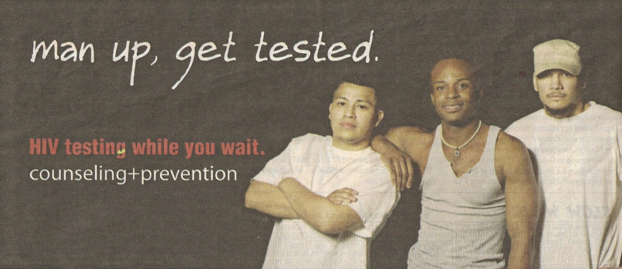
For example, this ad from a western Massachusetts clinic uses the phrase “man up, get tested” — taking care of yourself by getting tested for HIV is linked to your masculinity. What’s interesting is that by including only men of color in the photo, the ad suggests that black and Latino men are particularly obsessed with their masculinity, more so, perhaps, than white men. It also potentially reinforces stereotypes about black men as hyper-sexualized and Latino men as machismo.


[If an item is not written by an IRMA member, it should not be construed that IRMA has taken a position on the article's content, whether in support or in opposition.]

A Donor Deferred: The Lifetime Ban on Blood Donations from Gay Men

via The Huffington Post, by Robert Valadez

"Save a life, give blood," read the sticker on a colleague's lapel. It sounds wonderful -- where do I sign up? Unfortunately, I can't donate blood because I'm gay. Many people are surprised to hear that gay men are prohibited from donating blood in most countries around the world, including the U.S. I've sat at several dinner parties, perched atop my advocacy soapbox, informing straights and gays alike of the U.S. Food and Drug Administration's (FDA) policy that permanently defers any man who has had sex with another man, even once, since 1977, from donating blood.

It wasn't long ago that I was unaware of the policy. Like many college students across the nation, I happily signed up to donate blood at the campus blood drive. In fact, I rallied a group of friends to join me in participating in one of our country's most noble civic duties. One by one, we were called to donate. However, when my name was called, I was escorted to speak with a phlebotomist rather than fitted with an arm tie and stress ball. I was informed that my blood would not be accepted. Not today, not ever again. It had nothing to do with having consumed questionable British meat products or having a deficiency in iron. Rather, I had answered yes to the question -- the one that asked if I had had sex with a man since the 1970s. Given that I was born in the 1980s, the question seemed oddly phrased to me, not to mention unclear as to the definition of sex. Regardless, I checked the box, unaware of its repercussions. Suddenly, I was blacklisted.

Read the rest.


[If an item is not written by an IRMA member, it should not be construed that IRMA has taken a position on the article's content, whether in support or in opposition.]

Targeting the Invisible World Of Men Who Have Sex With Men

via Outwords, by Peter Carlyle-Gordge

Ask any outreach worker in the fight against HIV transmission and you’ll find one of the hardest at-risk groups to reach is MSM, or men who have sex with men.

Men in this group don’t necessarily identify as gay. Some may be married to women and have families. Some may simply avoid defining their sexual orientation and it is often hard to pinpoint where they gather or connect.

Now, if reaching the MSM group is challenging here, consider its near impossibility in such homophobic places as Africa, a place still plagued by superstition, repression and an outright burning hostility to any sexual practices beyond the vanilla heterosexual variety. In many Islamic countries such as Iran and Iraq, being attracted to the same sex may bring instant death by a mob, or less instant death after a shameful “trial” in an Islamic court, which may sentence you to be hanged, often in public.

Attitudes to same-sex attraction in Africa aren’t much better, with a nasty, often violent reaction to same-sex couplings – an official kind of homophobia that is encouraged by the Neanderthal and ignorant Catholic and Anglican churches. Indeed, the current worldwide Anglican communion is deeply split on same-sex rights, thanks largely to the Archbishop of Canterbury kowtowing in fear to the outspoken black African bishops who despise homosexuality and claim God does, too.

You don’t need to go far to stack up evidence of this official homophobia. The president of Iran famously came to the U.S. and told a university audience that same-sex dalliances did not exist in Iran. The evidence in the form of beatings and hangings of gay men tends to undermine his insane statement.

Read the rest.


[If an item is not written by an IRMA member, it should not be construed that IRMA has taken a position on the article's content, whether in support or in opposition.]

Questions Surround PrEP Trials

via The New York Times, by David Tuller

In the past year, three landmark clinical trials have shown that a daily dose of the antiretroviral medication Truvada can protect individuals from infection with H.I.V. — a significant discovery, given the failure so far of all efforts to develop a vaccine against the virus.

Now researchers in San Francisco and Miami are planning to test this prevention strategy, called pre-exposure prophylaxis, or PrEP, in a pilot study supported by the National Institutes of Health. The researchers will soon recruit up to 500 uninfected men who have sex with men, especially those considered to be at greatest risk of infection, such as younger gay men and, in particular, African-Americans.

The men will be asked to take Truvada daily, and the researchers will monitor their compliance with the regimen, their sexual behavior and their health status. Already, though, the prospect of antiretroviral drugs’ being used for prevention as well as treatment is raising complex questions for researchers and advocates.

Will healthy uninfected people consistently take an expensive and powerful drug that can cause a range of side effects? Is it fair to provide medications to H.I.V.-negative individuals when so many of those already infected do not have access? Will those receiving the drug be more likely to engage in risky sex because they believe they are protected — even if they do not always take it as prescribed?

Read the rest.


[If an intem is not written by an IRMA member, it should not be construed that IRMA has taken a position on the article's content, whether in support or in opposition.]

Pro/Con: Two views of U.S. prohibiting gay men's blood donation

via The Los Angeles Times, by Jessica Pauline Ogilvie

Donor bloodLast month, the United Kingdom lifted its long-standing ban on accepting blood donations from gay men. Instead, health officials there implemented a new policy that allows men to become blood donors as long as they haven't had sex with another man in the previous year.

With this decision, the U.K. joined France, Italy, Japan and eight other developed countries in allowing gay and bisexual men to contribute to the nation's blood supply. Many of those countries require sexually active gay men to wait a year before giving blood, while others have deferral periods of six months or five years. Some countries have regulations that focus on potential donors' risky sexual behavior rather than their sexual orientation.

In the United States, however, men who have sex with men are still subject to a lifetime ban on donating blood. The U.S. Food and Drug Administration implemented the ban in 1983 after an estimated 10,000 people with the bleeding disorder hemophilia became infected with HIV through transfusions of HIV-tainted blood.

That policy has become increasingly controversial in recent years. Some experts in the field of blood safety — as well as gay rights activists — say that it's discriminatory and that scientific advances in testing for HIV render it obsolete. Many would like to see the policy changed to resemble the U.K.'s one-year deferral policy or have the ban lifted altogether.
On the other side of the debate are those who say that men who have sex with men still face a heightened risk of contracting HIV and that even a small increased threat to the blood supply isn't justifiable.

The issue has divided major U.S. health organizations. Last year, the FDA denied a request to overturn the ban, but the American Red Cross and others support moving to a one-year deferral.

Read the rest.


[If an item is not written by an IRMA member, it should not be construed that IRMA has taken a position on the article's content, whether in support or in opposition.]

Addressing the HIV Epidemic among Gay and Bisexual Men

via AIDS.gov, by Kevin Fenton, M.D., Ph.D., FFPH, Director, National Center for HIV/AIDS, Viral Hepatitis, STD, and TB Prevention, CDC

In 1981, our nation and its public health system were grappling with a new disease that was taking the lives of gay men across the United States. Thirty years later, HIV/AIDS continues to be a crisis among gay and bisexual men. The latest data show men who have sex with men (MSM) remain most affected in this country. Although MSM represent 2% of the population, they account for 64% of all new infections (including 3% among MSM who are injection drug users [IDUs]). CDC estimates that there were more than 30,000 new HIV infections in 2009 among MSM, including MSM-IDU. Though the numbers have gone down dramatically, approximately 7,000 MSM with an AIDS diagnoses still die each year and nearly 300,000 MSM with AIDS have died since the beginning of the epidemic.

Today, we commemorate the fourth annual National Gay Men’s HIV/AIDS Awareness Day, an observance founded by the National Association of People with AIDS to raise awareness of the HIV/AIDS epidemic among gay and bisexual men. This annual observance is one way we are focusing attention and resources on those populations at highest risk for HIV infection, including gay and bisexual men. This focus is a top priority outlined in the National HIV/AIDS Strategy (NHAS).

To reach those at risk, CDC is pursuing High Impact Prevention to support the most effective and impactful programs to aggressively reach the goals of the National Strategy. The interventions are being implemented at the federal, state, and local levels to reach the right populations at a scale large enough to make a significant difference. These approaches include expanded testing efforts to ensure more gay and bisexual men get tested at least annually, more often if at increased risk;prevention programs for people living with HIV and their partners; condom distribution; demonstration projects that focus on the most heavily affected communities; and matching HIV prevention funding for health departments and community-based organizations in those locations with the highest HIV burden.

Read the rest.


[If an item is not written by an IRMA member, it should not be construed that IRMA has taken a position on the article's content, whether in support or in opposition.]

CDC awards $55 million for HIV prevention among gay, bisexual and transgender youth of color

via NCHHSTP Newsroom

The Centers for Disease Control and Prevention today awarded $55 million over five years to 34 community-based organizations (CBOs) to expand HIV prevention services for young gay and bisexual men of color, transgender youth of color, and their partners. The awards expand upon a previous program to reach these populations with an increase of $10 million to fund a larger number of community organizations. The average award for each organization is approximately $300,000 per year.

“On this National Gay Men’s HIV/AIDS Awareness Day, we are reminded of the urgency of the HIV epidemic in the United States and the dramatic impact among gay and bisexual men, who account for more than 60 percent of new infections,” said Dr. Jonathan Mermin, director of CDC’s Division of HIV/AIDS Prevention. “We must also recognize that the epidemic cannot be overcome without effectively addressing the severe and rising toll of HIV infections among gay and bisexual men of color, who continue to be hardest hit by this disease.”

Recent data show that young men who have sex with men (MSM) of color are at particularly high and increasing risk of HIV infection. According to CDC estimates released in August, between 2006 and 2009, the annual number of new HIV infections increased 48 percent among young black MSM. Among Latinos, men who have sex with men are by far the most severely impacted, accounting for nearly two-thirds of all new infections. Nearly half of these infections among Latino MSM occurred in the youngest age group (aged 13-29). Transgender people are also severely affected by HIV. It is estimated that 28 percent of transgender people are HIV-infected.

The new CDC awards are designed to enable CBOs with strong links to these populations to meet their specific HIV prevention needs. As part of these awards, each organization will be required to provide specific prevention services. These include providing HIV testing to a total of more than 90,000 young gay and bisexual men and transgender youth of color, with a goal of identifying more than 3,500 previously unrecognized HIV infections (over the five-year funding period) – and linking those who are HIV-infected to care and prevention services. CBOs will also carry out proven behavioral change HIV prevention programs and distribute condoms to young gay and bisexual men and transgender youth of color who are at high risk for HIV or are HIV-infected.

Read the rest.


[If an item is not written by an IRMA member, it should not be construed that IRMA has taken a position on the article's content, whether in support or in opposition.]

'Less education' associated with PrEP and PEP use: only one in five gay men yet aware of PrEP

via aidsmap, by Gus Cairns

A survey (Mansergh) of 454 HIV-negative gay men in four US cities (New York, Los Angeles, Chicago and San Francisco) has found that men with lower educational attainment (high school only) were more likely to use antiretrovirals informally for HIV prevention, either as pre-exposure prophylaxis (PrEP) or post-exposure prophylaxis (PEP), than men who had had further education.
In a parallel survey of 557 HIV-positive gay men, men with lower educational attainment were, similarly, more likely to share their antiretroviral pills with HIV-negative partners to use as PrEP or PEP.

Taken together, 22% of the men in the two surveys were under 30, 35% in their 30s and 43% 40 or over. A third were black, 38% white and the rest Hispanic or of other ethnicity.

Roughly a third each of the sample had education only to high school level, to some college qualification, or to a university degree.

The survey asked both groups if they had used PrEP or PEP or, in the case of the HIV-positive men, provided it to others, in the last six months.

Informal use of PrEP or PEP was still comparatively uncommon; only a few per cent of those surveyed overall had used ARVs as prevention or provided them in the previous six mnoths.

However men with high-school-only education were two to six times more likely to report using one of these strategies.

Read the rest.


[If an item is not written by an IRMA member, it should not be construed that IRMA has taken a position on the article's content, whether in support or in opposition.]

Media campaign on disclosure and stigma changes gay men’s attitudes

via aidsmap, by Roger Pebody

A Canadian campaign which asked gay men “If you were rejected every time you disclosed, would you?” appears to have raised men’s understanding of the dilemmas which men with HIV face. The campaign also succeeded in reducing the number of men who try to avoid infection by relying on men with HIV disclosing their status, researchers report in the October issue of Health Education Research.

The campaign was not intended to broadcast a ‘message’ or give instructions, but to stimulate dialogue within local communities. Moreover the authors suggest that the extensive community consultation which went into its development contributed to the campaign’s success.

Staff from frontline HIV prevention work, public health, government and academia participated in the consultation which identified HIV-related stigma as a priority issue. Moreover they focused on stigma within gay communities as it is manifested in the attitudes of some HIV-negative men towards potential sexual partners who have HIV. The campaign developers believe that there are links between the problems of stigma, disclosure, conflicting assumptions and risk taking.

Read the rest.


[If an item is not written by an IRMA member, it should not be construed that IRMA has taken a position on the article's content, whether in support or in opposition.]

Methamphetamine use drives HIV infections among gay Thais

via BMJ group, by Bob Roehr

Bangkok
One in 10 gay and bisexual men aged 18 to 21 became infected with HIV during their first year of enrollment in a cohort study in Bangkok. The rate of new infections slows down a bit after that, in part because those most likely to become infected already are. Fully 1 in 3 of them carry the virus by the time they reach 30.

“From 18 to 21 it has been a slaughterhouse,” says Frits van Griensven, shaking his head in dismay. “They are getting the best prevention information possible, counselling every four months, condoms and lubricants. They know the facts of incidence of new infections.” And yet the infections continue to occur, “It is something that we cannot control with behavioural interventions.”

Van Griensven runs what is believed to be the only HIV prevention clinic in all of Asia that was created to serve men who have sex with men. This is despite the fact that in Asia, that group is 18.7 times more likely to become infected with HIV than the general population.

“It’s my opinion that the epidemic in young men is driven by methamphetamines – crystal ice. I don’t know what to do about it,” he says.

Read the rest.


[If an item is not written by an IRMA member, it should not be construed that IRMA has taken a position on the article's content, whether in support or in opposition.]

Gay men use many ways to moderate sexual risk

via aidsmap, by Gus Cairns

The vast majority of gay men, HIV-positive and negative, make some effort to moderate their risk of transmitting or acquiring HIV, Dr Limin Mao of the University of New South Wales in Australia told the Tenth AIDS Impact conference.

The results of three annual surveys show that the decisions faced by gay men are much more complex than the decision whether or not to use a condom. Choices range in terms of the likely degree of protection from HIV they offer: from avoiding sex or anal sex altogether to at least avoiding unprotected anal sex with someone known to have the opposite HIV status.

Using condoms 100% of the time for anal sex is still the most popular single strategy, the study found, but only a third of HIV-negative men and a quarter of HIV-positive men now do this. Taken as a whole, strategies involving basing whether to have unprotected anal sex on a partner's HIV status (serosorting) are now at least as popular as consistent condom use.

The study found a clear difference between serosorting practices according to participants' HIV status. The second most popular safer-sex strategy for HIV-negative men was to restrict unprotected sex to an HIV-negative regular partner – a strategy that has been called 'negotiated safety'.

HIV-positive men were less likely to restrict unprotected sex solely to their primary partner; instead the most popular strategies were to limit unprotected anal sex, both with regular and casual partners, to other HIV-positive partners – or at least to try and exclude having it with regular and casual partners not known to be HIV positive.

Read the rest.


[If an item is not written by an IRMA member, it should not be construed that IRMA has taken a position on the article's content, whether in support or in opposition.]

Open Letter from HIV-Positive Prevention Advocates Rejects Misinformation about PrEP

Close to 100 openly HIV-positive gay and bisexual men from across the United States and around the world have signed a new letter (http://tinyurl.com/pozPrEPletter) calling for an open discussion, “based on facts rather than on fear or misinformation,” of the challenges and opportunities presented by pre-exposure prophylaxis (PrEP) for HIV prevention in gay and bisexual men and transgender women. The new open letter is designed in part to urge FDA review of PrEP and to clarify facts about important PrEP research that advocates say have been misrepresented in a paid ad campaign sponsored by the AIDS Healthcare Foundation (AHF).

Pre-exposure prophylaxis, or PrEP, is a new HIV prevention method in which an uninfected person takes a daily HIV medication to reduce HIV infection risk. Data from an international study released in November, 2010 called iPrEx found that men and transgender women who have sex with men who received a daily single-tablet dose of the HIV drugs tenofovir and emtricitabine along with condoms and safe sex counseling had an average of 42% fewer HIV infections than those who received condoms and counseling alone. Much higher rates of protection were achieved among participants who took PrEP consistently.

Most of the HIV prevention community welcomed the news of a new tool that could significantly reduce infections in the populations at highest risk for HIV in many parts of the world. One HIV treatment provider, however, the AIDS Healthcare Foundation, has taken out an extensive series of full-page advertisements in gay papers around the country claiming that gay and bisexual men will act recklessly and will spread HIV if they are allowed to use PrEP. The AHF ad campaign claims that it is supporting gay and bisexual health by urging the U.S. FDA to ignore the PrEP study.

Today’s open letter challenges both the tone and content of the AHF communications and encourages “a full and factual discussion of the pros and cons of PrEP... based on facts, not misinformation.” Reminding the world that “gay and bisexual men invented safer sex…and have worked tirelessly to prevent new HIV infections,” the letter also points out that gay and bisexual men account for more than half of new HIV infections in the United States and are in particular need of new HIV prevention approaches.

"As an HIV positive gay man I signed this letter because I learned from experience we need all credible options to stop this epidemic. I owe my life to the fact that advocates and activists have pushed hard for decades to make effective AIDS drugs available to HIV-positive people,” said Kali Lindsey.  “Now we know that AIDS drugs can also play an important role in the health and well-being of HIV-negative gay men, how could we not move forward to reap the benefits of this research. It is not an option to ignore these findings.”

In July of this year the results of two addition studies, Partners PrEP (led by the University of Washington Department of Global Health) and TDF2 (led by the U.S. Centers for Disease Control and Prevention) demonstrated that PrEP is also safe and effective in heterosexual women and men. The Partners study found that participants who received PrEP experienced an average of 62-73% fewer HIV infections than those who received placebo. The TDF2 trial, conducted by the U.S. Centers for Disease Control found that the risk of HIV infection dropped by an average of 63% among those who received PrEP in addition to condoms and counseling. Data expected from the FEM-PrEP trial, which was stopped in April after it was determined that the trial would not be able to provide an efficacy result, will also provide additional information about PrEP use among women.

The new letter acknowledges that the PrEP, “is no magic solution to the HIV crisis,” and that research, “raises important questions…includ(ing) how to best support regular PrEP use; how to ensure the continued use of condoms and other precautions for those who decide to take PrEP; how to target PrEP to those who will benefit most; and how to pay for this new HIV prevention tool.”  Its signers express their commitment “to promoting safer sex and the open exchange of accurate information on HIV prevention,” and to “clarify the facts about PrEP, open up community discussion and make clear our belief that we are entitled to respect, accurate information and new HIV prevention tools.” The letter concludes by calling on all interested parties to “get the facts about PrEP, seek information, and express opinions…but to do so based on real information, not fear of the scientific process or prejudice against gay/bi men.”

The letter was coordinated by a group of U.S.-based AIDS advocacy organizations, including AIDS Foundation of Chicago, AVAC, International Rectal Microbicide Advocates (IRMA), and Project Inform.

Openly HIV-positive gay and bisexual men who wish to add their name to the letter can do so at: http://tinyurl.com/pozPrEPletter.


[If an item is not written by an IRMA member, it should not be construed that IRMA has taken a position on the article's content, whether in support or in opposition.]

San Francisco First U.S. City to Offer PrEP

via Bay Area Reporter, by Matthew S. Bajko

San Francisco is expected to become the first city in the country to offer gay men an anti-HIV pill that has proven successful in stopping transmission of the virus that causes AIDS.

Officials with the National Institutes of Health and San Francisco public health officials are close to finalizing an agreement to launch in early 2012 a demonstration project for usage of pre-exposure prophylaxis or PrEP. The combination pill contains tenofovir and emtricitabine (Gilead Science's Truvada) and has proven to be highly effective during clinical trials studying its efficacy.

Under the contract, up to 300 men who have sex with men at high risk for contracting HIV would be enrolled in the pilot study. City Clinic would administer the program while Magnet, the gay men's health center in the Castro, would help identify suitable participants for the study.

"We are anticipating we will be the first municipality to implement a PrEP demonstration project and things are moving forward toward that goal," Dr. Grant Colfax, the city's director of HIV prevention, told the Bay Area Reporter this week. "We are hoping the demo project would be implemented in the first quarter of 2012."


Read the rest.


[If an item is not written by an IRMA member, it should not be construed that IRMA has taken a position on the article's content, whether in support or in opposition.]

Gay couples in Atlanta back HIV tests together


Some gay male couples, including ones in Atlanta and two other cities, support getting HIV tests with their partner as a way to bolster the relationship, but current testing protocols may not support it, according to a new study from Emory University researchers.

The study, “Attitudes Towards Couples-Based HIV Testing Among MSM in Three U.S. Cities,” was published in the journal AIDS and Behavior. Dr. Rob Stephenson of the Rollins School of Public Health at Emory worked with three colleagues from the school and others in Chicago and Seattle to complete the study. It calls on opening HIV testing to gay couples as a way to fill “a significant gap” in couples-based services for men who have sex with men (MSM) and to help them integrate routine HIV testing into their lives.

“Services remain individually focused,” the researchers say. “[Couples-based voluntary HIV counseling and testing] provides an opportunity for MSM to talk about sex, and to make plans for safer sexual behavior as a couple in the presence of a counselor.”

“The initial results presented here are encouraging. Couples-based voluntary HIV counseling and testing] is an acceptable format for HIV counseling and testing among MSM in this study, and if it is adapted and promoted well, could fill a significant gap in couples-based services for U.S. MSM,” they add.

The researchers launched the study after noting that heterosexual couples in Africa in which one member is HIV-positive and the other is not who receive HIV counseling and testing together helped bring about behavioral changes that reduced HIV transmission. So they examined attitudes toward couples-based testing with four focus groups of gay men in relationships in Atlanta, Chicago and Seattle.


[If an item is not written by an IRMA member, it should not be construed that IRMA has taken a position on the article's content, whether in support or in opposition.]