Pages

Tampilkan postingan dengan label Gay. Tampilkan semua postingan

Get Real! I'm a Guy Interested in Receptive Anal Sex: Does That Mean I'm Gay?

via RH Reality Check, by Heather Corinna

bobwilkins asks:

I'm a 16 year old boy, and for as long as I can remember I have been attracted to girls and yet rarely able to feel comfortable around them and get to know them. I've always been a nice person (the friendly guy) but without that many actual close friends who are girls. Recently I've noticed I am turned on (and everything that follows that) with the thought of receiving anal. Yet when I actually tried to see what anal was like through porn (I know this isn't realistic) I really didn't like it (to be polite). People have sometimes quietly thought of me as homosexual as I've never had a girlfriend and now I'm really not sure about myself? There are so many bad stereotypes and public jokes about gays I don't think its worth considering? I guess if I could fall in love with a girl and kiss her I would be far more confident...but I shouldn't need this! Advice please?

Heather Corinna replies:

There are gay or bisexual men who love or like anal sex, it's true. But there are also gay or bisexual men who don't like it, or who just aren't interested in it. There are heterosexual men who don't like anal sex or aren't interested in it, either. There are also heterosexual men who like or love it. And for all of these groups, all of that goes for being on either end of anal sex, as it were, and for people with partners of any or every gender. Human sexuality is incredibly diverse, and all someone liking a given kind of sex can usually tell us by itself is that someone likes that kind of sex. That's it.

Whether or not someone of any gender is curious about, wants, fantasizes about or takes part in anal sex in any way doesn't tell us a darn thing about their orientation. Now, if and when a guy fantasizes about it, wants or or engages in it with other men, then that is an indication that guy probably is attracted to other men (though maybe not just men: being attracted to other men doesn't always mean only being attracted to men), but that's still not about anal sex specifically. That same guy might also feel that way about kissing and who he kisses, but if he told people he was interested in kissing -- just kissing, not kissing any given gender of people -- you wouldn't hear anyone suggesting that probably means he's gay, right?

Read the rest.


[If an item is not written by an IRMA member, it should not be construed that IRMA has taken a position on the article's content, whether in support or in opposition.]

David Kato Vision and Voice Award

via visionandvoiceaward.com

David Kato - human rights activist, friend, and colleague - was murdered in his home in Kampala, Uganda on 26 January 2011.

In recognition of his life and courage, and the continued struggle of lesbian, gay, bisexual, transgender and intersex (LGBTI) individuals around the world, partners committed to eliminating violence, stigma and discrimination have established the David Kato Vision & Voice Award.
Inspired by his work, the award recognizes the leadership of individuals who strive to uphold the numerous dimensions of sexual rights for LGBTI people. Sexual rights are an evolving set of entitlements related to sexuality that contribute to the freedom, equality and dignity of all people, and are an important aspect of human rights. The realization of these rights is also an integral element to a meaningful HIV response among these marginalized groups.

Click here for more award and nomination information.


[If an item is not written by an IRMA member, it should not be construed that IRMA has taken a position on the article's content, whether in support or in opposition.]

Gay men use many ways to moderate sexual risk

via aidsmap, by Gus Cairns

The vast majority of gay men, HIV-positive and negative, make some effort to moderate their risk of transmitting or acquiring HIV, Dr Limin Mao of the University of New South Wales in Australia told the Tenth AIDS Impact conference.

The results of three annual surveys show that the decisions faced by gay men are much more complex than the decision whether or not to use a condom. Choices range in terms of the likely degree of protection from HIV they offer: from avoiding sex or anal sex altogether to at least avoiding unprotected anal sex with someone known to have the opposite HIV status.

Using condoms 100% of the time for anal sex is still the most popular single strategy, the study found, but only a third of HIV-negative men and a quarter of HIV-positive men now do this. Taken as a whole, strategies involving basing whether to have unprotected anal sex on a partner's HIV status (serosorting) are now at least as popular as consistent condom use.

The study found a clear difference between serosorting practices according to participants' HIV status. The second most popular safer-sex strategy for HIV-negative men was to restrict unprotected sex to an HIV-negative regular partner – a strategy that has been called 'negotiated safety'.

HIV-positive men were less likely to restrict unprotected sex solely to their primary partner; instead the most popular strategies were to limit unprotected anal sex, both with regular and casual partners, to other HIV-positive partners – or at least to try and exclude having it with regular and casual partners not known to be HIV positive.

Read the rest.


[If an item is not written by an IRMA member, it should not be construed that IRMA has taken a position on the article's content, whether in support or in opposition.]

Persecuted for Being Gay

via The Guardian, stories compiled by Gay Middle East

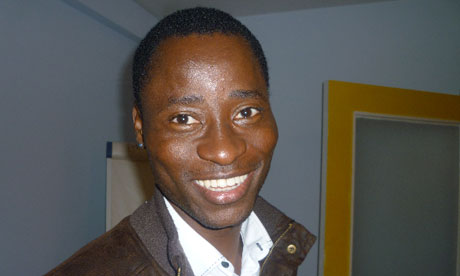
Bisi Alimi, from NigeriaBisi Alimi, from Nigeria (an IRMA member!)

In 2002, I was at university in Nigeria and standing for election. A magazine wrote about me and exposed me as being gay. This led the university to set up a disciplinary committee. I was very nearly dismissed. When I did graduate, people wanted to refuse me my certificate on the grounds that I did not have good enough morals to be an alumnus of the university. While this was going on, the then-president, Olusegun Obasanjo, declared that there were no homosexuals in Nigeria, and that such a thing would not be allowed in the country.

I talked with a friend of mine, who is a famous Nigerian talkshow host, about challenging this opinion. Nobody had come out publicly before. So, in October 2004, I appeared on her breakfast show, New Dawn with Funmi Iyanda". I talked about my sexuality, the burden of the HIV epidemic in the gay community.

The reaction was immediate and violent. I was subjected to brutality from the police and the community. I was disowned by my family and lost many friends, including in the gay community. They were afraid to know me. I was isolated, with no support and no job. The TV show was taken off the air by the government. It led to the introduction of the Same Sex Prohibition bill of 2006. All I had done was say who I was. Three years later I appeared on the BBC World Service. I repeated what I had said on television in Nigeria and suggested my government was using attacks on homosexuality to help cover up its own corruption.

On my arrival back to Nigeria, I was arrested, detained and beaten by the police. For a month, until I fled back to the UK in April 2007, my life was in constant danger.

Read the rest.


 [If an item is not written by an IRMA member, it should not be construed that IRMA has taken a position on the article's content, whether in support or in opposition.]
Homophobia in Ghana


Understanding the Drivers of Homophobia in Ghana


Recent condemnation of homosexuality by religious and political leaders in Ghana has led to a climate of fear preventing men who have sex with men (MSM) from accessing vital health services, say local NGOs.

The minister of Ghana’s Western Region, Paul Evans Aidoo, publicly described homosexuality as “detestable and abominable” after media reports in late May that 8,000 homosexuals had registered with health NGOs in the country’s west (the information appears to come from records kept by the NGOs of people who accessed services for MSM). Aidoo has since called for increased security in the region and the arrest of all homosexuals. Other religious leaders and politicians have followed suit, condemning homosexual activity.

As a result, far fewer MSM are accessing safe sex education and support programmes run by the Centre for Popular Education and Human Rights (CEPEHRG) to prevent the spread of HIV, said MacDarling Cobbinah from the Coalition against Homophobia in Ghana and a member of CEPEHRG.

“It has brought about a lot of fear and stigma for the people. It is difficult to organize programmes,” Cobbinah said. “It is very difficult for people to walk freely on the street… The call for arrest has really pushed people down.”

He added that one of his colleagues was recently accused of being gay and beaten up by a group of men.

Cobbinah said numbers had dropped at a regular HIV peer education programme that once had more than 20 people attending; two weeks ago only half the people came, and last week no one came, he told IRIN on 27 July. “They said, ‘If we come, we might be arrested.'”

An estimated 25 percent of Ghanaian MSM were HIV-positive in 2006, according to the US Agency for International Development (USAID).

According to the UN World Health Organization, since the beginning of the epidemic in the early 1980s, MSM have been disproportionately affected by HIV. The organization said social discrimination of MSM led them to delay or avoid seeking HIV-related information, care and services.

Other organizations in Ghana are also facing obstacles to providing vital services. An NGO based in the Western Region’s capital Sekondi-Takoradi, which distributes condoms and safe sex information to MSM, told IRIN that since Aidoo increased security and called for arrests they have felt threatened.

Male-to-male sexual relations are a crime in Ghana. Considered a misdemeanor, it carries a maximum sentence of six months, according to Kissi Agyabeng, a law lecturer at the University of Ghana. However, despite Aidoo’s calls for a crackdown, arrests do not yet appear to be taking place.

A spokesperson for the Sekondi-Takoradi NGO, who did not want his name or the organization’s name published for security reasons, said the NGO was now coming under pressure from the government to stop their work on HIV prevention if they did not reveal the names of MSM who have registered to use their services.

Stopping this work would affect thousands of people. In 2008, 2,900 people accessed their services, and by this year numbers had quadrupled, the spokesperson said.

...

Read the rest of the article here. For a fascinating personal story from a gay Ghanaian, read Paula Stromberg's article A Good Day in Ghana here.

[If an item is not written by an IRMA member, it should not be construed that IRMA has taken a position on the article's content, whether in support or in opposition.]

Ugandan Lawmakers okay HIV/Aids Bill

Via the Daily Monitor, by Mercy Nalugo.

Ugandan Lawmakers Wednesday resisted pressure from the human rights defenders and backed the new HIV /Aids Prevention and Control Bill that seeks to criminalise the intentional spread of HIV/Aids.

Briefing the new members on the Parliamentary HIV/Aids committee about their expectations, work plan and how far the eighth Parliament had gone with scrutinising the controversial Bill, the new committee chairperson, Ms Rosemary Najjemba Muyinda (NRM, Gomba) said most of the controversial clauses in the Bill were dropped.

“The Bill is now in its advanced stages since it was discussed by our colleagues in the eighth Parliament. So many stakeholders have been consulted and all the contentious issues were dropped. The Bill once passed into law will protect those without HIV from being infected. We have to take the Bill forward,” Ms Najjemba said.

She said the principles in the Bill were agreeable to the committee members since they are aimed at combating the intentional spread of HIV/Aids.

“For example why should someone infect the other with aids intentionally? That is a crime that should not go unpunished,” she said.

The controversial Bill that hands down a 10 year penalty in jail to individuals that knowingly infect others with the deadly aids disease has faced a lot of criticism from the human rights defenders both local and international.

They argue that the Bill violates human rights and threatens the progress the country has so far attained in fighting HIV/Aids as it legislates for mandatory testing for HIV and forced disclosure of HIV status.

Some of the human rights defenders against the Bill include Action Aid International,l Uganda Global AIDS Alliance,United States,the Global Forum on MSM & HIV United States,Global Coalition of Women against AIDS in Uganda,Uganda Network of AIDS Service Organisation (UNASO) and Uganda Young Positives among others.

Also in the Bill, Women who transmit HIV to their infants after birth through breast milk would also be subject to criminal prosecution. The activists concern is that it would be difficult, if not impossible, to determine who infected the other in courts of law hence making ignorance of one's status an effective defence.

Read the rest here.

[If an item is not written by an IRMA member, it should not be construed that IRMA has taken a position on the article's content, whether in support or in opposition.]

UPDATE ON UGANDA GAY-DEATH BILL

Via Mamba Online.

A member of parliament in Uganda says that the draconian Anti-Homosexuality Bill is likely to be made law within two months.

MP Otto Odonga, a member of the Legal and Parliamentary Affairs Committee in the country’s new parliament, told US professor and blogger Warren Throckmorton via Skype that the bill's author, David Bahati, will re-introduce the legislation as soon as possible.

"It will be expedited this time around and passed within one, maybe two months time,” Odonga said.

He added that the current committee would be able to make use of the report supporting the bill issued by the previous committee during the last parliament.

In May, legislators failed to debate and vote on the Anti-Homosexuality Bill after that parliamentary session ran out of time and was dissolved.

Originally introduced in October 2009, the Anti-Homosexuality Bill allows for the death penalty in cases of “aggravated homosexuality” and includes various criminal penalties for anyone who fails to turn over gay people to the police or who "promotes" homosexuality.

An international petition opposing the bill was signed by over 1.6 million people. It has been condemned by numerous governments around the world, some threatening to suspend aid to Uganda if it is passed.

[If an item is not written by an IRMA member, it should not be construed that IRMA has taken a position on the article's content, whether in support or in opposition.]

Gay Pride Rally in St. Petersburg Banned, Participants Arrested: Blog Updates

Via UK Gay News.

Saturday, June 25, 2011

10:35: Nice weather over St. Petersburg today. The city is enjoying what is called white nights. During this time of the year, there is light until very late at night.

12:45: A witness reports a lot of police near the monument to Peter the Great in central St. Petersburg. Skinhead groups have not yet been seen. The action is due to start in 75 minutes from now.

13:20: Details of the action are known to GayRussia but for safety reasons, we cannot write about it... a few more minutes to wait.

13:43: Anti-Gay groups which have been allowed by the city hall to stage an anti-gay protest a week ago did not show up – yet.

13:45: A first group is celebrating Pride on a boat, waiving Rainbow flags in front of the Statue to Peter the Great which is located near the river Neva. The boat is passing and tourists are taking photos of the participants waving their flags from the boat.

14:00: A second group started to unveil banners and flags shooting slogans “No to homophobia” or “Equal Rights”. A poster carried by trans activist Anna Komarova showed “Trans Rights are Human Rights”, one carried by Nikolai Alekseev played with the rumour that St Petersburg governor is alcoholic: “Alcoholism is a disease, homosexuality is not”. An another one carried which cannot be translated said “сосуЛИ Я? Тебя волнует?”

14:02: Everyone with a banner has been arrested. A very short action but participants have been able to waive their slogans in front of a large group of photo correspondents, TV crews and journalists.

14:05: Police have arrested a homophobe and are taking him to a police van. As he is being put into the van, he is giving Nikolai Alekseev ‘the finger’ While entering the van, he is showing Nikolai Alekseev with the finger and said “If you put me with him, I will kill him”. He is finally put in the same bus but in a separate compartment.

14:14: From the police van, Nikolai Alekseev explains: “We had a Pride of two minutes before being arrested and a homophobe started to attack us.”

14:40: Anna Komarova reports that Alexey Kiselev was beaten by a police officer inside the police station.

14:47: Nikolai Alekseev reports that after he told the police he will tweet about the beating of Alexey Kiselev inside the police station, the police replied to him: “Please tweet hello from me to Dmitri Medvedev”

14:55 Alexander Sheremetev, one of the organizers of Slavic Pride was beaten by a homophobe at the protest. His attacker has also been arrested.

16:25: The police said the activists will be charged with organising an illegal action but perhaps also of resisting police order. This second charge could lead to a 15-day prison sentence.

17:55: Nikolai Alekseev reports that he is with others in one room while trans rights activist Anna Komarova is in a cell without access to mobile phone.

Alexander Sheremetiev
19:00: Alexander Sheremetiev, one of the organisers who was attacked by a homophobe during the action has been taken to hospital in an emergency under police escort.

20:20: Andy Thayer from Gay Liberation Network is asking American, and a ‘veteran’ of three Gay Prides in Moscow has just said that he is calling the Russian Embassy in Washington D.C. “Gay Pride demonstrators brutally attacked & arrested in St Petersburg, Russia – facing poss 15 days in jail. Flood Russian embassy with calls to protest: 202-338-3263,” Thayer has posted on Facebook. Thayer was among those arrested at Moscow Pride last month.

20:50: In Berlin, gay activists are wasting no time. In 10 minutes (20:00 Central European Time) a protest in front of the Russian Embassy in Berlin. Is scheduled to start. The protest is organised by Norbert Blech, Maik Diekmannshemke, and Charles Meacham who were all in Moscow last month for the Pride. Berlin staged their Gay Pride (Christopher Street Day).

23:30: Detainees managed to keep a mobile phone. They told us that they have been put in two different cells (5 in one and 9 in another). “It is suffocating in this cell and the police denied us water,” said the text message we received.


Sunday, June 26, 2011

01:00: “It is like a torture in this cell. We cannot sleep. It is so hot. We are all wet,” says a text message received from Nikolai Alekseev in his police cell.


The protest in Berlin. Protestors
carry images of those arrested.

9:58: Overnight, Peter Tatchell, human rights campaigner, reacted to yesterday’s suppression of Slavic Pride. “The arrest, mistreatment and detention of LGBT activists is illegal under Russia’s constitution, which guarantees the right to peaceful assembly. It is alarming that this homophobic repression is taking place in Russia’s most liberal city, St Petersburg. The Council of Europe must take disciplinary action against Russia over it’s further violation of the European Convention on Human Rights (ECHR). The Russian government must not be allowed to defy the ECHR with impunity.” Tatchell has regularly attended Pride attempts in Moscow since 2006 where he was arrested and severely beaten.

11:00: SMS message from Alexander Sheremetiev: “We are still in the cell, no info on Court hearing. It was supposed to start at 10am but it is 11am now.”

11.20: On Twitter, Nikolai Alekseev reports: “It was my third overnight stay in police detention. One after Moscow Pride in 2007, one after Slavic Pride in Moscow in 2009. It was an unbelievable night. I would say this should be considered as torture. Cell 4 by 2 meters with wooden benches for 10 people.

12.40: The Court hearing has not yet started the hearings.

12.51: Nikolai Alekseev reports from inside the Court via SMS: “Police entered the court room to talk with the judge. No one else is there. You can guess the justice we might have!”

13.18: Nikolai Alekseev reports from Court via Twitter: “Breaking! First court verdict. Anton Sutyagin fined 500 rub (12 euros) for illegal protest, hearing on disobedience postponed to 6 July.”

14.08: Nikolai Alekseev reports by phone: "Alexander Sheremetyev who was beaten by the homophobe at the protest is released. His hearings are transferred to 6 July so he is not fined yet. Varvara Krasutskaya is with me out of the Court, she was also fined 500 roubles. Anna Komarova was fined 1,000 roubles on the basis that he had been arrested before in St. Petersburg.”

14.39: Chief organiser of St. Petersburg Pride and head of Equality, Yuri Gavrikov, is released. Fined 1000 rub, hearing on other charge on 11 July.

14.39: Nikolai Alekseev reports via Twitter: “I adore all who took part in Slavic Pride. Fabulous Belorusians! Amazing locals. So devoted activists.”

Read the rest of the entries here.

[If an item is not written by an IRMA member, it should not be construed that IRMA has taken a position on the article's content, whether in support or in opposition.]

CHINA: CAIDS deaths hit 'peak' as 7,700 die

Via China.org.cn

AIDS deaths are believed to be peaking on the Chinese mainland as many from the large number of people infected with HIV in the 1990s because of unsanitary blood-selling schemes develop full-blown AIDS, a senior health official said on Tuesday.

By the end of last year, the total reported number of AIDS deaths had reached 68,000, according to statistics from the ministry. Since 2008, AIDS has become the country's top infectious killer and it claimed the lives of 7,700 people in 2010 alone.

"As those infected in the 1990s have developed full-blown AIDS, the number of deaths has surged," Hao noted, adding that poor drug compliance largely because of side effects added to the number of deaths. To address the problems, the government cracked down on the illegal plasma-selling schemes, enhanced safety supervision and management of blood collection, and offered free medication to all patients. Currently, China has about 740,000 people living with AIDS/HIV, including 140,000 full-blown AIDS patients, official statistics show.

Hao urged people with the virus to accept the free medication they are entitled to and the first-line antiretroviral regimen, and said the government is making efforts to also provide free second-line drugs to those in need. The first-line antiretroviral regimen has helped reduce the fatality rate of full-blown AIDS patients on medication from 10.8 percent in 2005 to 4.6 percent last year.

In the past few years, men who have sex with men (MSM) have become one of the most vulnerable groups for contracting AIDS/HIV, experts said. Among the 44,000 new HIV infections detected in 2010, nearly 13 percent were infected through gay sex, according to the Ministry of Health. "AIDS/HIV became rampant among the MSM population which has an average HIV prevalence of 5 percent nationwide," Hao said. He noted that the infection rate is 0.05 percent among the general population.

Read the rest

[If an item is not written by an IRMA member, it should not be construed that IRMA has taken a position on the article's content, whether in support or in opposition.]

Bringing Up The Rear


Via salon.com, by Tracy Clark-Flory

It's no secret that more Americans are having anal sex than ever before: A study published last year in the Journal of Sexual Medicine found that more than 45 percent of women in their late 20s had tried anal sex.

On the flip side, women rarely get the opportunity to be penetrators. Virginia Vitzthum exquisitely described the appeal of taking on the male role in a piece for Salon back in 1999 -- before we even called it "pegging"
"In a way I'd never understood those words before, he was mine. The knowledge I could really hurt this person by being less than careful made me feel responsible, protective. The vulnerability appalled me at the same time; it was vaguely disgusting that he would let someone do this to him. Mixed in with the disgust was possessiveness. The thought of anyone else penetrating him seemed revolting. These observations clicked into place in quick succession; I felt like a projector being loaded with slides of maleness, of male seeing."
But, taboos change, and so do the cultural meanings of particular sexual acts. Just as the gay community has long debated the politics of being a top or a bottom, the hetero world is slowly catching up -or, um, bringing up the rear. As Pulley puts it, "We only have so many orifices. You'd think we'd all be itching to take advantage of them all, right?"

Read the rest

[If an item is not written by an IRMA member, it should not be construed that IRMA has taken a position on the article's content, whether in support or in opposition.]

Fearing No Evil

Via Poz, by Regan Hofmann with Oriol R. Gutierrez Jr.

David Kuria works for the Gay and Lesbian Coalition of Kenya where he risks his life daily to provide safe sanctuary and advocacy for the rights of lesbian, gay, bisexual and transgender people in Africa and around the world.

Now, he is running for Kenya’s Senate. A basic tenet of his work is showing that a global push for gay rights helps bolster the fight against HIV. His dream? A day when no LGBT person has to choose between being openly gay—or being killed.

In October 2009, David Bahati, a member of Uganda’s parliament, proposed an “Anti-Homosexuality Bill” (a.k.a. the “kill the gays bill”). It was an attempt to legalize a phenomenon spreading around the world: hate crimes against gay people.

Homosexuality is currently illegal in Uganda (and can result in up to a 14-year jail sentence); Bahati’s proposed bill intensifies the criminalization of homosexuality by introducing the death penalty for people who have previous convictions, are HIV positive, or engage in same-sex acts with people younger than 18. The bill also includes provisions for Ugandans who engage in same-sex relations outside the country—people can be sent back to Uganda for punishment.

Not that there are many safe places to go; laws against same-sex relations exist in nearly 80 countries. Finally, the bill outlines penalties for individuals, companies, media organizations or nongovernmental organizations that support LGBT rights. (As in, if you know your neighbor’s gay and don’t say so, you can get into huge trouble yourself.) It engenders nothing short of a witch hunt.

Read the rest

[If an item is not written by an IRMA member, it should not be construed that IRMA has taken a position on the article's content, whether in support or in opposition.]

Debate PrEP based on facts

Via Ebar, by Dr. Robert Grant

A robust public debate is under way about the potential use of anti-HIV drugs to prevent HIV infection (also known as pre-exposure prophylaxis or PrEP). Our study, called iPrEx, provided the first conclusive evidence that the daily use of PrEP with the FDA-approved HIV treatment Truvada can significantly reduce HIV infection risk in gay, bisexual, and other men who have sex with men and transgender women, when delivered as part of a comprehensive package of prevention services, including condoms.

Recently, a private health care provider has begun a paid advertising campaign urging the FDA not to even consider approving the use of PrEP – charging, among other things, that MSM will stop using condoms if PrEP is permitted. The pros and cons of PrEP use should be vigorously debated – but that debate should be based on facts, rather than the assumption that MSM will not act to protect themselves and others from infection. Here are the facts about the iPrEX study:

The protection provided by PrEP and condoms together could have a substantial impact in reducing new HIV infections among MSM worldwide.

A diverse group of 2,499 HIV-negative MSM and transgender women on four continents with a range of sexual practices participated in iPrEx. All participants received a comprehensive package of HIV prevention services. Half also received Truvada, while the other half received a placebo (blank pill). Neither the study participants nor the investigators knew which pill they received during the study.

Men in both study groups reduced their risk behaviors and increased their condom use – demonstrating that MSM can use PrEP and condoms together. PrEP does not protect against other sexually transmitted infections and should never be considered as a substitute for condom use or other safer sex precautions.

Much more work lies ahead to determine whether PrEP can help stop HIV infections in other populations, such as heterosexuals and injection drug users, to better understand possible side effects of PrEP, to support consistent pill use among people who want to use it, and to ensure that PrEP is seen as one element of an HIV prevention strategy that includes regular condom use.

Additional studies are also under way to test whether other anti-HIV medicines (including pills, gels, and other formulations) are safe and effective for HIV prevention.

Read the rest

[If an item is not written by an IRMA member, it should not be construed that IRMA has taken a position on the article's content, whether in support or in opposition.]

New resources on gay/bi men's health courtesy CDC

The CDC has a number of new info resources that will be very handy for all of us working in gay/bi men's health, as well as HIV/AIDS.

The following came to IRMA's in box today....Check them out.

Updated Factsheet: HIV among Gay, Bisexual and Other Men Who Have Sex with Men (MSM)
The HIV among Gay, Bisexual and Other Men Who Have Sex with Men (MSM)factsheet has recently been updated with information from the 2008 HIV Surveillance Report: Diagnoses of HIV infection and AIDS in the United States and Dependent Areas.

MMWR: Prevalence and Awareness of HIV Infection Among Men Who Have Sex With Men --- 21 Cities, United States, 2008
Men who have sex with men (MSM) are at increased risk for infection with human immunodeficiency virus (HIV). In 2006, 57% of new HIV infections in the United States occurred among MSM. To estimate and monitor risk behaviors, CDC's National HIV Behavioral Surveillance system (NHBS) collects data from metropolitan statistical areas (MSAs) using an anonymous cross-sectional interview of men at venues where MSM congregate, such as bars, clubs, and social organizations. 

New CDC Site: Gay and Bisexual Men's Health
Gay and bisexual men and other men who have sex with men (MSM) represent an incredibly diverse community. Gay and bisexual men have both shared and unique experiences and circumstances that affect their physical health and mental health needs as well as their ability to receive high-quality health services.