Pages

Tampilkan postingan dengan label Uganda. Tampilkan semua postingan

Why Uganda’s Anti-Gay Legislation Is the World’s Business

via Bloomberg News, by the editors

Uganda’s anti-homosexuality bill just won’t go away.

Last spring, an egregious proposal by a member of the ruling party to impose harsh penalties, including death, for homosexual acts was shelved for a second time when Uganda’s parliament recessed without debating it. This week, parliament moved to revive the measure.

Homosexuality is already illegal in Uganda. The law would increase the maximum penalties, providing up to life imprisonment for homosexual acts and execution for so-called aggravated homosexuality -- repeated homosexual behavior, homosexual acts with a minor or a disabled person, and homosexual acts by anyone who is HIV-positive.

The original bill also made it punishable by up to three years’ imprisonment to fail to report homosexual behavior to authorities within 24 hours. In the last parliamentary session, a committee recommended scratching that provision, which would compromise health workers involved in AIDS control efforts. It’s not clear this time around whether the bill will go through the committee process anew; in any case, committee views are not binding.

The bill enjoys considerable support in Uganda, where homosexuality is widely abhorred, and may well pass if it comes to a parliamentary vote. President Yoweri Museveni would probably veto it, knowing that passage would alienate Uganda’s Western allies, on whom the country relies for development assistance.

For now, the circus around the draft law suits Museveni, who has been in power for 25 years. Domestically, it whips up support for his party, the National Resistance Movement. Internationally, it attracts opprobrium but also distracts critics from other Ugandan scandals for which Museveni bears more direct responsibility: the arrest of opposition figures, police brutality, corruption.

Read the rest.


[If an item is not written by an IRMA member, it should not be construed that IRMA has taken a position on the article's content, whether in support or in opposition.]

Meet Moses Nsubuga Supercharger: Our New Friendly Rectal Microbicide Advocate!

“The task is hard but with determination we shall win together. Continue to keep the fire burning and remember it can even burn deep in the ocean.”

Moses is an IRMA advocate from Kampala, Uganda. He has been living with HIV since 1994 and is quite the superstar. He is a musician, radio host, TV presenter, actor, and activist who has a passion to fight HIV for people all over the world.

In 2000 he formed The Stigmaless Band - a music and drama group of adolescents living with HIV. Their objectives include encouraging early treatment, treatment adherence, and fighting stigma. The success of the band allowed Moses to collaborate with other community based organizations throughout Uganda and to eventually form a larger group called Joint Adherent Brothers and Sisters Against AIDS (JABASA). JABASA’s mission is to attain equal rights for minority and at-risk groups; to encourage early treatment for adults; and to help HIV positive Ugandans become financially self-sufficient by providing them with small loans to begin small income generating projects.

In 2009 he was contracted by USAID and The AIDS Support Organization (TASO) to host an HIV quiz game on television called “Everybody Wins When We Know the Facts about HIV.” As the show gained popularity and was being broadcast in more and more districts throughout Uganda, he was suspended from this work for opposing a law that he believed would criminalize and oppress minority groups if passed.

This did not slow Moses down! Since then he has become the manager of Searchland Shows, where he organizes music shows to advocate for treatment, condoms, and microbicides as prevention. He has also started an orphanage to look after the children of musicians who have died of AIDS. Currently he supports 34 children.

He believes microbicides have the potential to be one of the best prevention options available. He is very active on the IRMA listserv and always challenging opinions, asking questions, and striving to learn more.

Read more bios on the IRMA website.


[If an item is not written by an IRMA member, it should not be construed that IRMA has taken a position on the article's content, whether in support or in opposition.]

Meet Thomas Muyunga: Another New Friendly Rectal Microbicide Advocate!

“When one goes to fish, they go to the water body for fish. With the net one catches all sorts of fish and other debris. Sorting out the fish from debris is part of fishing. Same applies to HIV work. Talk about HIV, engage in activities around mobilising beneficiaries and challenge them to participate fully- make it enjoyable. Show the whole list of HIV fuels. Show how stigma, discrimination and abuse fuel HIV in communities.”

Thomas Muyunga is an IRMA Advocate from Kampala, Uganda. There he is CEO of MARPS (Most At Risk Populations’ Society) In Uganda, an umbrella organization committed to “lasting, enduring, and durable solutions against poverty.” Their work focuses on “PLEASE” - Protection, Lasting sexual-reproductive health practices, Empowerment, Attitude change, Social integration and Education. Thomas loves to mobilize communities and prepare and empower them to fight poverty, discrimination, and HIV.

Thomas has worked in HIV Services Provision since 1993 when he was a student volunteer at Rotary International. He first became aware of microbicides at an STD/STI Clinic at the National Referral Hospital in Uganda. He has since dedicated much time and effort to learning about and advocating for the development of successful microbicides. He will join IRMA as a Project ARM (Africa for Rectal Microbicides) scholarship grantee in Addis Ababa, Ethiopia prior to ICASA 2011 to be part of a working meeting to develop an African rectal microbicide agenda!

He believes rectal microbicides are very important because they bring more attention to anal intercourse and help to create conversation about it. He hopes this will also stimulate talk about the power dynamics of anal intercourse.

His advice for others wanting to become IRMA advocates is to first focus on learning as much as possible about HIV prevention, care and treatment so that you can teach others about these issues. Education will also prepare you to inform planning, programming and policy. We can only move forward if we are educated.

Read more Friendly Rectal Microbicide Advocate bios.


[If an item is not written by an IRMA member, it should not be construed that IRMA has taken a position on the article's content, whether in support or in opposition.]

The Rape of Men

via The Guardian, by Will Storr

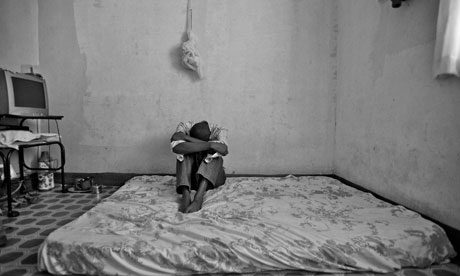
male-rape-victim-ugandaSexual violence is one of the most horrific weapons of war, an instrument of terror used against women. Yet huge numbers of men are also victims. In this harrowing report, Will Storr travels to Uganda to meet traumatised survivors, and reveals how male rape is endemic in many of the world's conflicts.

Of all the secrets of war, there is one that is so well kept that it exists mostly as a rumour. It is usually denied by the perpetrator and his victim. Governments, aid agencies and human rights defenders at the UN barely acknowledge its possibility. Yet every now and then someone gathers the courage to tell of it. This is just what happened on an ordinary afternoon in the office of a kind and careful counsellor in Kampala, Uganda. For four years Eunice Owiny had been employed by Makerere University's Refugee Law Project (RLP) to help displaced people from all over Africa work through their traumas. This particular case, though, was a puzzle. A female client was having marital difficulties. "My husband can't have sex," she complained. "He feels very bad about this. I'm sure there's something he's keeping from me."

Owiny invited the husband in. For a while they got nowhere. Then Owiny asked the wife to leave. The man then murmured cryptically: "It happened to me." Owiny frowned. He reached into his pocket and pulled out an old sanitary pad. "Mama Eunice," he said. "I am in pain. I have to use this."

Laying the pus-covered pad on the desk in front of him, he gave up his secret. During his escape from the civil war in neighbouring Congo, he had been separated from his wife and taken by rebels. His captors raped him, three times a day, every day for three years. And he wasn't the only one. He watched as man after man was taken and raped. The wounds of one were so grievous that he died in the cell in front of him.

Read the rest.


[If an item is not written by an IRMA member, it should not be construed that IRMA has taken a position on the article's content, whether in support or in opposition.]
Microbicide Trials Network Statement on Decision to Discontinue Use of Oral Tenofovir Tablets in VOICE, a Major HIV Prevention Study in Women

via Microbicide Trials Network

VOICE, an HIV prevention trial evaluating two antiretroviral (ARV)-based approaches for preventing the sexual transmission of HIV in women – daily use of one of two different ARV tablets or of a vaginal gel – will be dropping one of the oral tablets from the study. The decision to discontinue use of tenofovir tablets in VOICE comes after a routine review of study data concluded that the trial will not be able to demonstrate that tenofovir tablets are effective in preventing HIV in the women enrolled in the trial. VOICE will continue to test the safety and effectiveness of the other oral tablet, Truvada®, a combination of tenofovir and emtricitabine, and of the vaginal gel formulation of tenofovir.

Importantly, the review, which was conducted by the National Institute of Allergy and Infectious Diseases (NIAID)’s independent Prevention Trials Data and Safety Monitoring Board (DSMB), identified no safety concerns with any of the products being studied in VOICE.

VOICE – Vaginal and Oral Interventions to Control the Epidemic – involves 5,029 women at 15 trial sites in Uganda, South Africa and Zimbabwe. The trial is being conducted by the Microbicide Trials Network (MTN), an HIV/AIDS clinical trials network funded by the National Institute for Allergy and Infectious Diseases with co-funding from the Eunice Kennedy Shriver Institute for Child Health and Human Development and the National Institute of Mental Health, all components of the U.S. National Institutes of Health.

The study was designed with five study groups: tenofovir gel, an inactive placebo gel, oral tenofovir, oral Truvada and an inactive placebo tablet. The women in each group (about 1,000) are asked to take their assigned study product daily. VOICE is the only trial evaluating the daily use of an ARV tablet – an approach called oral pre-exposure prophylaxis, or PrEP – and a vaginal gel in the same study. This design is important for determining how each product works compared to its control (placebo gel or placebo tablet) and which approach women prefer.

On September 16, 2011, the NIAID Prevention Trials DSMB reviewed VOICE study data for the period between Sept. 9, 2009, when the study began, and July 1, 2011. Based on this interim review, the DSMB determined that it was not possible to show whether oral tenofovir tablets were any better than a placebo for preventing HIV in the women assigned to that study group. The DSMB therefore recommended that the women randomized to the oral tenofovir tablet group discontinue their use of the study product. This recommendation does not apply to the women in the groups using either the tenofovir gel or oral Truvada tablets, or the corresponding placebos; the DSMB recommended that these four study groups continue in VOICE.
 
Read the rest.
 
 
[If an item is not written by an IRMA member, it should not be construed that IRMA has taken a position on the article's content, whether in support or in opposition.]

David Kato Vision and Voice Award

via visionandvoiceaward.com

David Kato - human rights activist, friend, and colleague - was murdered in his home in Kampala, Uganda on 26 January 2011.

In recognition of his life and courage, and the continued struggle of lesbian, gay, bisexual, transgender and intersex (LGBTI) individuals around the world, partners committed to eliminating violence, stigma and discrimination have established the David Kato Vision & Voice Award.
Inspired by his work, the award recognizes the leadership of individuals who strive to uphold the numerous dimensions of sexual rights for LGBTI people. Sexual rights are an evolving set of entitlements related to sexuality that contribute to the freedom, equality and dignity of all people, and are an important aspect of human rights. The realization of these rights is also an integral element to a meaningful HIV response among these marginalized groups.

Click here for more award and nomination information.


[If an item is not written by an IRMA member, it should not be construed that IRMA has taken a position on the article's content, whether in support or in opposition.]

Treatment and Prevention: Interview w/Uganda's Dr. Patrick Ndase

via The Observer, by Shifa Mwesigye

Excerpt:
"Uganda has participated just like several other African countries; [in research] you must go where infection is happening. The majority of HIV research in the early stages happened in Uganda because Uganda was heavily infested with the virus. As you remember we had prevalence rates of above 20% and then we had the so called Uganda success story after the zero grazing campaign.

"At the time, the countries in southern Africa which largely [depend on] tourism were silent on HIV infection. Now the countries that are laden with infection are Swaziland, Botswana, Zimbabwe, Zambia and South Africa. So majority of HIV prevention research is not happening in Uganda anymore. In fact it is difficult to get someone who wants to do HIV research to come to Uganda."
Read the rest.

[If an item is not written by an IRMA member, it should not be construed that IRMA has taken a position on the article's content, whether in support or in opposition.]

The crazy things they say: politicians and HIV


Political commitment is key to the success of HIV programmes and African leaders have been at the forefront of the fight against HIV on the continent, but politicians also have the power to harm HIV/AIDS campaigns.

Uganda's recently appointed health minister, Christine Ondoa, has been berated by AIDS activists for comments she allegedly made in an interview with a local newspaper on 1 August. According to The Observer, Ondoa claimed to know three people who had been cured of HIV through prayer.

"I am sure and I have evidence that someone who was [HIV] positive turned negative after prayers," she said.

Activists described her comments as "careless and misleading". Ondoa joins a long list of African leaders who have been criticized for comments deemed detrimental to the fight against HIV; here are some of the more controversial statements made by politicians:

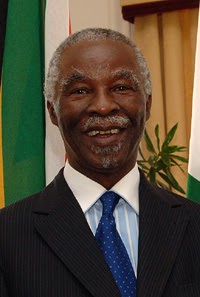
Thabo Mbeki - In 1999, the then South African president said the ARV zidovudine - also known as AZT - had toxic side-effects and was dangerous to health, and as such, the government would not provide it free of charge to HIV-positive pregnant women.

Mbeki stirred controversy when he questioned the causal link between HIV and AIDS; in 2000 he set up a Presidential AIDS Advisory Panel, largely comprising AIDS denialists, to discuss how South Africa should deal with the crisis.

Mbeki also evoked conspiracy theories by alleging that the US Central Intelligence Agency, working with large pharmaceutical companies, was part of a conspiracy to promote the view that HIV caused AIDS.

In 2001, the NGO Treatment Action Campaign (TAC) filed a lawsuit against the government aimed at giving HIV-positive pregnant women access to the ARV, nevirapine, used to reduce the risk of HIV transmission from mother to child. TAC won the case, and the government was forced to provide the drug through the public health system.

According to the authors of a 2008 Harvard study, more than 330,000 lives were lost as a result of the delays in implementing a feasible and timely ARV treatment programme in South Africa.

Manto Tshabalala-Msimang - South Africa's health minister from 1999 to 2008 under Mbeki, her years in office were characterized by controversy, largely due to her reluctance to develop public sector policies involving the use of ARVs to fight AIDS.

Even after ARVs became available, Tshabalala-Msimang continued to cast doubt on their safety and efficacy, actively endorsing alternative therapists who promoted scientifically untested alternatives to ARVs.

Read the rest here.

[If an item is not written by an IRMA member, it should not be construed that IRMA has taken a position on the article's content, whether in support or in opposition.]
More in Uganda: Minister Comments Carelessly on HIV/AIDS

Via In2EA.

The Health Minister Christine Ondoa’s remarks that HIV/Aids can be cured through prayer have not been received well by both health practitioners and born-again preachers who called it careless and misleading remarks.

Yesterday, Ms Ondoa was quoted by the Observer newspaper to have had a firsthand experience with people she claimed were infected by the HIV/Aids virus but after a series of prayer, tested negative.

She, however, observed that medical workers and the general public should be cautious about people who claim they were healed of HIV, adding that as a scientist she is often careful not to automatically believe a person who comes to her presenting negative results after being prayed for. Such a person’s sero status must be checked and their medical records that show they tested positive must be scrutinised, Ms Ondoa added.

The Head of The Aids Support Organisation (TASO), Mr Richard Ochai, who refused to believe that a minister could say such a thing, said such statements, most especially from born-again churches, are continuously curtailing TASO efforts to fight against HIV/Aids whose prevalence in recent years is said to have increased in the country.

He said science has proved that if one takes ARVs the viral load will become low such that they may not be detected but once they stop taking the drug, the virus will definitely be seen again. “We know God can do miracles if he so wishes but these many possibilities still need scientific prove,” Dr Ochai said.

Read the rest here.

[If an item is not written by an IRMA member, it should not be construed that IRMA has taken a position on the article's content, whether in support or in opposition.]

Former Ex-Gay Ugandan Man Now Regrets Past Homophobic Comments


A man who in 2009 renounced homosexuality at a public forum in Kampala has now told Behind the Mask that he regrets his previous actions and would like to be forgiven by the LGBTI community.

Saying that he felt “there is a fire in the belly saying gay is really who you are,” Mr George Oundo, known amongst Uganda’s LGBTI community as “Ms Georgina,” said that although he had renounced homosexuality on national media, at an opportune time he would ask the Kuchu community (Ugandan slang for LGBTI) to take him back.

Speaking on Wednesday July 27, 2011 to Behind the Mask outside the magistrate’s court in Kampala where three Christian evangelist preachers have been charged with making homophobic smears against a rival preacher, the now former ex-gay Oundo said he once again believed, “being gay is natural and inborn.”

The accused preachers, their lawyers, Henry Ddungu and David Kaggwa, together with David Mukalazi and Deborah Kyomuhendo (agents of the accused) face charges of conspiring to injure Pastor Robert Kayanja’s reputation by claiming that Kayanja sodomised boys in his church. The two lawyers are charged with allegedly commissioning false affidavits.

In March 2009 Oundo spoke at a Christian seminar and said he previously supported homophobic preacher Martin Sempa and legislator Mr David Bahati in their claims that homosexuals recruit children in schools and deserve the death penalty.

Speaking on Wednesday however, the now former ex-gay man said that he regrets the comments.

Looking sad, Mr Oundo, who once helped to establish an LGBTI human rights advocacy group in Kampala, said that although the preachers had given him some money and built him a house in Muyenga-Bukasa, a posh suburb of Kampala, he still had gay feelings. “I have never even become born again. I just do not want to be born again.”

Read the rest here.

[If an item is not written by an IRMA member, it should not be construed that IRMA has taken a position on the article's content, whether in support or in opposition.]

UGANDA NOW TO INCLUDE HOMOSEXUALS IN HIV PROGRAMMES


In an incredible change of heart, the Uganda government has listed homosexuals as a target for HIV/Aids programming in a new five year National HIV Prevention Strategy for Uganda 2011-2015.

The policy document which Behind the Mask has seen will run under the theme: “Expanding and Doing HIV Prevention better.” The policy development process is spearheaded by the Uganda Aids Commission (UAC), with consultations of various stakeholders including Civil Society.

Until recently, the UAC had publicly stated that they had no funds for targeting homosexuals in HIV programming. “Gays are one of the drivers of HIV in Uganda, but because of meagre resources we cannot direct our programmes at them at this time,” Dr Kihumuro Apuuli, (pictured) the Director General of UAC was quoted saying in 2008.

However, some have suggested that the UAC was being influenced by Christian born again movements who were lobbying Uganda’s First Lady, Janet Museveni, a born again Christian herself, not to recognize gays in any policy document. The UAC was established by an act of Parliament, and is directly under President’s Office.

The National HIV Prevention Strategy sets forth opportunities and guidance for intensified efforts to significantly stem new HIV infections. Its vision builds on that of the National HIV/Aids Strategic Plan(NSP), of a Uganda where new HIV infections are rare, and where everyone, regardless of age, gender, ethnicity or socio‐economic status has uninterrupted access to high quality and effective HIV prevention.

“The overall goal of the strategy is to reduce new HIV infections by 30percent based on the baseline of 2009 which would result in 40percent reduction of the projected number of new HIV infections in 2015,” the policy text reads in part.

Ms Hasifa Nakiganda, an LGBTI lobbyist with Uhspa Uganda welcomed the contents of the draft policy. She said Uganda’s burying its head in the sand over homosexuals was setting a bad example, because Uganda was a reference country when it came to the best management of HIV/Aids. “So by denying homosexuals universal access to HIV programming, Uganda is sending a bad signal to other countries struggling with the HIV pandemic,” Ms Hasifa said. Uhspa Uganda petitioned the Ugandan Parliament pleading for homosexuals Right to Health and HIV programming inclusion.

Uganda has only one policy that recognizes homosexuals as a target for health service delivery- the National Policy Guidelines and Service Standards for Sexual and Reproductive Health and Rights. But homophobia prevents gays from accessing public health services.

The new NPS policy aligns with the National Development Plan for Uganda and the, the Second National Health Policy, and the Health Sector Strategic and Investment Plan (HSSIP) (2010-2015). It will contribute to attainment of Universal Access, as per the UNGASS- United Nations General Special Session Country Progress Declaration of Commitment on HIV/Aids and MDG (Millennium Development Goals) 5, 6, and 7 targets; calling  for increased focus, coordination and collaboration to comprehensively scale‐up HIV prevention efforts and align them to the drivers of the epidemic.

Read the rest here.

Read another Behind the Mask article discussing this news here.

[If an item is not written by an IRMA member, it should not be construed that IRMA has taken a position on the article's content, whether in support or in opposition.]

Ugandan Lawmakers okay HIV/Aids Bill

Via the Daily Monitor, by Mercy Nalugo.

Ugandan Lawmakers Wednesday resisted pressure from the human rights defenders and backed the new HIV /Aids Prevention and Control Bill that seeks to criminalise the intentional spread of HIV/Aids.

Briefing the new members on the Parliamentary HIV/Aids committee about their expectations, work plan and how far the eighth Parliament had gone with scrutinising the controversial Bill, the new committee chairperson, Ms Rosemary Najjemba Muyinda (NRM, Gomba) said most of the controversial clauses in the Bill were dropped.

“The Bill is now in its advanced stages since it was discussed by our colleagues in the eighth Parliament. So many stakeholders have been consulted and all the contentious issues were dropped. The Bill once passed into law will protect those without HIV from being infected. We have to take the Bill forward,” Ms Najjemba said.

She said the principles in the Bill were agreeable to the committee members since they are aimed at combating the intentional spread of HIV/Aids.

“For example why should someone infect the other with aids intentionally? That is a crime that should not go unpunished,” she said.

The controversial Bill that hands down a 10 year penalty in jail to individuals that knowingly infect others with the deadly aids disease has faced a lot of criticism from the human rights defenders both local and international.

They argue that the Bill violates human rights and threatens the progress the country has so far attained in fighting HIV/Aids as it legislates for mandatory testing for HIV and forced disclosure of HIV status.

Some of the human rights defenders against the Bill include Action Aid International,l Uganda Global AIDS Alliance,United States,the Global Forum on MSM & HIV United States,Global Coalition of Women against AIDS in Uganda,Uganda Network of AIDS Service Organisation (UNASO) and Uganda Young Positives among others.

Also in the Bill, Women who transmit HIV to their infants after birth through breast milk would also be subject to criminal prosecution. The activists concern is that it would be difficult, if not impossible, to determine who infected the other in courts of law hence making ignorance of one's status an effective defence.

Read the rest here.

[If an item is not written by an IRMA member, it should not be construed that IRMA has taken a position on the article's content, whether in support or in opposition.]

UPDATE ON UGANDA GAY-DEATH BILL

Via Mamba Online.

A member of parliament in Uganda says that the draconian Anti-Homosexuality Bill is likely to be made law within two months.

MP Otto Odonga, a member of the Legal and Parliamentary Affairs Committee in the country’s new parliament, told US professor and blogger Warren Throckmorton via Skype that the bill's author, David Bahati, will re-introduce the legislation as soon as possible.

"It will be expedited this time around and passed within one, maybe two months time,” Odonga said.

He added that the current committee would be able to make use of the report supporting the bill issued by the previous committee during the last parliament.

In May, legislators failed to debate and vote on the Anti-Homosexuality Bill after that parliamentary session ran out of time and was dissolved.

Originally introduced in October 2009, the Anti-Homosexuality Bill allows for the death penalty in cases of “aggravated homosexuality” and includes various criminal penalties for anyone who fails to turn over gay people to the police or who "promotes" homosexuality.

An international petition opposing the bill was signed by over 1.6 million people. It has been condemned by numerous governments around the world, some threatening to suspend aid to Uganda if it is passed.

[If an item is not written by an IRMA member, it should not be construed that IRMA has taken a position on the article's content, whether in support or in opposition.]

David Kato: Lawyer Demands Speedy Trial in Letter to High Court Registrar


Six months after the murder of gay rights activist, David Kato, a Ugandan lawyer has written to the Registrar of the High Court demanding a speedy trial.

Mr Francis Onyango, Kato’s lawyer, told Behind the Mask on Thursday June 23, that [if the case took any longer] prosecution witnesses to the case were likely to forget the sequence of events or relocate to other areas in the country. He explained that he had chosen to write to the Registrar in Jinja town because the Mukono High Court where the case is expected to be heard is under the Jinja High Court jurisdiction registry.

Mr Onyango said, the Registrar should take into account the circumstances surrounding Mr. Kato’s death and fix the hearing in the next Criminal season of the high court criminal session. It is not known when the criminal session will begin, although it had earlier been anticipated to start in April this year.

The main suspect, Mr Nsubuga Sydney was charged with Mr Kato’s murder, which is thought to have taken place at Kato’s home in Mukono district, about 25 km east of Kampala.

Judicial officers, who spoke on condition of anonymity because they are not allowed to make media statements, said there was a back log of election petitions in Uganda’s country court systems resulting from February’s General Election and that these were overwhelming Uganda’s court system.

However, other lawyers said it was most likely the criminal court season would begin in July when courts receive a financial disbursement at the beginning of the government’s fiscal year. Courts need money from government to facilitate witnesses coming to court.

"This (the delay in hearings) will occasion a miscarriage of Justice as the key witnesses will be unavailable to testify,” Mr Onyango said in a letter to the Registrar.

Mr Nsubuga Sydney, Alias Enoch, was recently committed to the High Court from a lower magistrate’s court to begin hearings of the case.

Under Uganda’s Constitution, capital offenders including rape, defilement and rape suspects are not allowed to enter into any plea before magistrates, because the High Court is the only institution with Jurisdiction to try them.

However, legal experts note that it could take four to five years, before the suspect’s trial is completed. On average, suspected criminals in capital spend an average of about two and half years awaiting trial.

Read the rest here.

[If an item is not written by an IRMA member, it should not be construed that IRMA has taken a position on the article's content, whether in support or in opposition.]

Rush For Male Circumcision in Rural Areas

Via the Daily Monitor, by Evelyn Lirri.

Godfrey Aganza had never considered getting circumcised. The misconceptions that came with a circumcised non-Muslim man, including being considered a covert or the alleged future risk of impotence largely discouraged him from the cut. But that has changed now.

On June 7, this year, the 18-year-old senior three student of Kayunga Secondary School, joined the long queue of other men at a mobile circumcision clinic currently stationed at Bbaale Health Centre IV in Kayunga District, 74 kilometres northeast of Kampala.

Together with his peers, they arrived at the mobile clinic as early as 8am in the morning to halfheartedly give it a try.

It was only after the operation that Mr Aganza felt satisfied with the decision that he had made.

“I am happy I have done it now. It wasn’t painful and I feel okay,” he said moments after coming out of the “operating room”- a large, well equipped truck with the essential tools needed to carry out an operation.

“I have also been told of the health benefits of being circumcised and of course a circumcised man has a lower chance of contracting HIV/Aids,”he added.

Mr Anganza is not alone. I met Aaron Lubega, a 30-year-old police officer five days after he had been circumcised. When he first arrived at the mobile clinic, he did not know what to expect. Like all the other men who come to the mobile clinic, he was taken through a session of counseling so that he could fully understand the health benefits of circumcision.

Mr Lubega had heard about the free circumcision services from fellow residents in Kayunga town, many of who have already gone through the surgical procedure. “At the trading centre, the men talked about the mobile clinic and the benefits of being circumcised that’s why I came here to first hear from the health workers and then get circumcised myself,”he said.

Simple task

Mr Lubega, a single father of one, said the process was so simple and painless that shortly after being circumcised, he managed to ride a motorcycle on a 10km-long journey. In this remote region, residents have embraced circumcision almost 100 per cent.

The free medical male circumcision programme which has been rolled out in the districts of Kayunga and Mukono is being implemented by the Makerere University Walter Reed Project (MUWRP) in partnership with local governments. It’s funded through the US President’s Emergency Plan for Aids Relief.

Mark Breda, a programme manager at MUWRP, said since the initiative was rolled out in February, close to 7,000 men have been circumcised in the various sub counties in Kayunga and Mukono districts.

“We shall continue with the mobile clinic. The demand is nowhere close to being met,” said Mr Breda.

The target, he says, is to have to have up to 4.5 million men circumcised over the next five years across the various sites.

Read the rest here.

[If an item is not written by an IRMA member, it should not be construed that IRMA has taken a position on the article's content, whether in support or in opposition.]

New Guidelines on HIV Programming for MSM

Via IRIN.

HIV and gay rights activists say new guidelines released by the UN World Health Organization (WHO) on HIV programming for men who have sex with men (MSM) will not only improve health service provision for MSM, but will also act as an advocacy tool in the fight for the rights of this marginalized population.

"The document provides well-researched and evidence-based recommendations for HIV prevention and treatment of MSM, which will be useful for clinicians," said Kevin Rebe, a doctor with Health4Men, a South African health service provider which caters specifically for MSM. "The language of the paper is couched in human rights, and makes a strong call for decriminalization of same sex sexual activity, so it will also be useful for activists seeking to end discrimination."

The guidelines are designed for use by national public health officials and managers of HIV/AIDS and STI (sexually transmitted infections) programmes, NGOs and health workers. They contain MSM-specific programme activities such as the use of water- and silicone-based lubricant for the correct functioning of condoms during anal sex.

The guidelines do not advise medical male circumcision - a measure WHO recommends for HIV prevention among heterosexual men - for HIV prevention among MSM due to the lack of sufficient research on its effect of its use in MSM sexual activity.

They further recommend that health services adhere to the principles of medical ethics and the right to health, and ensure that MSM feel comfortable enough to seek medical care, with MSM-specific health needs catered for within national health systems.

"Like many other African countries, all men in South Africa are assumed to be straight, so health workers are not aware of the need to identify people of different sexualities during consultations; outside of centres like ours, there is little competency in providing health care to MSM," said Rebe. "By availing this knowledge, the guidelines will empower health workers to provide better care to MSM."


Wake-up call

In countries like Uganda, where homophobia is deeply entrenched both within society and the law, gay rights groups hope the new guidelines will serve as a wake-up call to the government about the need to include MSM in HIV programming.

"I hope the new guidelines will be an eye-opener to the government, who have so far ignored MSM within HIV prevention, treatment and support; it should show them that MSM exist in Uganda and are at high risk," said Frank Mugisha, executive director of the NGO Sexual Minorities Uganda. "They therefore cannot be ignored and urgently require HIV interventions."
 
Read the rest here.

[If an item is not written by an IRMA member, it should not be construed that IRMA has taken a position on the article's content, whether in support or in opposition.]

New Light Shed on Male Sex Work


Commercial sex work, dominated by a focus on women, could be redefined as new research launched today in Nairobi, Kenya, sheds light on the complicated HIV prevention needs of what may be Africa’s most deeply underground group at high risk of HIV - male sex workers.

The report co-authored by the United Nations Development Programme (UNDP) and South Africa's Sex Workers Education and Advocacy Taskforce (SWEAT) seeks to better understand the social contexts, sexual practices and risks, including that of HIV, among these men.

The professional debut of many of the 70 male sex workers surveyed in Kenya, Namibia, South Africa, Uganda and Zimbabwe was often prompted by the family rejecting the men’s sexual orientation; for others, it was a way to survive in a foreign country.

Men reported being at risk of HIV in many ways, including the unavailability of speciality health services, the premium clients placed on unprotected sex, violence and the lure of substance abuse. Although the work often placed them at risk of substance and physical abuse as well as HIV infection, the researchers found that it also provided the men with a sense of freedom and empowerment.

The report cautions that mitigating these risks may require specialised HIV prevention services unlike those targeted at female commercial sex workers or men who have sex with men (MSM).

A series of interviews with male sex workers at a five-country workshop in Johannesburg, South Africa, and country visits to Kenya and Namibia has produced a significant addition to the paucity of data on male sex workers, according to Paul Boyce, a UNDP researcher.

While data on MSM from Malawi, Namibia and Botswana indicated that about 17 percent were HIV positive - almost twice the national prevalence rates of their respective countries - not much has been written on the specific HIV risks of male sex workers, which may be higher than those of MSM.

While male sex workers reported working at a range of venues, including Namibian truck stops and Zimbabwean mines, most of the available information on male sex work has come from those operating in the sex tourism hot spot of Mombasa, Kenya, with limited data from a 2009 study in South Africa that showed male sex workers were twice as likely to engage in anal sex than MSM who were not selling sex.


Not necessarily the same old risks:

Unprotected receptive anal sex carries almost 20 times the HIV risk associated with unprotected vaginal sex.

Interviewees told researchers that the unavailability of water-based lubricant, which reduces the risk of condoms breaking during anal sex, and the higher financial reward of unprotected anal sex, made consistent condom use difficult.

Some clients forced unprotected intercourse on sex workers, while others admitted to practicing unsafe sex due to the disinhibition often brought about by the drug and alcohol abuse that is reportedly part of the social scene in sex work. Drugs and alcohol also helped the men mentally cope with the omnipresent risks of this lifestyle, including police harassment.

South African male sex workers said substance abuse - not HIV infection - was the greatest threat to their health.

Those who tried to access health services for HIV testing and treatment, or the diagnosis of sexually transmitted infections (STIs), reported being ridiculed and stigmatized by health workers, even in countries like Kenya, where the Ministry of Health has introduced new guidelines on MSM and sex work, and health and HIV.

"[At the] government hospital, the nurses just [stand] in front of everyone and shout out loud to the people waiting for assistance: 'If you have HIV, go to room nine, TB room 12, STD [sexually transmitted disease] room 8,'" said one man quoted in the report.

Read the rest here.

[If an item is not written by an IRMA member, it should not be construed that IRMA has taken a position on the article's content, whether in support or in opposition.]

Meet Paul Semugoma - a Friendly Rectal Microbicide Advocate

via IRMA
 For the populations that I have been working with, MSM/GB men, unprotected anal sex may be the single most important reason they are so vulnerable to HIV. So, getting a way and means of decreasing the spread of HIV in this way is something that should have been a priority from the beginning of the pandemic. - Paul Semugoma
Paul Semugoma is a medical doctor in Kampala, Uganda and is a member of the Global Forum on MSM and HIV Steering Committee. Paul first heard of rectal microbicides at International Conference on AIDS and STIs in Africa in Nigeria while he was involved in other projects. Later, he revisited rectal microbicides when he realized that anal sex is perhaps the most significant means of HIV transmission, yet interventions in that area have been very limited.

Paul's current work as an advocate includes encouraging research, interest, and discussion within his community. He is also part of the Project ARM - Africa for Rectal Microbicides working group.

Paul is an introspective man in his free time, reading and writing poetry when not hard at work.
Read about other friendly rectal microbicides advocates.
Newly featured advocates include Margaret Onah, Brian Kanyemba, and Ian Lemieux.
Want to join the best e-mail discussion list on new prevention technologies on the planet? Send a note to IRMA here - rectalmicro@gmail.com - and we will get you signed up.Joining the list makes you an automatic IRMA member too!

[If an item is not written by an IRMA member, it should not be construed that IRMA has taken a position on the article's content, whether in support or in opposition.]

Uganda Gay Death Bill May Return

via Mambaonline.com

Uganda's Anti-Homosexuality Bill and HIV Prevention and Control Bill are likely to be carried over to the new session of parliament, despite international and local pressure.

David Bahati, the Member of Parliament who introduced the Anti-Homosexuality Bill (2009), said he fully intended to re-introduce the bill into the next session. The new parliament began on 19 May.

"The closure of this parliament is just pressing on the pause button," he said. "I'm committed to the fight against behaviour and promotion of behaviour that is going to destroy the future of our children."

Men who have sex with men (MSM) are considered by the Uganda AIDS Commission to be a "most at-risk population", but because homosexual acts are illegal, there are no policies or services targeting HIV interventions towards them. AIDS activists say the bill would only drive an already stigmatised population further underground, leaving them even more vulnerable to HIV.

MSM are often referred to as a "bridging" population for HIV to the general population, given that many also have sex with women. According to a 2010 survey of 303 MSM in the capital Kampala by the US Centres for Disease Control, 78 percent had had sex with women while 31 percent had been married.

The study also found HIV prevalence among participants was 13.7 percent, significantly higher than the city's average rate of 8.5 percent; knowledge of the risks of HIV was also low.


Read the rest.


[If an item is not written by an IRMA member, it should not be construed that IRMA has taken a position on the article's content, whether in support or in opposition.]

IGLHRC Shocked at Possible Passage of Ugandan Anti-Homosexuality Bill; Rights Protections for All Ugandans Precarious


Press Release via IGLHRC

Contacts:

Cary Alan Johnson, Executive Director, IGLHRC (New York)
Tel: (347) 515 0330; Email: cjohnson@iglhrc.org

(New York, 6 May 2011) The International Gay and Lesbian Human Rights Commission is deeply concerned at reports that the now infamous Anti-Homosexuality Bill in Uganda may be passed by that country's Parliament. The Bill, first introduced in October 2009, was ostensibly "shelved" by Uganda's president Yoweri Museveni following an international outcry. However, public hearings on the Bill took place today in the Legal and Parliamentary Affairs Committee. The remaining stages of the legislative process – namely second and third readings of the bill and presidential adoption – could be completed within the remaining week of the current parliamentary session.

"We are shocked that after more than 2 years of engagement with the government of Uganda about the Anti-Homosexuality Bill, this heinous piece of legislation may still become law," said Cary Alan Johnson, IGLHRC Executive Director. "Governments, world religious and political leaders, and HIV prevention experts have all appealed to Ugandan parliamentarians to put their distaste and fear of LGBT people aside and use their better judgment for the good of the country."

The Bill reaffirms existing penalties for consensual same-sex relationships, and criminalizes the "promotion of homosexuality" and failure to report homosexual activity. The Parliamentary Committee itself has said that the provisions of the Bill are redundant and unnecessary. Most controversially, the Bill would punish "aggravated homosexuality" – including activity by "serial offenders" or those who are HIV positive – with the death penalty. To IGLHRC's knowledge, the provisions related to the death penalty remain part of the Bill, despite statements by the Bill's author that these would be removed. The Bill not only violates multiple protections guaranteed by the Constitution of Uganda, but also contravenes the African Charter on Human and People's Rights, the International Covenant on Civil and Political Rights (ICCPR), and other international human rights treaties to which Uganda is a party.

"There can be no reason to pass this Bill other than to take the attention of Ugandans – and the rest of the world – away from the fact that Uganda is slipping into political chaos," stated Johnson. "Clearly the issue of homosexuality is being used to deflect attention from the crackdown on democracy and freedom of speech that has led to at least 5 deaths, more than 100 injuries, and hundreds of arrests in the last month. IGLHRC stands firm with all the people of Uganda as they struggle to maintain their freedom and dignity."

See our previous work on Uganda

For more information, visit Uganda's Civil Society Coalition on Human Rights and Constitutional Law website


[If an item is not written by an IRMA member, it should not be construed that IRMA has taken a position on the article's content, whether in support or in opposition.]