Pages

Tampilkan postingan dengan label African American. Tampilkan semua postingan

Race, Gender, & Sexuality in HIV Prevention Campaigns

via The Society Pages, by Christie Barcelos

Gay men and bisexual men still represent a disproportionate number of HIV cases in the United States (CDC). In addition, African-American and Latino men are significantly more likely than white men to be diagnosed with HIV and die from AIDS-related illnesses. Numerous HIV prevention campaigns are thus aimed at these populations.

It’s important to try to reduce the HIV among these populations, but we also need to think critically about how prevention strategies reinforce stigmatization.

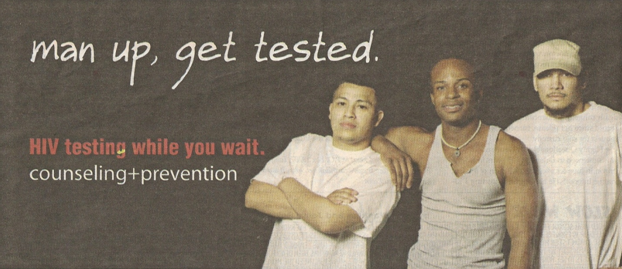
For example, this ad from a western Massachusetts clinic uses the phrase “man up, get tested” — taking care of yourself by getting tested for HIV is linked to your masculinity. What’s interesting is that by including only men of color in the photo, the ad suggests that black and Latino men are particularly obsessed with their masculinity, more so, perhaps, than white men. It also potentially reinforces stereotypes about black men as hyper-sexualized and Latino men as machismo.


[If an item is not written by an IRMA member, it should not be construed that IRMA has taken a position on the article's content, whether in support or in opposition.]

Today is National Black HIV/AIDS Awareness Day

National Black HIV/AIDS Awareness Day, February 7th of every year, is a national HIV testing and treatment community mobilization initiative targeted at Blacks in the United States and the Diaspora. There are four specific focal points: education, testing, involvement, and treatment. Educationally, the focus is to get Blacks educated about the basics of HIV/AIDS in their local communities. Testing is at the core of this initiative, as it is hoped that Blacks will mark February 7th of every year as their annual or bi-annual day to get tested for HIV. This is vital for those who are sexually active and those at high risk of contracting HIV. When it comes to community and organization leadership, getting Blacks involved to serve is another key focus. We need Black People from all walks of life, economic classes, literacy levels, shades and tones as well as communities (large and small) to get connected to the work happening on the ground in their local areas. And lastly, for those living with HIV or newly testing positive for the virus, getting them connected to treatment and care services becomes paramount.

Learn more.

[If an item is not written by an IRMA member, it should not be construed that IRMA has taken a position on the article's content, whether in support or in opposition.]

Community meetings on National HIV/AIDS Strategy

via National Black Leadership Commission on AIDS

As part of his National HIV/AIDS Strategy, President Barack Obama  mandated that Executive Branch departments and agencies with HIV/AIDS programs come up with an implementation plan for the strategy within  150 days (by Dec. 9). The National Black Leadership Commission on AIDS,  in collaboration with other national organizations and local leaders, is hosting community meetings in New York, Washington, D.C., Jackson, Miss., Atlanta, Los Angeles and Detroit from Sept. 16 to Oct. 12.

The purpose of the meetings  is to elicit input and recommendations to ensure that the National HIV/AIDS Strategy adequately addresses the unmet prevention, treatment and care needs with the African-American community. We are seeking participation in these meetings from clergy, health practitioners, persons living with HIV/AIDS, community-based organizations, direct service providers, community activists, policy makers and other concerned citizens.
More information