Pages

Tampilkan postingan dengan label HIV/AIDS. Tampilkan semua postingan

Whatever Happened to the AIDS Vaccine?

via the Huffington Post, by Michael Warren

"Now is exactly the time to maintain commitment. Now is exactly the time to hold a steady course in funding for basic science, clinical trials and product development. It's good business sense: Our investments are paying off -- and the dividend, in the form of an effective vaccine, would have value beyond our wildest dreams."

Recent news about HIV/AIDS has focused on the good -- promising trial results that prove the antiretroviral (ARV) drugs used to treat HIV can also prevent HIV infections -- and the bad -- retreats in donor commitment that imperil the substantial gains that have been made in treating global AIDS, at the precise moment that treatment has been recognized as a powerful prevention strategy. In discussions about whether AIDS treatment can be used to end the AIDS epidemic, scant attention is paid to the search for an AIDS vaccine.

When AIDS vaccines do get mentioned, it is often in the context of questions about whether a vaccine is still needed, or whether the search for an AIDS vaccine is affordable in today's economic climate.

Researchers and advocates who gathered Sept. 12-15 in Bangkok, Thailand, for the AIDS Vaccine 2011 conference have clear answers: Yes, we still need a vaccine, and yes, we need to continue to invest in AIDS vaccine research.

Read the rest.


[If an item is not written by an IRMA member, it should not be construed that IRMA has taken a position on the article's content, whether in support or in opposition.]

Persecuted for Being Gay

via The Guardian, stories compiled by Gay Middle East

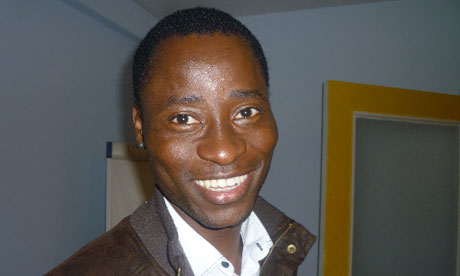
Bisi Alimi, from NigeriaBisi Alimi, from Nigeria (an IRMA member!)

In 2002, I was at university in Nigeria and standing for election. A magazine wrote about me and exposed me as being gay. This led the university to set up a disciplinary committee. I was very nearly dismissed. When I did graduate, people wanted to refuse me my certificate on the grounds that I did not have good enough morals to be an alumnus of the university. While this was going on, the then-president, Olusegun Obasanjo, declared that there were no homosexuals in Nigeria, and that such a thing would not be allowed in the country.

I talked with a friend of mine, who is a famous Nigerian talkshow host, about challenging this opinion. Nobody had come out publicly before. So, in October 2004, I appeared on her breakfast show, New Dawn with Funmi Iyanda". I talked about my sexuality, the burden of the HIV epidemic in the gay community.

The reaction was immediate and violent. I was subjected to brutality from the police and the community. I was disowned by my family and lost many friends, including in the gay community. They were afraid to know me. I was isolated, with no support and no job. The TV show was taken off the air by the government. It led to the introduction of the Same Sex Prohibition bill of 2006. All I had done was say who I was. Three years later I appeared on the BBC World Service. I repeated what I had said on television in Nigeria and suggested my government was using attacks on homosexuality to help cover up its own corruption.

On my arrival back to Nigeria, I was arrested, detained and beaten by the police. For a month, until I fled back to the UK in April 2007, my life was in constant danger.

Read the rest.


 [If an item is not written by an IRMA member, it should not be construed that IRMA has taken a position on the article's content, whether in support or in opposition.]

When addressing the challenge of changing behavior, it's "easy to blame the victim"

via Huffington Post, by Simon McCormack

When addressing the challenge of changing behavior, Marjorie Hill says it's easy to blame the victim.

"There's always a tendency to look at the person and say, 'why don't you just stop smoking or eating red meat or start exercising?'" The Gay Men's Health Crisis CEO and HuffPost blogger says.

But when it comes to dealing with HIV and AIDS, Hill says, it's more complicated.

"We think that personal responsibility is important and we certainly encourage it," she said. "But when you look at the numbers and understand the epidemiology, the most common factor that those 33 million people who have the disease share is poverty. Poverty doesn't transmit HIV, but certainly being in a situation where someone has less access to information, resources, education and power -- those are factors that influence HIV."

That's what GMHC, the world’s first provider of HIV and AIDS prevention, care and advocacy, works to change, Hill said.

Read the rest.


[If an item is not written by an IRMA member, it should not be construed that IRMA has taken a position on the article's content, whether in support or in opposition.]

SWAZILAND: HIV prevalence among factory workers "50 percent"


A new government study has found that more than half of workers in Swaziland’s garment industry are living with HIV, and officials are realizing that the once-hailed promise of manufacturing employment has become a financial and medical nightmare for tens of thousands of Swazi women.

“HIV prevalence among factory workers is 50.3 percent,” said Nhlanhla Nhlabatsi, an epidemiologist with the Ministry of Health. Nhlabatsi presented the data last week as preliminary findings for Swaziland’s first Behaviour Sentinel Surveillance Report to be released in its entirety later in the year.

About 30,000 Swazis, mostly women, are employed in garment factories financed by Taiwanese investors and operated by managers from mainland China.

The survey also found that most factory workers were well informed about HIV/AIDS, and 90 percent of workers interviewed were aware of the female condom and other methods of preventing HIV.

Government officials will now begin investigating the gap between knowledge of HIV/AIDS prevention and workers’ susceptibility to HIV. The prevalence rate for textile industry employees is significantly higher than the 26 percent rate among sexually active adult Swazis.

“Women comprise the largest number of workers at the garment industry plants. They work long hours at wages so low some of them are known to turn to prostitution to support themselves and their families,” said Alicia Simelane, an HIV testing and counselling officer at the Matsapha Industrial Estate, where Swaziland’s industry is concentrated outside the commercial hub of Manzini.

The link between “sweatshop” wages and the risk of HIV has been known for years, but the statistical impact of the risk is only becoming apparent now.

Read the rest here.

[If an item is not written by an IRMA member, it should not be construed that IRMA has taken a position on the article's content, whether in support or in opposition.]

Criminalizing HIV Transmission Will Only Spread the Problem

Via the Vancouver Sun, by Peter McKnight.

It sounds like the synopsis of a B-movie: Thanks to the long arm of the law, the world is once again safe from The Attack of the Killer HIV-people.

Safe from Johnson Aziga, the Ontario man who had sex with more than a dozen women without informing them of his HIV-positive status. Several of the women contracted HIV, including two who subsequently died, which led to Aziga being declared a dangerous offender and handed an indeterminate sentence earlier this week.

And safe from the 17-year-old Edmonton girl who was charged this week with two counts of aggravated sexual assault after allegedly having sex with two men without informing them of her HIV-positive status. The girl had been the subject of an urgent police bulletin, which led to the worldwide publication of her name, picture and health status. Aside from painting a rather ghoulish picture of people living with HIV, such unusual cases inevitably send the message that the best way to handle HIV-non-disclosure is through the criminal law.

Police forces across the country seem to have got the message, given the increase in the number and severity of charges laid for HIV-non-disclosure in recent years. Well over 100 HIV-positive people across Canada - and at least 14 in B.C. - have now been charged with offences ranging from assault to first-degree murder.

Courts, too, have been enthusiastic in prosecuting cases of non-disclosure, with defendants receiving everything from suspended sentences to, in Aziga's case, an indeterminate and potentially lifelong sentence of imprisonment.

This enthusiasm for criminal prosecution exists despite - or perhaps because of - uncertainty about the disclosure obligations of HIV-positive people. The Supreme Court of Canada has held that individuals are under a legal duty to reveal their HIV-positive status before engaging in sex that poses a "significant risk" of HIV transmission, but what constitutes a significant risk remains unclear.

Read the rest here.

[If an item is not written by an IRMA member, it should not be construed that IRMA has taken a position on the article's content, whether in support or in opposition.]

New Report Shows Major AIDS Funders Fail to Track Investments for Gay Men and Transgender People

Via MSMGF.

A new report indicates that most major bilateral, multilateral and private philanthropic funders that focus on HIV do not consistently track their investments targeting men who have sex with men (MSM) and transgender people. Produced by the Global Forum on MSM & HIV (MSMGF), the report also examines tracking of domestic government funding dedicated to these populations in all UN Member States, revealing that only 25% these countries recorded levels of HIV prevention spending for MSM in 2010 and no country tracked spending for transgender people.

“With overwhelming evidence for the need to prioritize MSM and transgender people in the global fight against AIDS, it is shocking that so few funders actually know how much money they are spending on these populations,” said Dr. George Ayala, Executive Officer of the MSMGF. “Funders often talk about the importance of investing in key affected populations, but budgets offer a clear reflection of what their priorities actually are. HIV investments must be accounted for in order to ensure that MSM and transgender people are getting the support they need.”

In the few countries that did track HIV prevention spending for MSM, the report indicates expenditures fell far below the amount required to achieve universal access. According to country reports made to the United Nations in 2010, an average of 2% of national HIV prevention budgets was dedicated to MSM in the 42 low- and middle-income countries that tracked spending for this population – $15.8 million in total. Nearly 75% of that sum came exclusively from international sources, highlighting the role of bilateral, multilateral and large private philanthropic funding in service provision for MSM in low- and middle-income countries.

The report follows a number of recent publications arguing in favor of targeted investments for most-at-risk populations like MSM and transgender people. In June of this year, the World Bank issued a report demonstrating that increased access to HIV prevention and treatment for MSM can change the trajectory of a national epidemic. That same month, the Lancet published a new global HIV investment framework that emphasizes the importance of targeted investments for key affected populations.

“After 30 years of diffused investment, the world is realizing that a focused approach is the only one that will work,” said Dr. Ayala. “It is time for funders to reflect that in their budgets and track their investments by population. Donor agencies must communicate and coordinate to ensure adequate coverage without duplication, and we must all aim for a higher level of accountability to the people we serve.”

Read the rest here.

[If an item is not written by an IRMA member, it should not be construed that IRMA has taken a position on the article's content, whether in support or in opposition.]

Petition for informed debate about PrEP. HIV+ gay and bi men, please SIGN BELOW!

The release of data from the iPrEx study of pre-exposure prophylaxis (PrEP) for HIV prevention in gay and bisexual men and transgender women has led to a good deal of debate about whether and how PrEP should be used.

Unfortunately, some of that debate has been fueled by misrepresentations of the study data and, perhaps more alarmingly, by groundless assertions that gay/bi men and other men who have sex with men (MSM) will misuse PrEP, spread drug resistance and act without regard to their health or the health of others if PrEP is made available. A paid ad campaign by the AIDS Healthcare Foundation running in gay papers across the country has contributed to spreading false ideas both about PrEP and about the commitment of gay/bi men to care for themselves and others. We reject those false assertions and want a full and factual discussion of the pros and cons of PrEP in our community.

Recently, two additional studies, Partners PrEP and the CDC's TDF2 study have confirmed the safety and efficacy of PrEP, this time in heterosexual women and men.

A small group of HIV positive gay/bi men who are committed to promoting safer sex and the open exchange of accurate information are circulating the following letter to help clarify the facts about PrEP, open up community discussion and make clear our belief that we are entitled to respect, accurate information and new HIV prevention tools.

This sign on letter is part of a broad array of advocacy activities being undertaken by the national PrEP Committee. Members of the PrEP Committee include individuals from a host of organizations working on PrEP and other new prevention technologies who meet regularly by phone and email to share information and strategize.

For allies who are not HIV+ gay/bi men, you can learn more about this work and how to participateby sending an email to Jim Pickett at jpickett@aidschicago.org.

We encourage HIV+ gay/bi men who are allied in the fight against AIDS to help us clear the record about PrEP by signing on to this letter.


[If an item is not written by an IRMA member, it should not be construed that IRMA has taken a position on the article's content, whether in support or in opposition.]

Project ARM: John Shaw Memorial Scholarship Call for Application

Project ARM—Africa for Rectal Microbicides—is a long-term, sustained project which aims to develop community capacity around rectal microbicide advocacy in order to ensure broad participation in research activities and well-informed community input into the development of an African rectal microbicide agenda. The end goal is enhanced rectal microbicide advocacy in Africa as well as the planning and implementation of rectal microbicide trials on the continent. Project ARM is coordinated by International Rectal Microbicide Advocates (IRMA). First year funding for Project ARM has been secured from the United States National Institutes of Health – Office of AIDS Research and the New Venture Fund. AVAC is also partnering with IRMA on this initiative.

Project ARM evolved from discussions initiated by IRMA through its listserv, and from input received from African advocates and partners at two informal meetings held in conjunction with the Microbicides 2010 (Pittsburgh) and AIDS 2010 (Vienna) conferences. A working group was formed following the Microbicides 2010 meeting, and has guided this process ever since. There are now 60 working group members including advocates and community members, researchers, funders and policy-makers from 10 African countries, as well as a few key international partners.

In order to develop an African rectal microbicide agenda that articulates research, advocacy and community mobilisation strategies, IRMA is hosting a working meeting on 2-3 December 2011 in Addis Ababa as part of Project ARM. This invite-only meeting is taking place prior to the 16th International Conference on AIDS and STIs in Africa (ICASA, December 4–8), and is considered an official satellite session.

PLEASE NOTE: This is a working meeting—not a workshop, nor a conference.

The objectives of the December working meeting are:
  • To promote a common understanding of how rectal microbicide (RM) research and advocacy is proceeding, the potential role that African RM research and advocacy could play, and the various African contexts within which RMs would be introduced.

  • To enhance the capacity of African community advocates to participate in RM agenda-setting, research and mobilisation efforts.

  • To stimulate strategies for African community mobilization around RMs; to put RMs on the research agenda in Africa; and, to develop an African RM research agenda that is part of a global RM research agenda.


AIMS OF THE SCHOLARSHIP PROGRAMME 
  1. To strengthen research literacy and advocacy capacity amongst IRMA membership in Africa

  2. To promote and enhance the role and standing of IRMA within the microbicide community in Africa

  3. To facilitate the involvement of well-informed and active members of the African research and advocacy communities in the development of an African rectal microbicides agenda

  4. To ensure diversity in participation at the meeting, including from researchers and community members, women and men, gay men and other men who have sex with men, people living with HIV, and different regions of Africa

We are covering the travel costs of more than 30 of the 40 meeting participants—most of which are Africans—including speakers, organisers, invited guests, and key partners. This includes an additional 12 scholarships for Africans through this call for applications.

For more information, please send an email to rectalmicro@gmail.com.

[If an item is not written by an IRMA member, it should not be construed that IRMA has taken a position on the article's content, whether in support or in opposition.]

Study - Addressing Social Drivers of HIV/AIDS for the Long-Term Response: Conceptual and methodological Considerations

Via MSMGF.

A key component of the shift from an emergency to a long-term response to AIDS is a change in focus from HIV prevention interventions focused on individuals to a comprehensive strategy in which social/structural approaches are core elements. Such approaches aim to modify social conditions by addressing key drivers of HIV vulnerability that affect the ability of individuals to protect themselves and others from HIV. The development and implementation of evidence-based social/structural interventions have been hampered by both scientific and political obstacles that have not been fully explored or redressed. This paper provides a framework, examples, and some guidance for how to conceptualise, operationalise, measure, and evaluate complex social/structural approaches to HIV prevention to help situate them more concretely in a long-term strategy to end AIDS.

Conclusion:
After nearly 30 years of the HIV/AIDS pandemic, there have been woefully few examples of truly successful HIV prevention initiatives conceived and implemented by national policy makers and programme planners. To ensure measurable HIV prevention success by 2031, the 50th anniversary of the epidemic, it will be necessary to move beyond the limited, individualistic, urgency-based approaches of the past. Shifting from an emergency framework and mounting a long-term response to AIDS requires new approaches that engage with underlying social-structural drivers of patterns of practices that influence vulnerability and facilitate the spread of HIV, as part of comprehensive, strategic programming (or ‘combination prevention’).

Patterns of behaviour and practices arise from combinations of drivers, operating in specific social, economic, and political contexts. As such, no single causal pathway can be drawn from a social driver to a set of practices or behaviours; rather, a range of potential outcomes may arise. Making causal inference about correlations between social drivers and HIV burden involves identifying ‘sociologically plausible’ pathways drawn from extant social science and epidemiological data. Engaging with social drivers requires methods and approaches beyond traditional conceptualisations that seek to identify and intervene on single, causal determinants or universal mechanisms of influence. HIV prevention researchers and advocates should reject and resist over-simplified language for social drivers. Statements that particular social-structural factors ‘do’ or ‘do not’ lead to HIV transmission are almost always too simplistic; language should shift to discussing how, in what circumstances, and for whom particular combinations of factors contribute to HIV vulnerability (or, conversely, resilience). In order to be rigorous, design of HIV prevention programmes and interventions aiming to address social-structural factors should:
  • Begin with an assessment of the social and structural factors that may be
  • increasing HIV vulnerability in targeted populations and settings.
  • Identify (hypothesise) sociologically plausible causal chains between distal structural factors and specific individual or group practices.
  • Identify levels of possible influence, in line with the HIV prevention programme’s or intervention’s scope and aim.
  • Articulate any assumptions about such influences and aims including potential expected and unexpected consequences of the programme or intervention (including other social impacts).
  • Build in evaluation mechanisms that are both feasible and appropriate to the aim, level, scope and method of the programme or intervention as a way to enable validation of assumptions, investigation of the mechanisms by which structures affect risk and vulnerability, and appropriate assessment of outcomes and impact.
Find the whole study here.

[If an item is not written by an IRMA member, it should not be construed that IRMA has taken a position on the article's content, whether in support or in opposition.]

Homophobia stymies HIV fight in Islamic countries


Stigma and homophobia against gay men is hampering efforts to manage a growing epidemic of HIV in Islamic countries, warn epidemiologists this week.

"The stigma is a barrier to HIV prevention services," says Laith Abu-Raddad of the Weill Cornell Medical College-Qatar in Doha. He heads up a team that is assembling, for the first time, data from the Islamic world on the growing prevalence of HIV in practising gay men.

They report that the arrival of HIV in the gay community has been relatively recent compared with other regions of the world, but warn that it is on the rise. In Pakistan, for example, the prevalence of HIV in transgender male sex workers rose from 0.8 per cent in 2005 to 6.4 per cent just three years later.

Historically, HIV epidemics have often begun in minority, high-risk groups such as men who have sex with men or intravenous drug users, then spread to the general population. A problem in much of the Islamic world is that men having sex with men is illegal. That, coupled with homophobia, hampers efforts to contain the virus by making gay men too scared to seek treatment, a pattern that has been seen in eastern European countries, India and sub-Saharan Africa.

Read the rest here.

[If an item is not written by an IRMA member, it should not be construed that IRMA has taken a position on the article's content, whether in support or in opposition.]

The Lagos HIV Stigma

Via Next, by Gbenro Adeoye.

The first case of HIV/AIDS in Lagos was reported in 1986, unlike the global stage, where it was first reported 30 years ago by the Centres for Disease Control and Prevention (CDC) in the United States among gay men. Since the discovery in Lagos which was also the first in Nigeria, HIV has steadily grown to a status of silent foreboding among the general public. According to the Lagos State AIDS Control Agency (LSACA), the current HIV prevalence rate in the state is 5.1 percent, ahead of the country's 4.1 percent prevalence rate recently announced by the Health Minister, Onyebuchi Chukwu.

But in the 25 year period, the state has seen significant progress in the level of public awareness, testing, treatment and care for persons living with HIV. In his assessment, the Head of Lagos office, United Nations Population Fund, Omolaso Omosehin, described the achievements made so far in the state as remarkable, highlighting improvements in the prevention and treatment of the disease. He said, "The situation is better than what it used to be; many people are now aware of how to prevent HIV/AIDS and there is hardly any health centre where you are not required to the test. Many more people are able to access antiretroviral (ARV) drugs which were not so available some years ago."

Yetunde Ababi, a health educator, who tested positive for HIV in 1991, also acknowledged the improvements made in the treatment and care for persons living with HIV. Mrs. Ababi said "the epidemic was so much in the 90s and the drugs were so expensive that people were being screened into the mortuary. Then, we were spending about N90, 000 monthly on ARVs, but the drugs and treatment are now free in government hospitals in Lagos."

Unfortunately, the stigma associated with HIV still denies infected persons job appointments and prevents many others from openly declaring their status. Patrick Akpan, the deputy coordinator of Plan Foundation for Health and Development, formerly called Positive Living Organisation of Nigeria (PLON), a nongovernmental organisation aimed at supporting persons living with HIV/aids, said the stigma against persons living with HIV in Lagos has been ‘modernised.' According to him, people have invented new ways of discriminating against persons living with HIV. He said, "People won't tell you that they are not relating with you because of your HIV status; they will rather find another excuse for avoiding you. They would rather say ‘you are not qualified for the job', rather than say it's because you are HIV positive."

Read the rest here.

[If an item is not written by an IRMA member, it should not be construed that IRMA has taken a position on the article's content, whether in support or in opposition.]

Bacterial Bioshield Could Keep HIV at Bay


A LIVING microbicide reduces HIV-like infection in monkeys, and might one day provide women with long-lasting defence against the virus.

Dean Hamer of the National Institutes of Health in Bethesda, Maryland, and colleagues engineered naturally occurring vaginal bacteria to produce the anti-HIV protein cyanovirin-N.

They applied a gel containing the bacteria to the vaginas of rhesus macaques before infecting them by the same route with a hybrid of SIV and HIV. The engineered bacteria cut the infection rate by 63 per cent (Mucosal Immunology, DOI: 10.1038/mi.2011.30).

Human females have 10 times as much of the bacteria as female macaques, so the engineered bacteria could reduce infection rates even more dramatically, says Hamer. Clinical tests could begin in a few years after safety testing.

[If an item is not written by an IRMA member, it should not be construed that IRMA has taken a position on the article's content, whether in support or in opposition.]

More in Uganda: Minister Comments Carelessly on HIV/AIDS

Via In2EA.

The Health Minister Christine Ondoa’s remarks that HIV/Aids can be cured through prayer have not been received well by both health practitioners and born-again preachers who called it careless and misleading remarks.

Yesterday, Ms Ondoa was quoted by the Observer newspaper to have had a firsthand experience with people she claimed were infected by the HIV/Aids virus but after a series of prayer, tested negative.

She, however, observed that medical workers and the general public should be cautious about people who claim they were healed of HIV, adding that as a scientist she is often careful not to automatically believe a person who comes to her presenting negative results after being prayed for. Such a person’s sero status must be checked and their medical records that show they tested positive must be scrutinised, Ms Ondoa added.

The Head of The Aids Support Organisation (TASO), Mr Richard Ochai, who refused to believe that a minister could say such a thing, said such statements, most especially from born-again churches, are continuously curtailing TASO efforts to fight against HIV/Aids whose prevalence in recent years is said to have increased in the country.

He said science has proved that if one takes ARVs the viral load will become low such that they may not be detected but once they stop taking the drug, the virus will definitely be seen again. “We know God can do miracles if he so wishes but these many possibilities still need scientific prove,” Dr Ochai said.

Read the rest here.

[If an item is not written by an IRMA member, it should not be construed that IRMA has taken a position on the article's content, whether in support or in opposition.]

Homophobia in Ghana


Understanding the Drivers of Homophobia in Ghana


Recent condemnation of homosexuality by religious and political leaders in Ghana has led to a climate of fear preventing men who have sex with men (MSM) from accessing vital health services, say local NGOs.

The minister of Ghana’s Western Region, Paul Evans Aidoo, publicly described homosexuality as “detestable and abominable” after media reports in late May that 8,000 homosexuals had registered with health NGOs in the country’s west (the information appears to come from records kept by the NGOs of people who accessed services for MSM). Aidoo has since called for increased security in the region and the arrest of all homosexuals. Other religious leaders and politicians have followed suit, condemning homosexual activity.

As a result, far fewer MSM are accessing safe sex education and support programmes run by the Centre for Popular Education and Human Rights (CEPEHRG) to prevent the spread of HIV, said MacDarling Cobbinah from the Coalition against Homophobia in Ghana and a member of CEPEHRG.

“It has brought about a lot of fear and stigma for the people. It is difficult to organize programmes,” Cobbinah said. “It is very difficult for people to walk freely on the street… The call for arrest has really pushed people down.”

He added that one of his colleagues was recently accused of being gay and beaten up by a group of men.

Cobbinah said numbers had dropped at a regular HIV peer education programme that once had more than 20 people attending; two weeks ago only half the people came, and last week no one came, he told IRIN on 27 July. “They said, ‘If we come, we might be arrested.'”

An estimated 25 percent of Ghanaian MSM were HIV-positive in 2006, according to the US Agency for International Development (USAID).

According to the UN World Health Organization, since the beginning of the epidemic in the early 1980s, MSM have been disproportionately affected by HIV. The organization said social discrimination of MSM led them to delay or avoid seeking HIV-related information, care and services.

Other organizations in Ghana are also facing obstacles to providing vital services. An NGO based in the Western Region’s capital Sekondi-Takoradi, which distributes condoms and safe sex information to MSM, told IRIN that since Aidoo increased security and called for arrests they have felt threatened.

Male-to-male sexual relations are a crime in Ghana. Considered a misdemeanor, it carries a maximum sentence of six months, according to Kissi Agyabeng, a law lecturer at the University of Ghana. However, despite Aidoo’s calls for a crackdown, arrests do not yet appear to be taking place.

A spokesperson for the Sekondi-Takoradi NGO, who did not want his name or the organization’s name published for security reasons, said the NGO was now coming under pressure from the government to stop their work on HIV prevention if they did not reveal the names of MSM who have registered to use their services.

Stopping this work would affect thousands of people. In 2008, 2,900 people accessed their services, and by this year numbers had quadrupled, the spokesperson said.

...

Read the rest of the article here. For a fascinating personal story from a gay Ghanaian, read Paula Stromberg's article A Good Day in Ghana here.

[If an item is not written by an IRMA member, it should not be construed that IRMA has taken a position on the article's content, whether in support or in opposition.]

Washington D.C.: Public Meeting on Safety Issues in PrEP

An invitation from the Forum for Collaborative HIV Research:


Safety Issues in Pre-exposure Prophylaxis for HIV negative individuals, proposals for management of safety concerns, and pending plans for scale-up

Forum for Collaborative HIV Research
1608 Rhode Island Avenue, NW
Washington, DC 20036

August 19, 2011
8:30am - 4:00pm

The Forum for Collaborative HIV Research has been tasked by our collaborators in the public health community, including the US Food and Drug Administration, to convene an open public meeting to address safety issues that may surround the introduction of biomedical approaches to prevent HIV infection. Recent data from the iPrEx, Partners PrEP and CDC’s TDF2 studies support a conclusion that pre-exposure prophylaxis (PrEP) with antiretrovirals may be effective at preventing transmission of infection in otherwise healthy, vulnerable individuals upon exposure to HIV. This important finding may lead to scale-up, broad use of PrEP and, potentially, approval of a PrEP indication.

Recently, the drug development paradigm has also shifted with more focus on safeguarding individuals on medications. Premarket studies can miss important safety signals, either because the patient population is different and limited by enrollment criteria, too small to see low incidence events, or exposure is not long enough to identify latent effects. Compensatory behavioral issues may also be a concern upon scale-up. Appropriate communication strategies to reach the intended healthcare provider and the intended vulnerable populations must be identified and formulated. Mechanisms to anticipate and/or control the development of resistant HIV are also important. Finally, public focus as a result of our meeting may identify additional public health issues that should be addressed as well.

The Forum meeting will follow our usual format of panel discussions featuring stakeholders, including academics, trialists, clinicians, community advocates, public health professionals, and others. Each will be asked by a moderator to address a set of pre-prepared questions. Four panels are planned: (1) What are the safety issues of concern with pre-exposure prophylaxis?; (2) what are potential remedies to control safety risks and their pros and cons?; (3) what are the public health implications?; and (4) finally, a panel will summarize and identify next step.

Because of limited space, public participation in the meeting room will be limited to one participant per organization. An overflow room will be available for attendees on an as-needed basis. The meeting will be webcast to enhance national dissemination. Written supplementary questions can be directed to the panels. Webcast attendees can also submit written questions via instant messaging.

Registration: Register online at http://prep-reg.com/ to attend the public meeting or to view the live webcast.
Location: 1608 Rhode Island Avenue NW, Washington, DC 20036
Date and Time: August 19, 2011 8:30 AM-4:00 PM

________________________________________
Forum Announcements

Studies show new progress in HIV testing in emergency departments
July 29
A CDC sponsored supplement released in the Annals of Emergency Medicine details new HIV testing efforts in Emergency Departments. "Emergency departments play a critical role in helping people learn their HIV status, connecting them to life-prolonging care, and helping them avoid transmitting the virus to others"said Jonathan Mermin, MD, Director of CDC's Division of HIV/AIDS Prevention. Click here to read more

Controlling the HIV Epidemic - The Promise of ARV-Based Prevention: Presentations now available
July 28
Presentations made at the Forum co-sponsored IAS Satellite Symposium "Controlling the HIV Epidemic - The Promise of ARV-Based Prevention" are now available. Click here to read more

Statistical Methods for Causal Inference in Observational and Randomized Studies: Course fees increase on August 1
7/26/11 This course concerns statistical methods for causal inference using observational and experimental longitudinal data. The course will focus on the application of methodological advances in statistical and causal research to improve the design and interpretation of safety analyses. These analyses will become increasingly important in the post-marketing safety environment for new drugs.

Dates: September 26-28, 2011.
Location: UC Washington Center, Washington, DC.
To register, please use the following link: www.hivforum.org/stats2011

[If an item is not written by an IRMA member, it should not be construed that IRMA has taken a position on the article's content, whether in support or in opposition.]

New, Long-Term PrEP Study Announced

Via Now Chelsea, by Sam Spokony.

Few methods of HIV prevention have been as promising, or as controversial, as pre-exposure prophylaxis (PrEP). After a history of underground practice and off-label prescriptions, the approach has recently begun to receive serious attention from researchers, policy makers and health care advocates.

An outgrowth of post-exposure prophylaxis (or PEP, a short-term antiretroviral treatment that has been used since the early 90s to decrease the likelihood of HIV infection after exposure to the virus, either occupationally or through sex), PrEP is a similar antiretroviral that can be taken by HIV-negative individuals in order to help prevent them from seroconverting (being infected).

The results of a Phase III clinical study known as iPrEx were published in the New England Journal of Medicine on November 23, 2010. The study showed that, in a group of 2,499 gay men, PrEP — in the form of a combination of drugs under the brand name Truvada — was 44 percent effective in preventing HIV seroconversion.

Under the guidance of Dr. Roy Gulick (director of the Weill Cornell Medical College HIV Clinical Trials Unit), a new experiment called the NEXT (Novel Explorations of Therapeutics) PrEP Study will begin this fall. It will include 400 at-risk, HIV-negative gay men, and will take place over 48 weeks at 12 sites across the U.S. and Puerto Rico.

The NEXT PrEP Study will differ from iPrEx in that its primary experimental group will receive a daily regimen of the drug maraviroc (brand name Selzentry). The control group will receive Truvada, and two other experimental groups will receive combinations of maraviroc and either tenofovir or FTC (the two individual drugs that make up Truvada). A major goal of the study, along with testing the HIV-prevention efficacy of maraviroc, will be to gauge the side effects of the drug on participants.

“The longest any HIV-negative person has taken PrEP in a clinical study is 12 weeks,” Gulick told Chelsea Now in a July 23 phone interview [This is actually a major factual error. For example, the average follow-up in iPrEx was 14 months - IRMA]. “Now, since this is a drug we’re giving to healthy people, the next step is exploring further to prove that it is both safe and tolerable for them.”

Read the rest here.

[If an item is not written by an IRMA member, it should not be construed that IRMA has taken a position on the article's content, whether in support or in opposition.]

UGANDA NOW TO INCLUDE HOMOSEXUALS IN HIV PROGRAMMES


In an incredible change of heart, the Uganda government has listed homosexuals as a target for HIV/Aids programming in a new five year National HIV Prevention Strategy for Uganda 2011-2015.

The policy document which Behind the Mask has seen will run under the theme: “Expanding and Doing HIV Prevention better.” The policy development process is spearheaded by the Uganda Aids Commission (UAC), with consultations of various stakeholders including Civil Society.

Until recently, the UAC had publicly stated that they had no funds for targeting homosexuals in HIV programming. “Gays are one of the drivers of HIV in Uganda, but because of meagre resources we cannot direct our programmes at them at this time,” Dr Kihumuro Apuuli, (pictured) the Director General of UAC was quoted saying in 2008.

However, some have suggested that the UAC was being influenced by Christian born again movements who were lobbying Uganda’s First Lady, Janet Museveni, a born again Christian herself, not to recognize gays in any policy document. The UAC was established by an act of Parliament, and is directly under President’s Office.

The National HIV Prevention Strategy sets forth opportunities and guidance for intensified efforts to significantly stem new HIV infections. Its vision builds on that of the National HIV/Aids Strategic Plan(NSP), of a Uganda where new HIV infections are rare, and where everyone, regardless of age, gender, ethnicity or socio‐economic status has uninterrupted access to high quality and effective HIV prevention.

“The overall goal of the strategy is to reduce new HIV infections by 30percent based on the baseline of 2009 which would result in 40percent reduction of the projected number of new HIV infections in 2015,” the policy text reads in part.

Ms Hasifa Nakiganda, an LGBTI lobbyist with Uhspa Uganda welcomed the contents of the draft policy. She said Uganda’s burying its head in the sand over homosexuals was setting a bad example, because Uganda was a reference country when it came to the best management of HIV/Aids. “So by denying homosexuals universal access to HIV programming, Uganda is sending a bad signal to other countries struggling with the HIV pandemic,” Ms Hasifa said. Uhspa Uganda petitioned the Ugandan Parliament pleading for homosexuals Right to Health and HIV programming inclusion.

Uganda has only one policy that recognizes homosexuals as a target for health service delivery- the National Policy Guidelines and Service Standards for Sexual and Reproductive Health and Rights. But homophobia prevents gays from accessing public health services.

The new NPS policy aligns with the National Development Plan for Uganda and the, the Second National Health Policy, and the Health Sector Strategic and Investment Plan (HSSIP) (2010-2015). It will contribute to attainment of Universal Access, as per the UNGASS- United Nations General Special Session Country Progress Declaration of Commitment on HIV/Aids and MDG (Millennium Development Goals) 5, 6, and 7 targets; calling  for increased focus, coordination and collaboration to comprehensively scale‐up HIV prevention efforts and align them to the drivers of the epidemic.

Read the rest here.

Read another Behind the Mask article discussing this news here.

[If an item is not written by an IRMA member, it should not be construed that IRMA has taken a position on the article's content, whether in support or in opposition.]

'Funding gap' imperils science exploits, AIDS forum hears


Via AFP, by Richard Ingham.

"Science is running much faster now than what we can implement and what we can pay for."

The four-day Rome conference, ending Wednesday, heard the outcome of several landmark trials.

The biggest found that giving early drug therapy to people with HIV reduced the risk of infecting others by a massive 96 percent.

Other trials found that giving antiretrovirals to a non-infected partner reduced the risk by around two-thirds.

These amount to two powerful new choices -- "treatment as prevention" and "pre-exposure prophylaxis" (PrEP) -- to brake transmission of the AIDS virus.

They join male circumcision, a proven measure to protect men, to which a vaginal microbicide, still under test, may one day be added for women.

In 2009, more than 33 million people were living with HIV and 2.6 million people became newly infected.

Making inroads into this tally means stumping up more money swiftly, said Julio Montaner, director of the BC Centre for Excellence in HIV/AIDS in British Columbia, Canada.

The higher early cost would lead to dividends, though. Eventually fewer people would ultimately become infected -- and people on treatment contribute to the economy because they are healthy rather than a burden to it through sickness.

"It could pay for itself in about a decade," calculated Jean-Paul Moatti, an economics professor at France's University of the Mediterranean in Marseille, southern France.

The financial outlook, though, is worrying.

Between 2001 and 2009, help for fighting AIDS in low- and middle-income countries rose nearly 10-fold, from $1.6 billion to $15.9 billion each year.

But in 2010, resources declined as Western countries, the mainstay of external funding, tightened the belt in response to their fiscal restraints.

Today, some 6.6 million people in poor countries have grasped the drug lifeline, but another nine million are still in need of treatment.

Reaching them by 2015, in line with the newly stated goal by UN members, will require between $22 billion and $24 billion annually.

Read the rest here.

[If an item is not written by an IRMA member, it should not be construed that IRMA has taken a position on the article's content, whether in support or in opposition.]

From 'What if' to 'What Now': Implementing the New Prevention Technologies

Via AIDSMap, by Gus Cairns.
Two consecutive sessions at the sixth International AIDS Society conference in Rome yesterday were devoted, now we have convincing scientific data on the benefits of treatment as prevention and PrEP, to putting these new prevention methods into practice.

“We have moved from ‘What if?’ to ‘What now?’” was the comment of Mitchell Warren, Executive Director of the AIDS Vaccine Advocacy Coalition (AVAC), on what else we need to know, what barriers need to be addressed , and what resources might be required, to maximise the promise of antiretroviral-based prevention.

Anthony Fauci, Director of the US National Institute of Allergies and Infectious Diseases (NIAID), said: “We now have a solid scientific foundation to say that even in the absence of a vaccine we have the capacity to end the epidemic. I can’t go to the US President and say: 'We can cure HIV.’ But I can say ‘Ending the epidemic is scientifically doable’.”

Earlier, however, Nancy Padian from the Office of the US Global AIDS Coordinator had outlined formidable challenges still to be answered if antiretroviral treatment could bring about this goal.

She said that questions still needing answers include whether antiretroviral drugs (ARVs) really are a durable and reliable means of viral load suppression over a period of years and whether increasing the proportion of people on treatment would lead to increased levels of resistance. The biggest practical question, however, was whether treatment as prevention would work in situations where a high proportion of transmissions came from people with acute, recent HIV infections.

The biggest barriers to treatment as prevention, however, are stigma and lack of resources. Implementing ARV-based prevention would not only be expensive in terms of drugs; it would require added human resources and increased training and task-shifting for prevention counsellors so they can deal with biomedical data. There would also be added costs in terms of tests and monitoring.

The other big barrier will be the stigma of being tested, she said, particularly for at-risk populations in societies where injecting drug use, male-male sex, or sex work were criminalised and stigmatised. Treatment as prevention would require people not simply to test and then go to more supportive community organisations for prevention advice; it required a much closer relationship with medical personnel who might be prejudiced or feared to be so.

Mitchell Warren issued a call to action to implement the new strategies, but his presentation was tempered by realism. “We have evidence, we have data, and we now need to make decisions,” he said.

Read the rest here.

[If an item is not written by an IRMA member, it should not be construed that IRMA has taken a position on the article's content, whether in support or in opposition.]

IAS 2011: Day 4 Press Release

OFFICIAL PRESS RELEASE – DAY 4
16.30 (CET), WEDNESDAY JULY 20

Late Breaker extracts - newsmakers

First global study of real-world circumcision rollout conducted over three-year period in South Africa amongst 110,000 adults shows a marked reduction (>60%) of HIV acquisition among circumcised adult men .

Elvitegravir once-daily is non inferior to raltegravir twice-daily in treatment experienced patients

iPrEx study: new, long-term data from the first large-scale clinical trial to demonstrate the efficacy of oral pre-exposure prophylaxis shows the durability of PrEP for HIV prevention


Wednesday, 20 July, 2011 (Rome, Italy) -- Researchers presenting late breaking research  on the final day of  the 6th IAS Conference on HIV Pathogenesis, Treatment and Prevention (IAS 2011) have today focussed on new studies in the field of circumcision, pre-exposure prophylaxis (PrEP) and antiretroviral treatment. The IAS 2011 conference has been attended by over 5000 researchers, clinicians and community leaders since Sunday in Rome.

  • The roll-out of male circumcision in the South African township of Orange Farm (ANRS 12126) is curbing the spread of HIV ( 16.30-17.30, SR2)
B. Auvert1, D. Taljaard2, D. Rech2, P. Lissouba3, B. Singh4, D. Shabangu2, C. Nhlapo5, J. Otchere-Darko2,T. Mashigo2, G. Phatedi2, R. Taljaard2, M. Tsepe2, M. Chakela2, A. Mkhwanazi2, P. Ntshangase2, S. Billy5,D. Lewis4

1Univeristy of Versailles, Versailles, France, 2Progressus, Johannesburg, South Africa, 3Inserm 1018, Villejuif, France, 4NICD-NHLS, Johannesburg, South Africa, 5SFH, Johannesburg, South Africa

Three years after the start of the male circumcision roll-out (ANRS 12126) in the South African township of Orange Farm (110 000 adults), a reduction in HIV prevalence and incidence among men has been observed. These findings demonstrate for the first time that male circumcision roll-out is effective at community level in curbing the spread of HIV. This research is coordinated by Inserm U1018/UVSQ and conducted by Progressus (South Africa), the National Institute of Communicable diseases of the NHLS (South Africa) and is financed by the French National Agency for Research on AIDS and Viral Hepatitis ANRS.

"The real-world effect of the roll-out of medical male circumcision (MMC) on the HIV epidemic has been until today, unknown,” said Professor Bertran Auvert, Professor of Public Health at the University of Versailles and  principal investigator of  the  study.

“This study demonstrates that adult male circumcision works to reduce the spread of HIV in an African community highly affected by the epidemic. Reducing the number of new infections with adult male circumcision will save lives and reduce the need for antiretroviral therapy. This study shows also that the roll out of adult safe male circumcision should become a top health priority in Southern and Eastern Africa and that a strong political commitment is needed now,” concluded Auvert.

  • Completed observation of the randomized placebo-controlled phase of iPrEx: daily oral FTC/TDF pre-exposure HIV prophylaxis among men and trans women who have sex with men (16.30-17.30, SR2)
 R. Grant1,2, V. McMahan1, A. Liu3, J. Guanira4, M. Casapia5, J. Lama4, T. Fernandez6, V. Veloso7, S. Buchbinder3, S. Chariyalertsak8, M. Schechter9, L.-G. Bekker10, K. Mayer11, E. Kallas12, P. Anderson13, K.R. Amico14, D. Glidden2, for the iPrEx Study Team

1Gladstone Institutes, San Francisco, United States, 2University of California - San Francisco, San Francisco, United States, 3San Francisco Department of Public Health, San Francisco, United States, 4INMENSA, Lima, Peru, 5ACSA, Iquitos, Peru, 6Equidad, Guayaquil, Ecuador, 7FIOCRUZ, Rio de Janeiro, Brazil, 8RIHES, University of Chiang Mai, Chiang Mai, Thailand, 9Project Praca Onze, Hospital Escola Sao Francisco de Assis, Universidade Federal do Rio de Janeiro, Rio de Janeiro, Brazil, 10Desmond Tutu HIV Centre, University of Cape Town, Cape Town, South Africa, 11Fenway Health, Boston, United States, 12University of Sao Paulo, Sao Paulo, Brazil, 13University of Colorado Denver, Aurora, United States, 14University of Connecticut, Storrs, United States

New research will be presented from investigators of the iPrEx study, the first large-scale clinical trial to demonstrate the efficacy of oral pre-exposure prophylaxis (PrEP) as HIV prevention. Data presented here demonstrate that the HIV prevention impact of PrEP was durable throughout the iPrEx study and across participant subgroups, with no evidence of HIV drug resistance among individuals infected with HIV after starting PrEP and a very low rate of side effects.

"PrEP is an important HIV prevention tool with the potential to prevent significant numbers of new HIV infections," said iPrEx Protocol Chair Robert Grant, investigator at the Gladstone Institute of Virology and Immunology in San Francisco and Associate Professor of Medicine at the University of California.

"These data confirm that PrEP is safe and effective in MSM, one of the populations most affected by HIV worldwide. A four-continent open-label extension of the iPrEx study is underway. Global and national public health experts and advocates should work expeditiously to determine how to best make this lifesaving HIV prevention tool available for MSM, who bear the brunt of the epidemic in many parts of the world, “concluded Grant

  • Results of the Gilead 145 trial: Elvitegravir once-daily is non inferior to raltegravir twice-daily in treatment experienced patients: 48 week results from a phase 3 multicenter, randomized, double blind study (16.30-17.30, SR1)
 J.-M. Molina1, A. LaMarca2, J. Andrade Villanueva3, B. Clotet4, N. Clumeck5, Y.-P. Liu6, L. Zhong6, A. Cheng6, J. Szwarcberg6, S.L. Chuck6, for the Study 145 Group

1Hopital Saint Louis, Paris, France, 2Therafirst Medical Center, Fort Lauderdale, United States, 3HospitalCivil de Guadalajara, CUCS, U de G, Guadalajara, Mexico, 4Hospital Universitario Germans Trias i Pujol, Barcelona, Spain, 5C.H.U. St Pierre, Brussels, Belgium, 6Gilead Sciences, Foster City, United States

This is the first head to head comparison of elvitegravir an investigational once-daily HIV integrase inhibitor to raltegravir, the only approved integrase inhibitor today.

In this international phase III study involving 234 sites in United States, Europe, Canada, Mexico, Australia and Puerto Rico, 702 HIV-infected patients failing their current antiretroviral regimen with drug-resistant viruses, were randomized to receive in a double-blind fashion either once-daily elvitegravir or twice daily raltegravir in combination with a boosted protease inhibitor and a third agent. The primary efficacy endpoint at week 48 demonstrated similar efficacy of the two regimens with a virologic response rate (plasma HIV viral load below 50 copies/ml) of 59 and 58% in the elvitegravir and raltegravir arms, respectively using an intent to treat analysis, with a treatment difference of 1.1% (95% CI : -6.2;8.2).

The safety of the two regimens was also similar with only 2-3% of patients in both arms discontinuing treatment because of adverse events. Finally, the emergence of integrase resistance among patients with virologic failure was only 27% and 21% in the elvitegravir and raltegravir arms, respectively.

Overall, these results demonstrate the efficacy and safety of elvitegravir in combination with a ritonavir-boosted protease inhibitor for treatment-experienced patients, and position elvitegravir as an alternative once-daily integrase inhibitor. 

“For many people, HIV treatment might just have got simpler,"   said Jean-Michel Molina, the study’s principal investigator and Head  of   the  Department of Infectious Diseases at the  Hopital Saint Louis in Paris. “This  study is good news  for people living with HIV -  pending FDA approval they  will  now have available a new antiretroviral drug that only needs to be taken once a day which in itself will also promote better adherence,” concluded Molina.
[If an item is not written by an IRMA member, it should not be construed that IRMA has taken a position on the article's content, whether in support or in opposition.]