Pages

Tampilkan postingan dengan label Africa. Tampilkan semua postingan

Kenyan ex-pat (and IRMA Steering Committee Member) aims to help gay countrymen

[We are so proud of IRMA Steering Committee Larry Misedah - shown on the left in the pic below. His compelling story is a must-read. Of note, Larry will be joining a group of IRMA members in Addis Ababa this December for Project ARM - Africa for Rectal Microbicides organizing and strategizing activities taking place in advance of the ICASA 2011 conference.]


via Bay Area Reporter, by Heather Cassell

Excerpt:

Until recently, Kenyan LGBT individuals were isolated, believing they were the only ones in their community; some expressed the desire to take their own lives, said Misedah. Older gay and lesbian individuals were forced to marry people of the opposite sex. Younger queer Kenyans felt comfort from their problems with alcohol, said Misedah, who also felt the cold hand of isolation until he came out.

Coming out liberated Misedah, he no longer suffered from the isolation and instead became a beacon for others.

"I felt sort of obliged in order to speak for those who did not have a voice," said Misedah. "I just felt that we needed to speak more and let the society know the challenges that LGBTI people were facing."

He worked first with Ishtar MSM, one of Kenya's first organizations to provide health services to men who have sex with men. He served as the spokesman for Sexual Minorities Uganda's first media campaign. Misedah, in collaboration with IGLHRC, drafted the first Declaration on Transgender Rights for Central and East Africa in 2007 and continued to work on capacity building in Africa with IGLHRC. He spoke at the African AIDS conference in 2009.

Misedah, among others, risked the threat of up to 14 years of imprisonment under Kenya's penal codes sections 162 and 165 for attempted or homosexual behavior under "carnal knowledge against the order of nature."

Misedah, who came from a well-to-do family, found himself banished from his family and cut off from his educational support at the university, where he eventually obtained his bachelor's degree in environmental planning and management, he said.

Usually, families look the other way in regards to their LGBT family members who have financial resources and contribute to their families. Poor queer Kenyans, however, often find themselves in "deep trouble," said Misedah.
Read the rest.


[If an item is not written by an IRMA member, it should not be construed that IRMA has taken a position on the article's content, whether in support or in opposition.]

Why Uganda’s Anti-Gay Legislation Is the World’s Business

via Bloomberg News, by the editors

Uganda’s anti-homosexuality bill just won’t go away.

Last spring, an egregious proposal by a member of the ruling party to impose harsh penalties, including death, for homosexual acts was shelved for a second time when Uganda’s parliament recessed without debating it. This week, parliament moved to revive the measure.

Homosexuality is already illegal in Uganda. The law would increase the maximum penalties, providing up to life imprisonment for homosexual acts and execution for so-called aggravated homosexuality -- repeated homosexual behavior, homosexual acts with a minor or a disabled person, and homosexual acts by anyone who is HIV-positive.

The original bill also made it punishable by up to three years’ imprisonment to fail to report homosexual behavior to authorities within 24 hours. In the last parliamentary session, a committee recommended scratching that provision, which would compromise health workers involved in AIDS control efforts. It’s not clear this time around whether the bill will go through the committee process anew; in any case, committee views are not binding.

The bill enjoys considerable support in Uganda, where homosexuality is widely abhorred, and may well pass if it comes to a parliamentary vote. President Yoweri Museveni would probably veto it, knowing that passage would alienate Uganda’s Western allies, on whom the country relies for development assistance.

For now, the circus around the draft law suits Museveni, who has been in power for 25 years. Domestically, it whips up support for his party, the National Resistance Movement. Internationally, it attracts opprobrium but also distracts critics from other Ugandan scandals for which Museveni bears more direct responsibility: the arrest of opposition figures, police brutality, corruption.

Read the rest.


[If an item is not written by an IRMA member, it should not be construed that IRMA has taken a position on the article's content, whether in support or in opposition.]

Meet Thomas Muyunga: Another New Friendly Rectal Microbicide Advocate!

“When one goes to fish, they go to the water body for fish. With the net one catches all sorts of fish and other debris. Sorting out the fish from debris is part of fishing. Same applies to HIV work. Talk about HIV, engage in activities around mobilising beneficiaries and challenge them to participate fully- make it enjoyable. Show the whole list of HIV fuels. Show how stigma, discrimination and abuse fuel HIV in communities.”

Thomas Muyunga is an IRMA Advocate from Kampala, Uganda. There he is CEO of MARPS (Most At Risk Populations’ Society) In Uganda, an umbrella organization committed to “lasting, enduring, and durable solutions against poverty.” Their work focuses on “PLEASE” - Protection, Lasting sexual-reproductive health practices, Empowerment, Attitude change, Social integration and Education. Thomas loves to mobilize communities and prepare and empower them to fight poverty, discrimination, and HIV.

Thomas has worked in HIV Services Provision since 1993 when he was a student volunteer at Rotary International. He first became aware of microbicides at an STD/STI Clinic at the National Referral Hospital in Uganda. He has since dedicated much time and effort to learning about and advocating for the development of successful microbicides. He will join IRMA as a Project ARM (Africa for Rectal Microbicides) scholarship grantee in Addis Ababa, Ethiopia prior to ICASA 2011 to be part of a working meeting to develop an African rectal microbicide agenda!

He believes rectal microbicides are very important because they bring more attention to anal intercourse and help to create conversation about it. He hopes this will also stimulate talk about the power dynamics of anal intercourse.

His advice for others wanting to become IRMA advocates is to first focus on learning as much as possible about HIV prevention, care and treatment so that you can teach others about these issues. Education will also prepare you to inform planning, programming and policy. We can only move forward if we are educated.

Read more Friendly Rectal Microbicide Advocate bios.


[If an item is not written by an IRMA member, it should not be construed that IRMA has taken a position on the article's content, whether in support or in opposition.]

Meet Amadou Moreau: Another New Friendly Rectal Microbicide Advocate!

“Advocating for the cause of minority groups in general is on my everyday to do list.”

Amadou Moreau is an IRMA advocate from Dakar, Senegal. There he is also a sociologist and demographer and Vice President of Global Initiatives at the Global Research and Advocacy Group (GRAG) - and he loves his job. HIV related matters are among key issues GRAG advocates for, as well as youth education across the developing world and gender-based violence.

He stays up to date on IRMA through the listserv and is hoping to become more involved through greater collaboration between IRMA and GRAG. He believes this relationship could be an asset to “enhance education and advocacy initiatives” and that IRMA collaboration with other groups, like GRAG, could do the same.

To Amadou, rectal microbicides are important among new HIV prevention technologies because they could be easy and safe to use and could add an important element to prevention packages. He has learned that across the developing world, and particularly in sub-Saharan Africa, it is not easy to advocate for rectal microbicides. However, he believes that with commitment and creativity IRMA advocates can succeed. He is excited to work with IRMA to bring more positive change to those who need it most.

Read more Friendly Rectal Microbicide Advocate bios.


[If an item is not written by an IRMA member, it should not be construed that IRMA has taken a position on the article's content, whether in support or in opposition.]

Meet Michael Ighodaro: Our New Friendly Rectal Microbicide Advocate!

“I believe there should be other HIV prevention options for gay men all around the world and especially Africa and Nigeria where same sex is taboo, which has made it very difficult for most gay men and MSM to access HIV prevention services.”

Michael Ighodaro is an IRMA advocate from Abuja, Nigeria. He is a social worker and support officer for ICARE who loves football and being on the internet. At ICARE he is a Community Outreach Officer and works mainly providing care and counseling to HIV positive MSM. He is also involved with a new LGBTI organization in the Edo state of Nigeria called Mind Builders Initiative.

He first learned of IRMA at a training and meeting for MSM held by IRMA-Nigeria. He now creates trainings for MSM himself, where he educates others about rectal microbicides. He strongly believes that all African LGBTI need to stand up for IRMA because “we deserve a prevention option against HIV for us too.”

When asked how he combats the stigma associated with standing up for rectal microbicides in Nigeria, he says “It is a cross I have decided to carry, and no matter the stigma and discrimination I will still be an IRMA advocate. I am used to stigma, being an MSM and HIV positive person in a country where they see you as a cursed person because of your sexuality and see HIV as a curse.”

He believes IRMA should conduct more trainings around the world, as well as host a meeting every few years where advocates can meet to share experience, advice and challenges.

Read more Friendly Rectal Microbicide Advocate bios.


[If an item is not written by an IRMA member, it should not be construed that IRMA has taken a position on the article's content, whether in support or in opposition.]

Chimp to Man to History Books: The Path of AIDS

via The New York Times, by Donald G. McNeil, Jr.

Our story begins sometime close to 1921, somewhere between the Sanaga River in Cameroon and the Congo River in the former Belgian Congo. It involves chimps and monkeys, hunters and butchers, “free women” and prostitutes, syringes and plasma-sellers, evil colonial lawmakers and decent colonial doctors with the best of intentions. And a virus that, against all odds, appears to have made it from one ape in the central African jungle to one Haitian bureaucrat leaving Zaire for home and then to a few dozen men in California gay bars before it was even noticed — about 60 years after its journey began.

Most books about AIDS begin in 1981, when gay American men began dying of a rare pneumonia. In “The Origins of AIDS,” published last week by Cambridge University Press, Dr. Jacques Pépin, an infectious disease specialist at the University of Sherbrooke in Quebec, performs a remarkable feat.

Dr. Pépin sifts the blizzard of scientific papers written about AIDS, adds his own training in epidemiology, his own observations from treating patients in a bush hospital, his studies of the blood of elderly Africans, and years of digging in the archives of the European colonial powers, and works out the most likely path the virus took during the years it left almost no tracks.

Working slowly forward from 1900, he explains how Belgian and French colonial policies led to an incredibly unlikely event: a fragile virus infecting a small minority of chimpanzees slipped into the blood of a handful of hunters, one of whom must have sent it down a chain of “amplifiers” — disease eradication campaigns, red-light districts, a Haitian plasma center and gay sex tourism. Without those amplifiers, the virus would not be what it now is: a grim pilgrim atop a mountain of 62 million victims, living and dead.

Read the rest.


[If an item is not written by an IRMA member, it should not be construed that IRMA has taken a position on the article's content, whether in support or in opposition.]
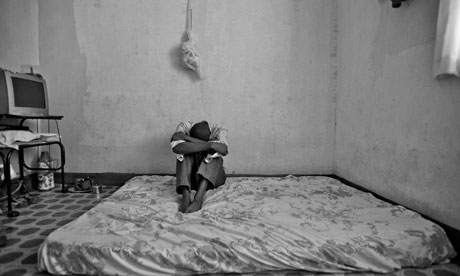
The Rape of Men

via The Guardian, by Will Storr

male-rape-victim-ugandaSexual violence is one of the most horrific weapons of war, an instrument of terror used against women. Yet huge numbers of men are also victims. In this harrowing report, Will Storr travels to Uganda to meet traumatised survivors, and reveals how male rape is endemic in many of the world's conflicts.

Of all the secrets of war, there is one that is so well kept that it exists mostly as a rumour. It is usually denied by the perpetrator and his victim. Governments, aid agencies and human rights defenders at the UN barely acknowledge its possibility. Yet every now and then someone gathers the courage to tell of it. This is just what happened on an ordinary afternoon in the office of a kind and careful counsellor in Kampala, Uganda. For four years Eunice Owiny had been employed by Makerere University's Refugee Law Project (RLP) to help displaced people from all over Africa work through their traumas. This particular case, though, was a puzzle. A female client was having marital difficulties. "My husband can't have sex," she complained. "He feels very bad about this. I'm sure there's something he's keeping from me."

Owiny invited the husband in. For a while they got nowhere. Then Owiny asked the wife to leave. The man then murmured cryptically: "It happened to me." Owiny frowned. He reached into his pocket and pulled out an old sanitary pad. "Mama Eunice," he said. "I am in pain. I have to use this."

Laying the pus-covered pad on the desk in front of him, he gave up his secret. During his escape from the civil war in neighbouring Congo, he had been separated from his wife and taken by rebels. His captors raped him, three times a day, every day for three years. And he wasn't the only one. He watched as man after man was taken and raped. The wounds of one were so grievous that he died in the cell in front of him.

Read the rest.


[If an item is not written by an IRMA member, it should not be construed that IRMA has taken a position on the article's content, whether in support or in opposition.]

Targeting the Invisible World Of Men Who Have Sex With Men

via Outwords, by Peter Carlyle-Gordge

Ask any outreach worker in the fight against HIV transmission and you’ll find one of the hardest at-risk groups to reach is MSM, or men who have sex with men.

Men in this group don’t necessarily identify as gay. Some may be married to women and have families. Some may simply avoid defining their sexual orientation and it is often hard to pinpoint where they gather or connect.

Now, if reaching the MSM group is challenging here, consider its near impossibility in such homophobic places as Africa, a place still plagued by superstition, repression and an outright burning hostility to any sexual practices beyond the vanilla heterosexual variety. In many Islamic countries such as Iran and Iraq, being attracted to the same sex may bring instant death by a mob, or less instant death after a shameful “trial” in an Islamic court, which may sentence you to be hanged, often in public.

Attitudes to same-sex attraction in Africa aren’t much better, with a nasty, often violent reaction to same-sex couplings – an official kind of homophobia that is encouraged by the Neanderthal and ignorant Catholic and Anglican churches. Indeed, the current worldwide Anglican communion is deeply split on same-sex rights, thanks largely to the Archbishop of Canterbury kowtowing in fear to the outspoken black African bishops who despise homosexuality and claim God does, too.

You don’t need to go far to stack up evidence of this official homophobia. The president of Iran famously came to the U.S. and told a university audience that same-sex dalliances did not exist in Iran. The evidence in the form of beatings and hangings of gay men tends to undermine his insane statement.

Read the rest.


[If an item is not written by an IRMA member, it should not be construed that IRMA has taken a position on the article's content, whether in support or in opposition.]

Announcing the 2012 Omololu Falobi Award for Excellence in HIV Prevention Research Community Advocacy

Five years ago on October 5 2006, we lost our brother and colleague Omololu Falobi. Those who knew Omololu professionally will remember him, among many other things - as a talented journalist on HIV, as an activist for social justice, as an advocate for prevention research and as a son of Africa in his zeal to ensure Africans were taking ownership of their own HIV care and prevention.

Omololu founded the Journalists Against AIDS in Nigeria (JAAIDS), was an instrumental pioneer member of the Nigerian Treatment Access Movement (TAM), and co-founded the New HIV Vaccine & Microbicide Advocacy Society (NHMAS). He was tragically killed in 2006 in Lagos, Nigeria.

In 2008, in honour of Omololu’s memory and commitment to the field, The Omololu Falobi Award for Excellence in HIV Prevention Research Community Advocacy was established by the African Microbicides Advocacy Group (AMAG) and partners. The Award is presented to an individual nominated by their peers at the biennial International Microbicides Conferences. Lori Heise (USA) and Aylur Srikrishnan (India) were the 2008 recipients and Charles Shagi (Tanzania) the recipient in 2010.

In continuation of this tradition and to mark the fifth anniversary of Omololu’s death, we proudly announce the call for nominations of The Omololu Falobi Award for Excellence in HIV Prevention Research Community Advocacy 2012 to be awarded to a community advocate in recognition of their contribution to the HIV prevention research field through community advocacy.

The 2012 Award Planning Committee includes representatives from the African AIDS Vaccine Program (AAVP), AMAG, AVAC: Global Advocacy for HIV Prevention, the Global Campaign for Microbicides (GCM), International Rectal Microbicides Advocates (IRMA), JAAIDS, NHVMAS and TAM, with acknowledgment from the Omololu Falobi Foundation.

Nominations will be reviewed by a committee of stakeholders in the prevention research field and the selected individual will then be recognized and awarded at the Closing Ceremony of the International Microbicides 2012 Conference in Sydney, Australia in April 2012. We are pleased to work with the Microbicides 2012 Conference Planning Committee to present the Award next year.
A call for nominations and information on the selection process will be circulated later this month.

On behalf of the planning committee:
AAVP, AMAG, AVAC, GCM, IRMA, JAAIDS, NHVMAS, TAM

For more information:
Website: http://www.avac.org/ht/d/sp/i/4345/pid/4345
Email: amag_info@yahoo.com


[If an item is not written by an IRMA member, it should not be construed that IRMA has taken a position on the article's content, whether in support or in opposition.]

Microbicide Trials Network Statement on Decision to Discontinue Use of Oral Tenofovir Tablets in VOICE, a Major HIV Prevention Study in Women

via Microbicide Trials Network

VOICE, an HIV prevention trial evaluating two antiretroviral (ARV)-based approaches for preventing the sexual transmission of HIV in women – daily use of one of two different ARV tablets or of a vaginal gel – will be dropping one of the oral tablets from the study. The decision to discontinue use of tenofovir tablets in VOICE comes after a routine review of study data concluded that the trial will not be able to demonstrate that tenofovir tablets are effective in preventing HIV in the women enrolled in the trial. VOICE will continue to test the safety and effectiveness of the other oral tablet, Truvada®, a combination of tenofovir and emtricitabine, and of the vaginal gel formulation of tenofovir.

Importantly, the review, which was conducted by the National Institute of Allergy and Infectious Diseases (NIAID)’s independent Prevention Trials Data and Safety Monitoring Board (DSMB), identified no safety concerns with any of the products being studied in VOICE.

VOICE – Vaginal and Oral Interventions to Control the Epidemic – involves 5,029 women at 15 trial sites in Uganda, South Africa and Zimbabwe. The trial is being conducted by the Microbicide Trials Network (MTN), an HIV/AIDS clinical trials network funded by the National Institute for Allergy and Infectious Diseases with co-funding from the Eunice Kennedy Shriver Institute for Child Health and Human Development and the National Institute of Mental Health, all components of the U.S. National Institutes of Health.

The study was designed with five study groups: tenofovir gel, an inactive placebo gel, oral tenofovir, oral Truvada and an inactive placebo tablet. The women in each group (about 1,000) are asked to take their assigned study product daily. VOICE is the only trial evaluating the daily use of an ARV tablet – an approach called oral pre-exposure prophylaxis, or PrEP – and a vaginal gel in the same study. This design is important for determining how each product works compared to its control (placebo gel or placebo tablet) and which approach women prefer.

On September 16, 2011, the NIAID Prevention Trials DSMB reviewed VOICE study data for the period between Sept. 9, 2009, when the study began, and July 1, 2011. Based on this interim review, the DSMB determined that it was not possible to show whether oral tenofovir tablets were any better than a placebo for preventing HIV in the women assigned to that study group. The DSMB therefore recommended that the women randomized to the oral tenofovir tablet group discontinue their use of the study product. This recommendation does not apply to the women in the groups using either the tenofovir gel or oral Truvada tablets, or the corresponding placebos; the DSMB recommended that these four study groups continue in VOICE.
 
Read the rest.
 
 
[If an item is not written by an IRMA member, it should not be construed that IRMA has taken a position on the article's content, whether in support or in opposition.]

David Kato Vision and Voice Award

via visionandvoiceaward.com

David Kato - human rights activist, friend, and colleague - was murdered in his home in Kampala, Uganda on 26 January 2011.

In recognition of his life and courage, and the continued struggle of lesbian, gay, bisexual, transgender and intersex (LGBTI) individuals around the world, partners committed to eliminating violence, stigma and discrimination have established the David Kato Vision & Voice Award.
Inspired by his work, the award recognizes the leadership of individuals who strive to uphold the numerous dimensions of sexual rights for LGBTI people. Sexual rights are an evolving set of entitlements related to sexuality that contribute to the freedom, equality and dignity of all people, and are an important aspect of human rights. The realization of these rights is also an integral element to a meaningful HIV response among these marginalized groups.

Click here for more award and nomination information.


[If an item is not written by an IRMA member, it should not be construed that IRMA has taken a position on the article's content, whether in support or in opposition.]

Non-communicable diseases (NCDs) and HIV fight for resources in Kenya

via PlusNews Global

"NCDs are sexy now, last year it was maternal health; there doesn't seem to be a genuine commitment by government to fully address any of these issues... where are the results? The government must not forget about people living with HIV," said James Kamau, coordinator of the Kenya Treatment Access Movement. "Where is the 15 percent they promised - that way, we could improve treatment of all illnesses."

The crowd of health issues jostling for a share of Kenya's inadequate health budget is expanding, with activists calling for an increase in resources for the management of non-communicable diseases (NCDs), which account for more than 50 percent of hospital deaths and admissions.

"We need to see more commitment in terms of resources; we have policies and guidelines for the management of non-communicable illnesses, but we need strategic focus on operational implementation," said Andrew Suleh, medical superintendent of Mbagathi District Hospital in the Kenyan capital, Nairobi.

According to the NGO, NCD Alliance, NCDs are responsible for more than half of all hospital admissions and deaths; 13 percent of deaths are due to cardiovascular disease, while cancers account for 7 percent and diabetes for 4 percent of deaths, respectively.

Read the rest.


[If an item is not written by an IRMA member, it should not be construed that IRMA has taken a position on the article's content, whether in support or in opposition.]
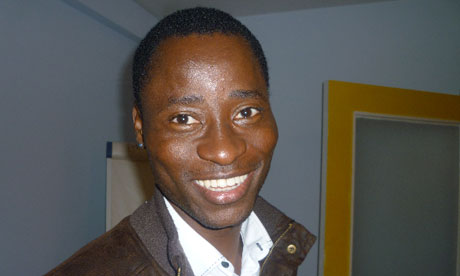
Persecuted for Being Gay

via The Guardian, stories compiled by Gay Middle East

Bisi Alimi, from NigeriaBisi Alimi, from Nigeria (an IRMA member!)

In 2002, I was at university in Nigeria and standing for election. A magazine wrote about me and exposed me as being gay. This led the university to set up a disciplinary committee. I was very nearly dismissed. When I did graduate, people wanted to refuse me my certificate on the grounds that I did not have good enough morals to be an alumnus of the university. While this was going on, the then-president, Olusegun Obasanjo, declared that there were no homosexuals in Nigeria, and that such a thing would not be allowed in the country.

I talked with a friend of mine, who is a famous Nigerian talkshow host, about challenging this opinion. Nobody had come out publicly before. So, in October 2004, I appeared on her breakfast show, New Dawn with Funmi Iyanda". I talked about my sexuality, the burden of the HIV epidemic in the gay community.

The reaction was immediate and violent. I was subjected to brutality from the police and the community. I was disowned by my family and lost many friends, including in the gay community. They were afraid to know me. I was isolated, with no support and no job. The TV show was taken off the air by the government. It led to the introduction of the Same Sex Prohibition bill of 2006. All I had done was say who I was. Three years later I appeared on the BBC World Service. I repeated what I had said on television in Nigeria and suggested my government was using attacks on homosexuality to help cover up its own corruption.

On my arrival back to Nigeria, I was arrested, detained and beaten by the police. For a month, until I fled back to the UK in April 2007, my life was in constant danger.

Read the rest.


 [If an item is not written by an IRMA member, it should not be construed that IRMA has taken a position on the article's content, whether in support or in opposition.]
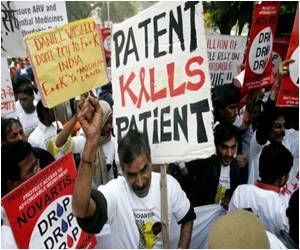
Legal Case in India Threatens HIV Drug Access for Poorest

via The Bureau of Investigative Journalism, by Melanie Newman

"India is literally the lifeline of patients in the developing world, especially in the poorest parts of Africa…If Sec. 3(d) is overturned, it means any meaningful effort to make these vital medicines available will be put in jeopardy."

A technical case going through the Supreme Court in India is being carefully watched by aid agencies and other human rights organisations, who claim it could have severe consequences for the supply of lifesaving drugs to the developing world.

More than 90% of drugs used to treat children with AIDS in Africa come from Indian generic manufacturers, according to the medical NGO Medicins Sans Frontieres. And if the Swiss pharmaceutical giant Novartis wins a case it has brought against the Indian government, MSF fears that supply could dry up.

Novartis is seeking patent protection for its leukaemia drug Glivec, whose patent has expired in India. It is challenging India’s interpretation of a section of the nation’s patent law — Section 3(d) — which prevents ‘evergreening’.

Read the rest.

[If an item is not written by an IRMA member, it should not be construed that IRMA has taken a position on the article's content, whether in support or in opposition.]

Treatment and Prevention: Interview w/Uganda's Dr. Patrick Ndase

via The Observer, by Shifa Mwesigye

Excerpt:
"Uganda has participated just like several other African countries; [in research] you must go where infection is happening. The majority of HIV research in the early stages happened in Uganda because Uganda was heavily infested with the virus. As you remember we had prevalence rates of above 20% and then we had the so called Uganda success story after the zero grazing campaign.

"At the time, the countries in southern Africa which largely [depend on] tourism were silent on HIV infection. Now the countries that are laden with infection are Swaziland, Botswana, Zimbabwe, Zambia and South Africa. So majority of HIV prevention research is not happening in Uganda anymore. In fact it is difficult to get someone who wants to do HIV research to come to Uganda."
Read the rest.

[If an item is not written by an IRMA member, it should not be construed that IRMA has taken a position on the article's content, whether in support or in opposition.]

IRMA's next teleconference: Yes, Africa Needs Rectal Microbicides - 9/27

Yes, Africa Needs Rectal Microbicides
Tuesday, September 27, 2011, 10:00 EDT

(click here to determine the time in your area)

Please join IRMA and AVAC with our special guest Dr. Salim Abdool Karim (Slim.)

Slim is a clinical infectious diseases epidemiologist whose main current research interests are in microbicides and vaccines to prevent HIV infection and implementing antiretroviral therapy in resource constrained settings. He is Pro Vice- Chancellor (Research) at the University of KwaZulu-Natal in Durban, South Africa and is also Professor of Clinical Epidemiology at the Mailman School of Public Health at Columbia University and Adjunct Professor of Medicine at the Weill Medical College of Cornell University. He is Director of CAPRISA - Centre for the AIDS Programme of Research in South Africa.

Slim did a fantastic presentation at the Microbicides 2010 called "Does Africa Need a Rectal Microbicide" and the data he shared revealed the answer to be a resounding "YES!" He will be doing an updated version of this presentation on our call.

Additionally, IRMA's Jim Pickett will discuss Project ARM - Africa for Rectal Microbicides. Project ARM is hosting a 2-day strategy meeting at the ICASA 2011 conference in Ethiopia this December. The 40 invited participants and speakers will be working on crafting an African-specific agenda for rectal microbicide advocacy and research that ensures Africa remains on the rectal microbicide map, and that all Africans who need rectal microbicides have access to them when they become available.

Click here to RSVP. Check back here in advance of the call for presentation slides. An audio recording of the call will be made available shortly after its completion.


[If an item is not written by an IRMA member, it should not be construed that IRMA has taken a position on the article's content, whether in support or in opposition.]

‘Confront legal and policy barriers to HIV’: Sub-Saharan Africa Regional Dialogue on HIV and the Law

Via UNAIDS.

In Sub-Saharan Africa, the region most heavily affected by HIV, legal, policy and social barriers, including stigma, discrimination, gender inequality and the criminalization of key populations at higher risk of HIV infection, continue to make people vulnerable to HIV and hamper the ability of individuals, communities and states to respond to the epidemic. This was the conclusion of the Regional Dialogue for sub-Saharan Africa, part of the Global Commission on HIV and the Law, held at the beginning of August in Pretoria, South Africa.

No taboo should be left unchallenged

A significant breakthrough came from the pledge of participants to highlight and discuss all aspects of the legal environment relating to HIV, including laws and practices related to stigma and discrimination, access to affordable treatment, children and adolescents, women’s rights and gender-based violence.

“This regional dialogue is a great opportunity for us, as Africans, to confront the difficult issues including discriminatory and punitive laws that target sex workers and men who have sex with men, and other populations vulnerable to HIV,” said Bience Gawanas, African Union Commissioner for Social Affairs.

The criminalization of drug use, sex work and same-sex sexual relations was also confronted by the participants in a bid to challenge all taboos. This is remarkable as recent punitive legal and policy developments in a number of countries in sub-Saharan Africa relating to the situation of members of key populations has raised concerns about the readiness of stakeholders in the region to confront this issue. Some 31 countries in the region criminalize sex work, and same-sex sexual relations constitute a criminal offence in at least 30 countries.

Read the rest here.

[If an item is not written by an IRMA member, it should not be construed that IRMA has taken a position on the article's content, whether in support or in opposition.]

Early ARV Treatment Will Save Lives in South Africa


Government's decision to offer free ARV treatment to people with CD4 counts of 350 or less has been welcomed as a life-saver.

The South African government's announcement that it will give antiretroviral medication to people with HIV who have CD4 counts of below 350 will save lives and prevent infection.

This is according to Medecins Sans Frontieres (MSF), which welcomed the announcement made by Deputy President Kgalema Motlanthe on Friday (12 August).

Until Friday, people were only able to get ARVs if their CD4 count was below 200 unless they were pregnant or had tuberculosis.

"The decision to start people on HIV treatment earlier, before they become sick with diseases like tuberculosis, marks a critical moment for this country that is so hard hit by the epidemic," said Dr Gilles van Cutsem, Medical Coordinator for MSF in South Africa.

"When people are started earlier on ARV treatment, they are less likely to die, less likely to become ill, less likely to need hospitalisation and more likely to stick to their treatment in the long run."

A study conducted by MSF last year in Lesotho found that patients who started treatment above CD4 200 were 68% more likely to survive than patients those who started ARVs when their CD4 count was below 200.

Van Cutsem added that starting people on ARVs earlier was likely to prevent new infections as "ARV treatment dramatically reduces the spread of the virus to others, by making people living with HIV less infectious by up to 96 percent".

Meanwhile, a study published in PloS journal in July predicts that making ARVs available to people from CD4 of 350 would have a dramatic effect on the community of Hlabisa in northern KwaZulu-Natal.

Read the rest here.

[If an item is not written by an IRMA member, it should not be construed that IRMA has taken a position on the article's content, whether in support or in opposition.]

SWAZILAND: HIV prevalence among factory workers "50 percent"


A new government study has found that more than half of workers in Swaziland’s garment industry are living with HIV, and officials are realizing that the once-hailed promise of manufacturing employment has become a financial and medical nightmare for tens of thousands of Swazi women.

“HIV prevalence among factory workers is 50.3 percent,” said Nhlanhla Nhlabatsi, an epidemiologist with the Ministry of Health. Nhlabatsi presented the data last week as preliminary findings for Swaziland’s first Behaviour Sentinel Surveillance Report to be released in its entirety later in the year.

About 30,000 Swazis, mostly women, are employed in garment factories financed by Taiwanese investors and operated by managers from mainland China.

The survey also found that most factory workers were well informed about HIV/AIDS, and 90 percent of workers interviewed were aware of the female condom and other methods of preventing HIV.

Government officials will now begin investigating the gap between knowledge of HIV/AIDS prevention and workers’ susceptibility to HIV. The prevalence rate for textile industry employees is significantly higher than the 26 percent rate among sexually active adult Swazis.

“Women comprise the largest number of workers at the garment industry plants. They work long hours at wages so low some of them are known to turn to prostitution to support themselves and their families,” said Alicia Simelane, an HIV testing and counselling officer at the Matsapha Industrial Estate, where Swaziland’s industry is concentrated outside the commercial hub of Manzini.

The link between “sweatshop” wages and the risk of HIV has been known for years, but the statistical impact of the risk is only becoming apparent now.

Read the rest here.

[If an item is not written by an IRMA member, it should not be construed that IRMA has taken a position on the article's content, whether in support or in opposition.]

Project ARM: John Shaw Memorial Scholarship Call for Application

Project ARM—Africa for Rectal Microbicides—is a long-term, sustained project which aims to develop community capacity around rectal microbicide advocacy in order to ensure broad participation in research activities and well-informed community input into the development of an African rectal microbicide agenda. The end goal is enhanced rectal microbicide advocacy in Africa as well as the planning and implementation of rectal microbicide trials on the continent. Project ARM is coordinated by International Rectal Microbicide Advocates (IRMA). First year funding for Project ARM has been secured from the United States National Institutes of Health – Office of AIDS Research and the New Venture Fund. AVAC is also partnering with IRMA on this initiative.

Project ARM evolved from discussions initiated by IRMA through its listserv, and from input received from African advocates and partners at two informal meetings held in conjunction with the Microbicides 2010 (Pittsburgh) and AIDS 2010 (Vienna) conferences. A working group was formed following the Microbicides 2010 meeting, and has guided this process ever since. There are now 60 working group members including advocates and community members, researchers, funders and policy-makers from 10 African countries, as well as a few key international partners.

In order to develop an African rectal microbicide agenda that articulates research, advocacy and community mobilisation strategies, IRMA is hosting a working meeting on 2-3 December 2011 in Addis Ababa as part of Project ARM. This invite-only meeting is taking place prior to the 16th International Conference on AIDS and STIs in Africa (ICASA, December 4–8), and is considered an official satellite session.

PLEASE NOTE: This is a working meeting—not a workshop, nor a conference.

The objectives of the December working meeting are:
  • To promote a common understanding of how rectal microbicide (RM) research and advocacy is proceeding, the potential role that African RM research and advocacy could play, and the various African contexts within which RMs would be introduced.

  • To enhance the capacity of African community advocates to participate in RM agenda-setting, research and mobilisation efforts.

  • To stimulate strategies for African community mobilization around RMs; to put RMs on the research agenda in Africa; and, to develop an African RM research agenda that is part of a global RM research agenda.


AIMS OF THE SCHOLARSHIP PROGRAMME 
  1. To strengthen research literacy and advocacy capacity amongst IRMA membership in Africa

  2. To promote and enhance the role and standing of IRMA within the microbicide community in Africa

  3. To facilitate the involvement of well-informed and active members of the African research and advocacy communities in the development of an African rectal microbicides agenda

  4. To ensure diversity in participation at the meeting, including from researchers and community members, women and men, gay men and other men who have sex with men, people living with HIV, and different regions of Africa

We are covering the travel costs of more than 30 of the 40 meeting participants—most of which are Africans—including speakers, organisers, invited guests, and key partners. This includes an additional 12 scholarships for Africans through this call for applications.

For more information, please send an email to rectalmicro@gmail.com.

[If an item is not written by an IRMA member, it should not be construed that IRMA has taken a position on the article's content, whether in support or in opposition.]