Pages

Tampilkan postingan dengan label drug development. Tampilkan semua postingan

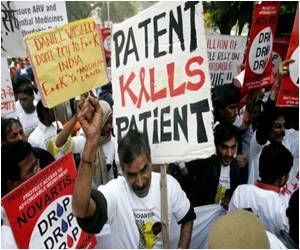
Legal Case in India Threatens HIV Drug Access for Poorest

via The Bureau of Investigative Journalism, by Melanie Newman

"India is literally the lifeline of patients in the developing world, especially in the poorest parts of Africa…If Sec. 3(d) is overturned, it means any meaningful effort to make these vital medicines available will be put in jeopardy."

A technical case going through the Supreme Court in India is being carefully watched by aid agencies and other human rights organisations, who claim it could have severe consequences for the supply of lifesaving drugs to the developing world.

More than 90% of drugs used to treat children with AIDS in Africa come from Indian generic manufacturers, according to the medical NGO Medicins Sans Frontieres. And if the Swiss pharmaceutical giant Novartis wins a case it has brought against the Indian government, MSF fears that supply could dry up.

Novartis is seeking patent protection for its leukaemia drug Glivec, whose patent has expired in India. It is challenging India’s interpretation of a section of the nation’s patent law — Section 3(d) — which prevents ‘evergreening’.

Read the rest.

[If an item is not written by an IRMA member, it should not be construed that IRMA has taken a position on the article's content, whether in support or in opposition.]
Investment in HIV Prevention Research

A report released yesterday by HIV Vaccines and Microbicides Resource Tracking Working Group at the IAS conference in Rome "found that overall investment in HIV prevention R&D had actually increased, with the modest exception of a one percent decline in vaccine R&D. The report documented a total US$1.19 billion investment in research and development (R&D) for four key HIV prevention options: preventive vaccines, microbicides, pre-exposure prophylaxis (PrEP) using antiretroviral drugs, and operations research related to medical male circumcision.":

"2010 has been a year of retrospection, a time for looking back over the 30 years since the first published report of the mysterious illness that would come to be known as AIDS. As sobering as this anniversary has been, it has also been a time for some optimism and calls to end the epidemic. These calls may not be simply wishful thinking, fueled as they have been by promising research results over the past two years in vaccines, microbicides, pre-exposure prophylaxis using antiretrovirals (PrEP), and antiretroviral treatment as prevention—results that have energized the entire HIV prevention field.

The first good news came at the end of 2009, when researchers in the RV 144 Thai vaccine trial reported that a vaccine combination had reduced risk of infection by 31 percent—the first clinical evidence that a preventive AIDS vaccine would be possible. Then, in July 2010, the CAPRISA 004 trial team announced its findings–that use of 1% tenofovir (TDF, also known as Viread®) vaginal gel reduced women’s risk of HIV infection by 39 percent—providing the first proof that a microbicide would be possible. This news was followed in November 2010 by the announcement from the iPrEx trial team that daily oral tenofovir/emtricitabine (TDF/FTC, also known as Truvada®) had reduced risk of HIV infection by an estimated 44 percent overall in men who have sex with men (MSM) and transgender women, and proved for the first time that HIV prevention using PrEP would be possible. And finally, in early 2011, the HIV Prevention Trials Network (HPTN) 052 trial established that use of antiretroviral therapy (ART) by HIV-positive individuals reduced transmission to their partners"

Source: HIV Vaccines and Microbicides Resource Tracking Working Group

[If an item is not written by an IRMA member, it should not be construed that IRMA has taken a position on the article's content, whether in support or in opposition.]

The Role of Public-Sector Research in the Discovery of Drugs and Vaccines


via New England Journal of Medicine

Ashley J. Stevens, D.Phil., Jonathan J. Jensen, M.B.A., Katrine Wyller, M.B.E., Patrick C. Kilgore, B.S., Sabarni Chatterjee, M.B.A., Ph.D., and Mark L. Rohrbaugh, Ph.D., J.D.

Historically, there has been a clear distinction between the roles of public-sector research and corporate research in the discovery of new drugs and vaccines to solve unmet medical needs. Public-sector research institutions (PSRIs) have performed the upstream, basic research to elucidate the underlying mechanisms and pathways of disease and identify promising points of intervention, whereas corporate researchers have performed the downstream, applied research to discover drugs that can be used to treat diseases and have then carried out the development activities to bring the drugs to market. The intellectual property that protects the investment in developing these drugs is created in the applied-research phase.

Read the rest.

[If an item is not written by an IRMA member, it should not be construed that IRMA has taken a position on the article's content, whether in support or in opposition.]