Pages

Tampilkan postingan dengan label stigma. Tampilkan semua postingan

Meet Moses Nsubuga Supercharger: Our New Friendly Rectal Microbicide Advocate!

“The task is hard but with determination we shall win together. Continue to keep the fire burning and remember it can even burn deep in the ocean.”

Moses is an IRMA advocate from Kampala, Uganda. He has been living with HIV since 1994 and is quite the superstar. He is a musician, radio host, TV presenter, actor, and activist who has a passion to fight HIV for people all over the world.

In 2000 he formed The Stigmaless Band - a music and drama group of adolescents living with HIV. Their objectives include encouraging early treatment, treatment adherence, and fighting stigma. The success of the band allowed Moses to collaborate with other community based organizations throughout Uganda and to eventually form a larger group called Joint Adherent Brothers and Sisters Against AIDS (JABASA). JABASA’s mission is to attain equal rights for minority and at-risk groups; to encourage early treatment for adults; and to help HIV positive Ugandans become financially self-sufficient by providing them with small loans to begin small income generating projects.

In 2009 he was contracted by USAID and The AIDS Support Organization (TASO) to host an HIV quiz game on television called “Everybody Wins When We Know the Facts about HIV.” As the show gained popularity and was being broadcast in more and more districts throughout Uganda, he was suspended from this work for opposing a law that he believed would criminalize and oppress minority groups if passed.

This did not slow Moses down! Since then he has become the manager of Searchland Shows, where he organizes music shows to advocate for treatment, condoms, and microbicides as prevention. He has also started an orphanage to look after the children of musicians who have died of AIDS. Currently he supports 34 children.

He believes microbicides have the potential to be one of the best prevention options available. He is very active on the IRMA listserv and always challenging opinions, asking questions, and striving to learn more.

Read more bios on the IRMA website.


[If an item is not written by an IRMA member, it should not be construed that IRMA has taken a position on the article's content, whether in support or in opposition.]

Media campaign on disclosure and stigma changes gay men’s attitudes

via aidsmap, by Roger Pebody

A Canadian campaign which asked gay men “If you were rejected every time you disclosed, would you?” appears to have raised men’s understanding of the dilemmas which men with HIV face. The campaign also succeeded in reducing the number of men who try to avoid infection by relying on men with HIV disclosing their status, researchers report in the October issue of Health Education Research.

The campaign was not intended to broadcast a ‘message’ or give instructions, but to stimulate dialogue within local communities. Moreover the authors suggest that the extensive community consultation which went into its development contributed to the campaign’s success.

Staff from frontline HIV prevention work, public health, government and academia participated in the consultation which identified HIV-related stigma as a priority issue. Moreover they focused on stigma within gay communities as it is manifested in the attitudes of some HIV-negative men towards potential sexual partners who have HIV. The campaign developers believe that there are links between the problems of stigma, disclosure, conflicting assumptions and risk taking.

Read the rest.


[If an item is not written by an IRMA member, it should not be construed that IRMA has taken a position on the article's content, whether in support or in opposition.]

‘Confront legal and policy barriers to HIV’: Sub-Saharan Africa Regional Dialogue on HIV and the Law

Via UNAIDS.

In Sub-Saharan Africa, the region most heavily affected by HIV, legal, policy and social barriers, including stigma, discrimination, gender inequality and the criminalization of key populations at higher risk of HIV infection, continue to make people vulnerable to HIV and hamper the ability of individuals, communities and states to respond to the epidemic. This was the conclusion of the Regional Dialogue for sub-Saharan Africa, part of the Global Commission on HIV and the Law, held at the beginning of August in Pretoria, South Africa.

No taboo should be left unchallenged

A significant breakthrough came from the pledge of participants to highlight and discuss all aspects of the legal environment relating to HIV, including laws and practices related to stigma and discrimination, access to affordable treatment, children and adolescents, women’s rights and gender-based violence.

“This regional dialogue is a great opportunity for us, as Africans, to confront the difficult issues including discriminatory and punitive laws that target sex workers and men who have sex with men, and other populations vulnerable to HIV,” said Bience Gawanas, African Union Commissioner for Social Affairs.

The criminalization of drug use, sex work and same-sex sexual relations was also confronted by the participants in a bid to challenge all taboos. This is remarkable as recent punitive legal and policy developments in a number of countries in sub-Saharan Africa relating to the situation of members of key populations has raised concerns about the readiness of stakeholders in the region to confront this issue. Some 31 countries in the region criminalize sex work, and same-sex sexual relations constitute a criminal offence in at least 30 countries.

Read the rest here.

[If an item is not written by an IRMA member, it should not be construed that IRMA has taken a position on the article's content, whether in support or in opposition.]

The Lagos HIV Stigma

Via Next, by Gbenro Adeoye.

The first case of HIV/AIDS in Lagos was reported in 1986, unlike the global stage, where it was first reported 30 years ago by the Centres for Disease Control and Prevention (CDC) in the United States among gay men. Since the discovery in Lagos which was also the first in Nigeria, HIV has steadily grown to a status of silent foreboding among the general public. According to the Lagos State AIDS Control Agency (LSACA), the current HIV prevalence rate in the state is 5.1 percent, ahead of the country's 4.1 percent prevalence rate recently announced by the Health Minister, Onyebuchi Chukwu.

But in the 25 year period, the state has seen significant progress in the level of public awareness, testing, treatment and care for persons living with HIV. In his assessment, the Head of Lagos office, United Nations Population Fund, Omolaso Omosehin, described the achievements made so far in the state as remarkable, highlighting improvements in the prevention and treatment of the disease. He said, "The situation is better than what it used to be; many people are now aware of how to prevent HIV/AIDS and there is hardly any health centre where you are not required to the test. Many more people are able to access antiretroviral (ARV) drugs which were not so available some years ago."

Yetunde Ababi, a health educator, who tested positive for HIV in 1991, also acknowledged the improvements made in the treatment and care for persons living with HIV. Mrs. Ababi said "the epidemic was so much in the 90s and the drugs were so expensive that people were being screened into the mortuary. Then, we were spending about N90, 000 monthly on ARVs, but the drugs and treatment are now free in government hospitals in Lagos."

Unfortunately, the stigma associated with HIV still denies infected persons job appointments and prevents many others from openly declaring their status. Patrick Akpan, the deputy coordinator of Plan Foundation for Health and Development, formerly called Positive Living Organisation of Nigeria (PLON), a nongovernmental organisation aimed at supporting persons living with HIV/aids, said the stigma against persons living with HIV in Lagos has been ‘modernised.' According to him, people have invented new ways of discriminating against persons living with HIV. He said, "People won't tell you that they are not relating with you because of your HIV status; they will rather find another excuse for avoiding you. They would rather say ‘you are not qualified for the job', rather than say it's because you are HIV positive."

Read the rest here.

[If an item is not written by an IRMA member, it should not be construed that IRMA has taken a position on the article's content, whether in support or in opposition.]

Survey reveals gaps in HIV programming for MSM

Via PlusNews.

A new global survey of more than 5,000 men who have sex with men (MSM) reveals a marginalized group of people with little access to basic HIV prevention tools such as condoms and few means to learn about HIV.

Conducted by the Global Forum on MSM & HIV between 24 June and 17 August 2010, the survey sought to highlight key gaps in global efforts to provide MSM with evidence-informed HIV prevention services. More than 1,000 of the study participants - drawn from all over the world - were health workers; 22 percent reported being HIV-positive.

The authors recommend expanding access to HIV prevention services for MSM across the globe, more focus on promoting awareness of emerging HIV prevention interventions and more robust and sustained stigma-reduction efforts. Some of the major findings of the survey include:

Access to health services - Fifty-three percent of participants said they could easily access testing for sexually transmitted infections, while 51 percent said they had easy access to HIV counseling; 47 percent found STI treatment easily accessible.

Just 36 percent of MSM surveyed reported having easy access to HIV treatment, while 27 percent said it was available but difficult to access, was not available or had never heard of HIV treatment.

Access to HIV prevention - Free condoms were easily accessible only to 44 percent of participants, while just 29 percent could obtain lubricant.

Just 30 percent of participants reported easy access to each of the basic HIV prevention services, including behavioural HIV/AIDS interventions, HIV education materials, mental health services, free or low-cost medical care, media campaigns focused on reducing HIV, and laws/policies to ensure access to HIV prevention.

Just 25 percent said they had access to sex education.

Stigma - Africa reported the highest levels of stigma and external homophobia, followed by the Middle East, Asia-Pacific, Central/South America and the Caribbean, which all reported similar levels of stigma. Australia and New Zealand reported the lowest levels of stigma and external homophobia.

MSM from Africa and the Asia-Pacific region reported the highest levels of internalized homophobia.

Read the rest here.

[If an item is not written by an IRMA member, it should not be construed that IRMA has taken a position on the article's content, whether in support or in opposition.]

HIV Risk of Anal Sex Misunderstood Among Heterosexuals

This news article features our very own Zoe Duby, an IRMA advocate and valued member of our community! Congratulations to Zoe, and thank you for working so hard as an advocate for rectal microbicides and HIV prevention in South Africa and worldwide.

Via PlusNews.

Vaginal sex, thigh sex, even armpit sex - people have sex in lots of ways, but in heterosexual anal sex, HIV prevention programming is silent about the high risk of infection that goes with it, and people may have mistaken this silence for safety.

The risk of contracting HIV through unprotected receptive anal sex is almost 20 times greater than the HIV risk associated with vaginal intercourse.

While this fact is often a focus in HIV prevention programming aimed at men-who-have-sex-with-men (MSM), it has been largely left out of programmes for heterosexuals, according to Zoe Duby of the University of Cape Town, South Africa, and the Desmond Tutu HIV Foundation.

Duby presented the findings of her study, which interviewed almost 400 people in Tanzania, Uganda and Kenya, at the 1st HIV Social Sciences and Humanities Conference held recently in Durban, South Africa.

“Safer sex programming has, in my opinion, failed to take into account varying definitions of sex. The omission of anal sex in safe sex messaging has been interpreted as meaning that anal sex is safe,” she told IRIN/PlusNews.

“What people preach out there, it’s just vaginal sex - not information on anal [sex],” said a young woman from Salgaa, Kenya, who was quoted in the research. “So somebody thinks, ‘if I do [sex] this other way, then I will not get HIV.’”

Even more worrying was that research showed healthcare workers often held similar views, and some incorrectly believed HIV was only present in vaginal fluid. The virus is, in fact, also present in male sperm and blood.

“Me, I do not want to practice vaginal sex because that is the highest [risk] sex that transmits HIV, so it is a belief… that non-vaginal sex does not transmit HIV,” one Kenyan healthcare worker reported.

A nurse in Malaba, Uganda, said: “As you go and have sex vaginally you can get HIV, but these other methods, they do not expose you [to HIV].”

Read the rest here.

[If an item is not written by an IRMA member, it should not be construed that IRMA has taken a position on the article's content, whether in support or in opposition.]

SOUTH AFRICA: MSM still sidelined in HIV programming

"Biomedical strategies can only have a limited impact if MSM live in fear, live hidden or have limited access to safe and effective clinical care." 
via PlusNews

South African men who have sex with men are twice as likely to be HIV-positive as heterosexual men, but spending on research, prevention and treatment for this group remains low, delegates at a conference on MSM and HIV in Cape Town heard.

"We see HIV incidence rates for MSM continue to increase in all studied countries; we must advocate for more research," Linda-Gail Bekker, deputy director of the Desmond Tutu HIV Centre, said in a statement.

Bekker called for the introduction of specific HIV packages tailored to the needs of particular groups, including one for MSM.

Studies show that the risk of contracting HIV during anal sex is 18 times higher than during penile-vaginal sex.

According to research whose results were revealed at the conference, held on 23-25 May, more than one in 20 men taking part in the survey reported consensual participation in a sexual act with another man and MSM were twice as likely to be HIV-positive as their heterosexual peers.

Read the rest.

[If an item is not written by an IRMA member, it should not be construed that IRMA has taken a position on the article's content, whether in support or in opposition.]

Vietnam: Gay rights group tackles insensitive medical care

Doctors believed, for example, that becoming a homosexual was a fashion statement. They teased gay patients, and criticised anal sex despite training on gay issues, the survey revealed.
via VietNamNet

Nguyen Thanh Trung (not his real name), a gay man who lives in Ha Noi, was very upset by the way doctors discriminated against him when he was undergoing an anal health test in one of the city's many health clinics.

"The doctor told me to my face that having sex with men is not a natural act and asked me why I did it," Trung recalled.

"I was so upset that I left the clinic and will never return," he said.


Read the rest.


[If an item is not written by an IRMA member, it should not be construed that IRMA has taken a position on the article's content, whether in support or in opposition.]

<script type="text/javascript"><!--
google_ad_client = "ca-pub-4979705037097754";
/* 336x280,FreewarelistHome_B */
google_ad_slot = "3276839894";
google_ad_width = 336;
google_ad_height = 280;
//-->
</script>
<script type="text/javascript"
src="http://pagead2.googlesyndication.com/pagead/show_ads.js">
</script>
Percakapan Obrolan Berakhir
Adi sedang mengetik

Bringing Up The Rear


Via salon.com, by Tracy Clark-Flory

It's no secret that more Americans are having anal sex than ever before: A study published last year in the Journal of Sexual Medicine found that more than 45 percent of women in their late 20s had tried anal sex.

On the flip side, women rarely get the opportunity to be penetrators. Virginia Vitzthum exquisitely described the appeal of taking on the male role in a piece for Salon back in 1999 -- before we even called it "pegging"
"In a way I'd never understood those words before, he was mine. The knowledge I could really hurt this person by being less than careful made me feel responsible, protective. The vulnerability appalled me at the same time; it was vaguely disgusting that he would let someone do this to him. Mixed in with the disgust was possessiveness. The thought of anyone else penetrating him seemed revolting. These observations clicked into place in quick succession; I felt like a projector being loaded with slides of maleness, of male seeing."
But, taboos change, and so do the cultural meanings of particular sexual acts. Just as the gay community has long debated the politics of being a top or a bottom, the hetero world is slowly catching up -or, um, bringing up the rear. As Pulley puts it, "We only have so many orifices. You'd think we'd all be itching to take advantage of them all, right?"

Read the rest

[If an item is not written by an IRMA member, it should not be construed that IRMA has taken a position on the article's content, whether in support or in opposition.]

Is being an HIV Gay a punishment from God?

Via bulawayo24.com, by Yngve Sjolund

In 2000, an ex-partner accused Adam of infecting him with HIV. He went to Adam’s employers and told them that he had infected him with HIV. Adam was forced to go for an HIV test by his employers which came back showing that he was HIV positive.

Adam remembers: “I felt kind of betrayed that my employers were falling for the blackmail. I had broken up with this person – and so he said I infected him with HIV because he wanted me to give him money and food, because I had a job. He wanted support from me.”

Today Adam (38), living in Soweto, considers himself as a self-identified black gay man and explains: “I always believed that when a person is born they are born for a reason, and they are born with different sexual orientations. There are straight people and there are gay people. Especially amongst the gay population in the black community people will say it is a foreign thing to be gay. They will say it is a white man’s disease, and as our Zimbabwean President will say, they are ‘worse than pigs and dogs’.

Adam is determined to make a change and sees a way forward for his peers: “I think people should embrace who they are. I personally feel that their conscience should guide them. If we look at culture, culture has its own imbalances, and as a gay and a Christian man I believe God created everybody differently, for a purpose. God did not make a mistake creating me as a gay person. And I don’t believe it is the work of the devil that somebody sleeps with the same sex. God created it that way. And he made me that – he is the one that created me as a man and gave me the feelings to be gay and have feelings for other men.”

Many people today still believe that being gay and contracting HIV is a “punishment from God”, but Adam explains that it is actually more a case of being lucky or unlucky. “I personally believe HIV has exposed me to so many things – I was lucky to get HIV. And because I have had bad publicity about me which I would not like to discuss. You get HIV for a variety of reasons. It is not a punishment.

It is just like another disease, like you can get cancer. Some people don’t even go around saying ‘I want cancer’ or ‘I want sugar diabetes.’ It is unfortunate that HIV is stigmatised to sex and people will think that a person has to be a pervert to have sex to get HIV. But it is just unfortunate.”

Read the rest

[If an item is not written by an IRMA member, it should not be construed that IRMA has taken a position on the article's content, whether in support or in opposition.]

Kenya: Testing the Integration of HIV and public healthcare

Via PlusNews

HIV could lose its "special status" in Kenya's health system if a new pilot programme integrating HIV care and public healthcare proves successful.

Traditionally, public hospitals in Kenya have a "comprehensive care clinic" (CCC) dedicated to people living with HIV; under the new system, these would no longer exist.

For more than six months, the Ministry of Health and its partners have been piloting the move in Western Province; senior government officials say it will not reduce the focus on HIV, but will ease pressure on an already overburdened and understaffed health system.

"Integrating HIV treatment with other outpatient services doesn't mean it has become less important; it only means maximizing on space and reducing the burden on healthcare personnel and to help increase focus on other equally important diseases like malaria," said Ibrahim Mohamed, head of the National AIDS and Sexually transmitted infections Control Programme, NASCOP.

Joshua Omoro likes the new system, stating, "I have come today to pick my [antiretroviral] medicine but nobody can know; people are just guessing what I might be suffering from just like I am also just guessing for other people," he said. "It puts you at ease... before when you went to a specific room, people just knew you had HIV."

"It is not only reducing stigma but is also easing the staff shortages that had been experienced earlier when too much focus was placed on HIV/AIDS," said Beatrice Misoga, HIV/AIDS integration officer for US government-supported AIDS, Population and Health Integrated Assistance II (APHIA II) in Western Kenya.

Read the rest

[If an item is not written by an IRMA member, it should not be construed that IRMA has taken a position on the article's content, whether in support or in opposition.]

KENYA: Stigma keeps Asian population from accessing HIV services

via PlusNews

When 20-year-old Jenna,* a Kenyan of Asian descent, told her family two years ago she had tested positive for HIV, they forced her to terminate her pregnancy, forbad her to seek treatment and kept her locked in the house because of the shame she had brought on the family.

She did, however, go against their will and obtained life-prolonging antiretroviral medication at hospital. She now lives with another family who have taken her in and accepted her status.

"When I insisted on seeking treatment, my family chased me away," Jenna told IRIN/PlusNews. "For them it was good if I died slowly rather than shame them by seeking treatment and giving people an opportunity to know my status."

The Kenya National Bureau of Statistics estimates there are about 120,000 Kenyans of Asian - largely South Asian – origin, mainly living in the three major cities of Nairobi, Mombasa and Kisumu.

According to Anwar Ali Sharif, 36, the only Asian member of the National Empowerment of People Living with HIV/AIDS of Kenya (NEPHAK), stigma is the biggest impediment to Kenyan Asians accessing HIV/AIDS services.

"There is a lot of stigma among Kenyans of Asian origin. Many people who are HIV-positive are locked in the house because it is feared they will shame the family if it is known they are HIV-positive," he said.

He noted that while wealthy Asians could afford to visit private health facilities where no one need know their status, the stigma of visiting the clearly marked comprehensive HIV care clinics in public hospitals kept poorer Asians away from treatment.


[If an item is not written by an IRMA member, it should not be construed that IRMA has taken a position on the article's content, whether in support or in opposition.]
 

High HIV risk behavior among men who have sex with men in Kigali, Rwanda: making the case for supportive prevention policy

AIDS Care. 2011 Apr;23(4):449-55.

Chapman J, Koleros A, Delmont Y, Pegurri E, Gahire R, Binagwaho A.

Futures Group International, Washington, DC, USA.

Abstract

Rwanda has responded strongly to HIV/AIDS, but prevention among men who have sex with men (MSM) has not yet been addressed due to a strong cultural resistance to homosexuality, and a lack of data showing the public health value of attending to the sexual health needs of this group. We conducted an exploratory study on HIV risk among MSM in Kigali using snowball sampling involving peer leaders. The 99 respondents were demographically, socially, and sexually diverse. Respondents reported relatively high numbers of male and female partners, and considerable HIV risk behaviors including commercial sex with men and women, low condom use during anal and vaginal sex, and high mobility. Many respondents reported verbal and/or physical abuse due to their sexuality. This first study of MSM in Rwanda has brought attention to a previously neglected HIV risk group and their potential driving role in the Rwandan epidemic, demonstrating the need for sensitive and targeted interventions.

[If an item is not written by an IRMA member, it should not be construed that IRMA has taken a position on the article's content, whether in support or in opposition.]
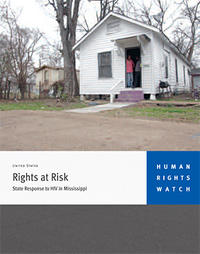
Human Rights Watch: US: Mississippi Policies Fuel HIV Epidemic

State’s Approaches Impede Access to Information, Prevention, Treatment

via Human Right Watch

Thousands of Mississippians are at risk for HIV, and many who are infected are denied lifesaving measures and treatment because of counterproductive state laws and policies, Human Rights Watch said in a report released March 9. Mississippi has resisted effective approaches to HIV prevention and treatment and instead supported policies that promote stigma and discrimination, fueling one of the nation's highest AIDS rates, Human Rights Watch said.

The 59-page report, "Rights at Risk: State Response to HIV in Mississippi," documents the harmful impact of Mississippi's policies on state residents, including people living with HIV and those at high risk of contracting it. Mississippi refuses to provide complete, accurate information about HIV prevention to students and threatens criminal penalties for failing to disclose one's HIV status to sexual partners. At the same time, Mississippi provides little or no funding for HIV prevention, housing, transportation, or prescription drug programs for people living with HIV, and the state fails to take full advantage of federal subsidies to bolster these programs. In Mississippi, half of people testing positive for the virus are not receiving treatment, a rate comparable to that in Botswana, Ethiopia, and Rwanda.

Read the rest.

[If an item is not written by an IRMA member, it should not be construed that IRMA has taken a position on the article's content, whether in support or in opposition.]

Kenya: How discrimination is a barrier to good health

via guardian.co.uk

Complex issues, such as health and poverty, are often best illustrated by following individuals and showing how the issues affect their lives. That is why the Guardian is producing a series of films about some of the global issues that feature in Christian Aid's manifesto for change, Poverty Over.

The first film – on sexuality-based discrimination, human rights and HIV in Kenya – is available to view here on the Guardian's Christian Aid website from Monday. Same-sex relationships are illegal in the country, but prejudice and fear about them go far deeper than that. This film shows how hatred has a negative impact on the health of gay people in Kenya.

Anti-gay feeling is common in Kenya. Some politicians, religious leaders and sections of the media have stirred up this hatred. In November last year, for instance, the prime minister, Raila Odinga, called for a nationwide crackdown on gay people. Odinga ordered the police to arrest anyone found having sex with someone of the same gender and said that the country's constitution made it clear that homosexual activity was not to be tolerated.

This has obvious implications for men who have sex with other men, as they are often unable to access care if they become infected with HIV. Clinics that are known to treat gay men are threatened, medical practitioners may be unwilling to help them, they are often isolated and unable to access any kind of information. Many of these men are married, and risk infecting their wives with HIV.

The red-light areas of large cities in Kenya also show that, despite the rhetoric, there is a thriving gay sex industry. Many of the male sex workers have been thrown out of their family homes for their sexuality; they report that they are often compelled by clients to have sex without condoms.

Yet a growing gay community, and some inspiring gay rights and HIV activists, are doing their best to ensure that more people in Kenya are made aware of safer sex, condoms are made available, and prejudice against men who have sex with other men is addressed.

To find out more, view the film online from Monday, March 14. The site also has other interesting content that will engage, outrage, inspire and inform you, including Thursday webchats (1pm-2pm) when you can post questions for Christian Aid advisers. Additional films will be uploaded every week.

Source.

[If an item is not written by an IRMA member, it should not be construed that IRMA has taken a position on the article's content, whether in support or in opposition.]

LGBT Africans Face Blackmail and Extortion on a Regular Basis

via International Gay and Lesbian Human Rights Commission

Antiquated laws against same-sex sexual activity as well as deeply ingrained social stigma result in the all-too-frequent targeting of lesbian, gay, bisexual and transgender (LGBT) people in Africa for blackmail and extortion, said the International Gay and Lesbian Human Rights Commission (IGLHRC) in a report launched today.

The report, Nowhere to Turn: Blackmail and Extortion of LGBT People in Sub-Saharan Africa, illustrates how LGBT Africans are made doubly vulnerable by the criminalization of homosexuality and the often-violent stigmatization they face if their sexuality is revealed. Based onresearch from 2007 to the present, the volume features articles and research by leading African activists and academics on the prevalence, severity and impact of these human rights violations on LGBT people in Cameroon, Ghana, Malawi, Nigeria, and Zimbabwe.

"The tragic reality is that blackmail and extortion are part of the daily lives of many LGBT Africans who are isolated and made vulnerable by homophobic laws and social stigma," says IGLHRC's Executive Director, Cary Alan Johnson. "The responsibility clearly lies with governments to address these crimes and the underlying social and legal vulnerability of LGBT people."

The report's authors vividly depict the isolation, humiliation and manipulation to which LGBT people are subjected by blackmailers and extortionists and describe the threats of exposure, theft, assault, and rape, that can damage and even destroy the lives of victims. Vulnerability to these crimes is faced on a regular basis and families and communities are not safe havens. For example, according to research conducted in Cameroon and featured in the report, "the bulk of blackmail and extortion attempts were committed by other members of the community - 33.9% by neighbors, 11.8% by family members, 11.5% by classmates, and 14.1% by homosexual friends. Police were often complicit in this - either by ignoring or dismissing it or, in 11.5% of cases, directly perpetrating it."

Nowhere to Turn explores the role the State plays in these crimes by ignoring blackmail and extortion carried out by police and other officials by failing to prosecute blackmailers, and by charging LGBT victims under sodomy laws when they do find the courage to report blackmail to the authorities.

IGLHRC urges States to take concrete steps to reduce the incidence of these crimes by decriminalizing same-sex sexual activity, educating officials and communities about blackmail laws, and ensuring that all people are able to access judicial mechanisms without prejudice.

A PDF version of Nowhere to Turn is available here. To obtain a hard copy of the volume, email iglhrc@iglhrc.org

[If an item is not written by an IRMA member, it should not be construed that IRMA has taken a position on the article's content, whether in support or in opposition.]

Being Gay in Egypt: ‘Some of my best friends do not know me’

via OUT Impact, by Theodora Birch

“Denying who you are leads to acceptance.”

In Egypt, laws on public morality are severe – homosexuality is seldom openly acknowledged. Whilst being gay is not technically illegal it is unacceptable in Egypt, it is frowned upon socially, culturally, religiously and politically. Gay people are vilified by the press and the public, Al Balagh Al Gadid, an independent weekly newspaper, was banned after accusing actors of homosexuality.

The personal struggle of many young gay Egyptians is constant- they must deny who they are to survive. Yet despite hostility, there are many Egyptians out there hoping that society will change its strict laws and accept them for who they are.

“Mohammed” is a good-looking man in his early twenties with a successful career and a very open mind. I met him for the first time in a quiet little coffee shop in central Cairo. In perfect English he tells me that he hides a secret most of the time: he is gay.

Below is a full transcript of our conversation. Mohammed touches on various issues: social perception, acceptance amongst his peers and family, as well as the personal struggle that he faces everyday with his religion and himself:

Theodora Birch, Out Impact: I wanted to start out by asking you, when you first realized that you were gay? 
“Mohammed”: When I was eighteen, I knew.

TB: Did you struggle with this realisation? 
M: Yes. I tried to fight my urges for a couple of months.

TB: Have you come out yet to your family and friends? 
M: No. My family and none of my close friends know, only my friends amongst the gay community. I am seeing a therapist, and she suggested that I don’t tell them. I come from a conservative family, and they would not accept me. There is also a possibility that I might change, therefore it is best to keep quiet.

Read the rest.


[If an item is not written by an IRMA member, it should not be construed that IRMA has taken a position on the article's content, whether in support or in opposition.]

Kenya: "Gays here are just outcasts"

via Voice of America, by Darren Taylor

Excerpt:
Denis Nzioka lives in Nairobi and is one of East Africa’s most prominent gay rights activists.  He works for a variety of NGOs, including the Gay and Lesbian Coalition of Kenya and the Gay Activists Alliance of Africa.

Nzioka says opinions like those of Ichuliza, Wathira and Githui have always been popular in Kenya.  But – fueled by some politicians, religious leaders and “cultural bigots” – he says homophobia’s becoming “much more” common in the country.

“We have had (recent) cases of police beating up gay people.  We have had gay parties being raided by police, or any effeminate guy – maybe in a club – being thrown out by bouncers or the police being called to arrest this person,” Nzioka says.  “We also have cases of gay people being blackmailed.  I know of one well-known Kenyan who has paid blackmailers 200,000 Shillings (about US$ 2,500) to prevent him being exposed as a homosexual.”

According to Nzioka, some Kenyan health institutions are also homophobic.  “We’ve had cases of homosexuals being infected with anal and oral gonorrhea and going to the hospital where doctors refused to treat them,” he says.

He says homophobia is very prevalent in Kenya’s schools.  “We often hear of cases of gay students being discriminated against by fellow pupils and even teachers,” he says.

And in Kenya’s streets, the insults persist.  “Homophobes shout at you, ‘You fag! Homo!   You prostitute!  You are evil; you are immoral.  You are worse than pigs; you are just dogs,” says Nzioka.
Read the rest.


[If an item is not written by an IRMA member, it should not be construed that IRMA has taken a position on the article's content, whether in support or in opposition.]

Sex Work, Criminalization, and HIV: Lessons from Advocacy History

via San Francisco AIDS Foundation's BETA,  by Anna Forbes

Sex workers are frequently omitted from discussions about the links between criminalization, marginaliza­tion, and increased HIV transmission. We talk a lot about the effects of this dynamic on men who have sex with men, injection drug users, and peo­ple living with HIV—as we certainly should—but not about sex workers. Why is this group not like the others?

Read the rest.


[If an item is not written by an IRMA member, it should not be construed that IRMA has taken a position on the article's content, whether in support or in opposition.]

Washington Post: Gays in Africa face growing persecution, activists say

via Washington Post, by Sudarsan Raghavan

Persecution of gays is intensifying across Africa
, fueled by fundamentalist preachers, intolerant governments and homophobic politicians. Gay people have been denied access to health care, detained, tortured and even killed, human rights activists and witnesses say.

The growing tide of homophobia comes at a time when gays in Africa are expressing themselves more openly, prompting greater media attention and debates about homosexuality. The rapid growth of Islam and evangelical forms of Christianity, both espousing conservative views on family values and marriage, have persuaded many Africans that homosexuality should not be tolerated in their societies.

"It has never been harder for gays and lesbians on the continent," said Monica Mbaru, Africa coordinator for the International Gay and Lesbian Human Rights Commission, based in Cape Town. "Homophobia is on the rise."

Read the rest.


[If an item is not written by an IRMA member, it should not be construed that IRMA has taken a position on the article's content, whether in support or in opposition.]